

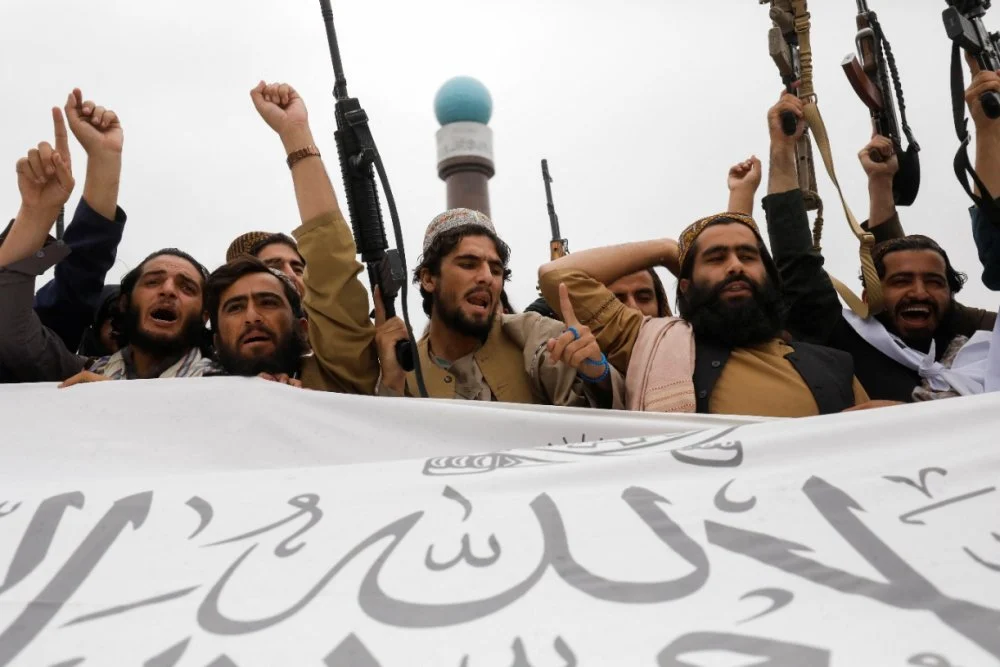
The idea of a religious government (here, specifically Islamic government) is desirable and attractive to many people in Afghanistan. A significant portion of the population is willing to spare no effort in establishing a religious government and is prepared to dedicate all their resources towards this goal. The Taliban, familiar with the spirit of the people up close, have been advocating for the adaptation of Sharia law and the establishment of an Islamic system since their inception. They understand that deceiving people through these slogans is easy, given the religious nature of many citizens. However, critics of the idea of a “religious government” argue that when such a government is established in a country, it imposes a particular interpretation of religion on the people and, in some way, suppresses individuals who disagree with this interpretation, thus violating the rights of a significant portion of citizens or, at best, failing to respect their natural rights.
The religious government created by the Taliban is one of the most primitive and oppressive versions of a religious government. In terms of disregarding citizens’ rights, it sets a new low and makes other religious governments appear benign. The Taliban, now holding the fate of millions of people in their hands, seeks to suppress individuals and groups who do not believe in the ideology of the Taliban and the primitive interpretation of religion they adhere to, under various pretexts, thus narrowing the space for dissent. One of the Taliban’s propaganda tools for suppressing their intellectual opponents is to label them as secular. Just spend a couple of hours listening to the sermons of the Taliban’s clerics across the country, and you’ll realize how eager and enthusiastic they are in accusing their intellectual opponents of atheism and portraying them as such. In the terminology of the Taliban, “secular” means “infidel”. Certainly, labeling them as infidels has serious and irreparable consequences and may subject the individual to countless problems.
The act of excommunication (Takfir) is one of the most commonly used tactics by religious systems to suppress dissenters. The Taliban accuses those who do not align with their religious interpretations of being secular, effectively labeling them as infidels. However, if we examine the internal logic of Islam, this approach by the Taliban towards intellectual dissenters is fundamentally flawed, as free interpretation of religious texts has been a common and recognized practice throughout Muslim history. Therefore, no one has the right to monopolize religion and prevent others from having different interpretations of religious texts. What harm is there if individuals come forward and present a secular interpretation of Islam and its history? It should not go unmentioned that accusations like secularism, which the Taliban hurl at their intellectual opponents, are more of a propaganda move to eliminate dissenters than an accurate portrayal of reality.
Every authoritarian regime psychologically requires intolerance. The Taliban, now at the peak of power, have taken self-aggrandizement to the extreme and become intoxicated with their thoughts. Perhaps the feeling of indispensability is necessary to maintain power, but when power is sustained in the name of religious exclusivity and through the creation of fear and intimidation, its first consequence is that the position of religion in the minds and souls of society becomes compromised, and belief in religious values gradually fades away.
In summary, a religious government is incompatible with societal diversity and reconciliation with dissenters. This reality should compel those who consider the establishment of a religious government beneficial to reconsider, as the idea of a religious government is inherently problematic and unstable. The story can be presented as follows:
When we talk about the establishment of an Islamic government, it should not be forgotten that such a government is supposed to adopt Islamic teachings and rulings. Now the question arises: who should identify these teachings and rulings? Surely, those who have gained power through a thousand sacrifices are not foolish enough to consult impartial experts who have spent years researching and studying in this field. The individuals at the helm of the Islamic government undoubtedly had crude and unrefined ideas in their minds before attempting to implement such a government, and now they see an opportunity to put these ideas into action. Those who have taken control of the government and advocated for the adaptation of Sharia and religion are not Islamic scholars and have never had the opportunity to do so during their lifetime. Therefore, they want to implement these crude and immature ideas to demonstrate that their government is truly Islamic.
Protesting why the leaders of a certain Islamic government have imposed restrictions on girls’ education, limitations on media freedom, and freedom of expression, or why they have enforced strict laws regarding citizens’ attire and facial hair, and why they resort to violence against dissenters and those with different ideologies, is a futile objection. Those who have taken control of the Islamic government have religious scholars advising them in these matters, guiding them on what is permissible and what is not. You’re either in favor of the Islamic government or you’re not. If you support the Islamic government, you must understand that individuals from within the same society, who possess a particular interpretation of religion and are considered backward within that society, lead this government. An Islamic government is nothing more than that. An Islamic government in any society reflects the level of knowledge, culture, and beliefs of that society. If you expect more than this, then you have misunderstood the premise.
Historical facts have proven that whenever the cloak of sanctity is worn by the state, questioning, and dissent are considered blasphemy and stir unrest. Europe experienced religious governments during the medieval ages, and we all know the atrocities inflicted upon the people. The reality is that government is a human and societal affair, grounded in human rationality and worldly matters, and should not be attributed to God. Religiousizing the government provides an opportunity for some to unleash tyranny and oppression, scrutinize beliefs, prosecute and harass scholars, and quash societal dynamism. Westerners, after a thousand years, concluded that the government should be separated from God and the holy book, yet we are still willing to strive for the ideal of a religious government, torturing and persecuting others in the process.
Afghanistan, with its ethnic, linguistic, and cultural diversity, is one of the most colorful countries. The governance of religious regimes like the Taliban turns a vibrant tapestry into a monotonous and singular narrative, forcing a nation of diverse thoughts, emotions, and sentiments to adhere to a single method and behavior. Religious dictatorship does not hesitate for a moment in curbing individual freedoms because it believes it holds the key to the betterment of human life. A religious government wants all humans to live according to the divine will and commandments. The claim of living according to divine will and commandments may sound appealing to some, but when put to the test, you will see insurmountable problems behind it. The ideal of religious governance, when put into practice, strips humanity of its color, leaving behind an individual intent on realizing it. In the shadow of a religious government, there is no possibility of diversity and variety; all colors must pass through the filter of clerics and priests. It’s not difficult to imagine that the adaptation of God’s commands by backward, primitive, and ossified individuals yields nothing but a Taliban-style regime; a regime that, under the guise of implementing divine laws, turns the country into a hell on earth, eradicating freedom of speech and belief, individual and collective liberties, and institutionalizing gender discrimination in its worst form, deepening ethnic and linguistic divides, and altogether obliterating intellectual and cultural diversity.
You can read the Persian version of this analysis here: