• 8AM.MEDIA
  • ویب‌سایت فارسی
  • پښتو ویب‌پاڼه
  • اۉزبېکچه ویب‌سایت
  • Podcast
Monday, September 21, 2026
Hasht-e Subh
  • Home
  • News
    • Afghanistan News
    • World News
  • Opinion
    • Editorial
    • Analysis
  • Reports
    • Daily Reports
    • Investigative Reports
  • Society
    • The story of people
  • Women’s Word
  • Columns
    • Three Years After Afghanistan’s Fall: The Taliban’s Resurgence
    • Towards Equality
    • The Resurgence of the Taliban: Two Years Since Afghanistan’s Fall
    • Hebatullah Report Special Edition
    • Resistance for Education Special Edition
    • Special Column on Taliban’s Education Curriculum
    • Nawroz
  • Interviews
  • Contact Us
    • About Us
    • 8AM MEDIA Annual Awards
    • Submit an Article to Hasht-e-Subh
  • 8am.mediaBack
Subscribe
No Result
View All Result
  • Home
  • News
    • Afghanistan News
    • World News
  • Opinion
    • Editorial
    • Analysis
  • Reports
    • Daily Reports
    • Investigative Reports
  • Society
    • The story of people
  • Women’s Word
  • Columns
    • Three Years After Afghanistan’s Fall: The Taliban’s Resurgence
    • Towards Equality
    • The Resurgence of the Taliban: Two Years Since Afghanistan’s Fall
    • Hebatullah Report Special Edition
    • Resistance for Education Special Edition
    • Special Column on Taliban’s Education Curriculum
    • Nawroz
  • Interviews
  • Contact Us
    • About Us
    • 8AM MEDIA Annual Awards
    • Submit an Article to Hasht-e-Subh
  • 8am.mediaBack
No Result
View All Result
Hasht-e Subh
No Result
View All Result

Kunduz Farmers Speak Out as Cotton Harvests Decline, Challenging Taliban Claims

Moqim mehran Moqim mehran
22 October 2023 - Solar Hijri Date: 1402/07/30 [t_time:1697982755]
Kunduz Farmers Speak Out as Cotton Harvests Decline, Challenging Taliban Claims

Sgt. Kimberly Lamb

Kunduz is one of the fertile provinces in northeastern Afghanistan. Farmers in this province have consistently complained about the neglect of mechanized agriculture and the prevention of plant diseases. They have called for cooperation from government authorities and UN agencies. Recently, some farmers in this province have reported a decrease in cotton yields. However, the Taliban claim that cotton production has increased by 10% this year. According to the Taliban officials, last year, 10,033 metric tons of cotton were harvested in Kunduz province. Some residents of Kunduz accuse the Taliban of providing “false” statistics. They claim that farmers collect the produce, but the Taliban report the figures.

Some farmers in Kunduz province claim that this year, cotton cultivation has not yielded much. However, Taliban authorities have reported a 10% increase in cotton production in the province. Kunduz farmers attribute the noticeable decrease in yields to the prevalence of plant diseases and water shortages during the cotton growth season. These farmers, both men and women, are engaged in cotton farming and use it to address their economic and livelihood challenges. In some rural areas of this province, women participate in collecting cotton in the fields.

Nik Mohammad, one of the farmers in the Chahar Dara district of Kunduz, tells the Hasht-e Subh Daily that this year, due to the prevalence of plant diseases and water shortages, their yields have significantly decreased. He says, “Cotton yields this year are much lower compared to last year because of the lack of water and the presence of pests. Every year, I cultivate about 7.4 acres of land for cotton, and I usually gather between 5 to 6 metric tons of cotton, but this year, I have only gathered close to 3 metric tons of cotton.”

Gholam is another farmer who, in addition to complaining about reduced yields, is also expressing concerns about the low prices of this crop. He says, “We used to irrigate cotton through river water, but due to water scarcity, we were forced to irrigate cotton with well water, which costs around 6,000 to 7,000 Afghanis per 2,000 square meters. The yields have decreased by 50% compared to last year. Last year, we harvested approximately 840 kilograms of cotton, but this year, we’ve only gathered approximately 280 kilograms. We usually get around 210 kilograms of cotton from each 2,000 square meter.”

This is happening while the authorities in charge of agriculture, irrigation, and livestock in Kunduz, under Taliban management, state that approximately 4,505 hectares of land in this province have been cultivated with cotton this year. According to them, 11,037 metric tons of cotton have been harvested, marking a 10% increase compared to the previous year.

Salahuddin Wahidi, the officer responsible for agricultural affairs in this department, attributes the increase in yields to the distribution of improved seeds. He claims, “The reason for the increased cotton yields is the distribution of improved seeds and the introduction of cultivation methods for farmers by the agricultural authorities, as well as the control of diseases and pests by agricultural staff.”

On the other hand, the cotton harvesting season provides an opportunity for rural and impoverished women to work for a few days. Some of these women collect cotton from morning till evening in exchange for a meager sum to cover their basic expenses.

Hawa, who is nearly 50 years old, is responsible for a 15-member family and is forced to work in cotton fields during the day to earn a small income. She says, “I come here at 8:00 or 9:00 AM daily. In a day, I can pick 14 to 21 kilograms of cotton, and I receive less than 100 Afghanis for each 7 kilograms. We have 12 destitute women and children at home, and we have no male laborers. The young ones can pick up to around 70 kilograms of cotton per day, but someone like me can only manage about 21 kilograms a day. Cotton picking makes us sick, and we get cold. We ask the government [ the Taliban] to assist us.”

Shirin is another woman who, in the cotton fields of others, works as a cotton picker during the day to secure a piece of bread. She says, “In a day, we pick around 28 to 35 kilograms of cotton. In the past, they used to pay 25 Afghanis for each 7 kilograms or a Seer, but now they pay 30 Afghanis. From my family, four of us are here, and each of us picks between 35 to 70 kilograms of cotton per day. I’ve been picking cotton up to this age. I have no male laborer to work for me. I have two sons who live separately. I’m a widow.”

These women are engaged in strenuous work while many women are prohibited by the Taliban from working in government and non-governmental offices, and thousands of other girls and women are deprived of their right to education, employment, and work.

It’s worth noting that cotton produced in Kunduz is purchased by government and private companies. After processing, the cotton is made available for sale and export in the form of cotton lint, and cotton seeds are used to produce oil.


Note:
1 Seer = 7.07 kg
1 Jareeb (land measurement) = 2,000 square meters (standardized)
این مقاله در سایت فارسی
ShareTweetSendSendShare

Related Posts

A young man coughs as thick smog blankets a hazy Afghan city, reflecting the mounting health toll of air pollution. (Photo credit: AFP + Magnific)
Analysis

Afghanistan: When Pollution Becomes an Economy of Illness

20 September 2026 [t_time:1789925963]
Qatar's Deputy National Security Adviser Hamad bin Khamis Al-Kubaisi (L) and Türkiye's intelligence chief Ibrahim Kalin (R) led separate delegations to Kabul and Kandahar for talks with senior Taliban officials. (Photo credit: Social Media)
Analysis

Two Mediators, One Case: Foreign Officials’ Visit to Kabul and Kandahar

20 September 2026 [t_time:1789925302]
Hesamuddin Akbari, a dentist in Badghis province, was killed by armed men in Qala-e-Naw. (Photo credit: Exclusive)
Afghanistan News

Criminal Incidents Increase: Dentist Killed in Badghis

20 September 2026 [t_time:1789923677]

Latest

Loading latest news...

Popular stories

  • Hamza bin Laden - the son of Osama bin Laden (Photo: Social Media)

    Al-Qaeda Releases Hamza bin Laden Message on 9/11 Anniversary

    Share
    Share Tweet
  • UN Report Reveals Shifts in Family Attitudes and Rise in Domestic Violence in Afghanistan

    Share
    Share Tweet
  • German Politician Calls for Faster Deportation of Undocumented Afghan Migrants

    Share
    Share Tweet
  • Pakistan Army Spokesperson: Afghanistan Has Become a Base for Dozens of Terrorist Groups

    Share
    Share Tweet
  • U.S. Defense Secretary Calls Washington Post Worse Than Iranian State Media

    Share
    Share Tweet

Podcast

Insights
Insights

Join Lynne O’Donnell for 8AM’s podcast series, Insights.
Lynne talks with generals, diplomats, soldiers, journalists, politicians, activists, people who have front row seats for conflicts around the world, and citizens with a story to tell, happy or sad. For this first series, Afghanistan is the focus. Lynne and her guests talk about the collapse of the republic in August, 2021, and the impact since — for the people of Afghanistan, for the security of the region, for the safety of the world. It’s important, interesting and insightful.

Insights/22: Controlling the Narrative with Mina Sharif
byinsights8am

Controlling the Narrative

Lynne O’Donnell talks with Mina Sharif, author, activist, women’s rights campaigner, educator and mentor. They discuss who controls the narrative and who speaks for Afghanistan’s people when the Taliban appear to have seized control not only of the country but of the message, too.

Have a listen

Insights/22: Controlling the Narrative with Mina Sharif
Episode play icon
Insights/22: Controlling the Narrative with Mina Sharif
Episode Description
Episode play icon
Insights/21: Media Meltdown with Zahra Joya
Episode Description
Episode play icon
Insights/20: Terror Inc with Scott Richards
Episode Description
Episode play icon
Insights/19: Busting Stereotypes with Bushra Gohar
Episode Description
Episode play icon
Insights/18: Media Matters with Waliullah Rahmani
Episode Description
Episode play icon
Insights/17: What Goes Around Comes Around with Sima Samar
Episode Description
Search Results placeholder
Hasht-e Subh

8AM Media, also known as Hasht-e-Subh Daily, stands as Afghanistan's premier independent and non-profit newspaper, resonating as a beacon of journalistic integrity since its establishment in June 2007 by esteemed Afghan journalists and human rights advocates. With a steadfast commitment to citizen journalism and civic education, Hasht-e-Subh Daily has earned its place as the most esteemed publication in the nation.

Publisher: Sanjar Sohail
Email: [email protected]
Executive Director: Parwiz Kawa
Email: [email protected]

Read More

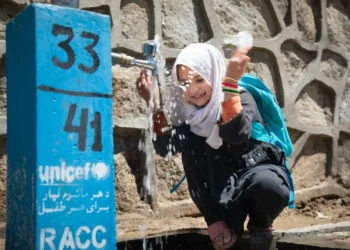
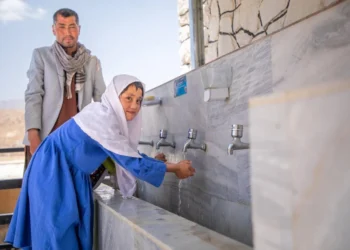
UNICEF-Funded Reconstruction of Four Water Supply Networks Begins in Parwan

Afghanistan: When Pollution Becomes an Economy of Illness

Two Mediators, One Case: Foreign Officials’ Visit to Kabul and Kandahar

Body of Young Man Found Hanging in Farah Province

Criminal Incidents Increase: Dentist Killed in Badghis

Editor’s Choice

Every Saturday morning, 8AM MEDIA English Services Department will guide you through the week’s biggest stories from Afghanistan and the international community.

Subscribe

© 2026 - ©Hasht-e Subh Daily

No Result
View All Result
8am.Media
پښتو ویب‌پاڼه
ویب‌سایت فارسی
اۉزبېکچه ویب‌سایت
  • Home
  • News
    • Afghanistan News
    • World News
  • Opinion
    • Editorial
    • Analysis
  • Reports
    • Daily Reports
    • Investigative Reports
  • Society
    • The story of people
  • Women’s Word
  • Columns
    • Three Years After Afghanistan’s Fall: The Taliban’s Resurgence
    • Towards Equality
    • The Resurgence of the Taliban: Two Years Since Afghanistan’s Fall
    • Hebatullah Report Special Edition
    • Resistance for Education Special Edition
    • Special Column on Taliban’s Education Curriculum
    • Nawroz
  • Interviews
  • Contact Us
    • About Us
    • 8AM MEDIA Annual Awards
    • Submit an Article to Hasht-e-Subh
  • 8am.media

© 2026 - ©Hasht-e Subh Daily