Since the early 20th century, the US policy towards Afghanistan has fallen under three categories: engagement, isolation, and opposition. Except for isolation, the engagement and opposition categories were security-guided and influenced by geopolitics and the great power competition. The US helped and supported Mujahidin in the 1980s because of the Cold War and to counter the Soviet Union. From 2017 and the announcement of the National Defense Strategy, the US foreign policy again guided through great power competition. From then onwards, terrorism was not considered the main security threat for the US. Great powers like Russia and China are considered prime threats to the US National Security. Accordingly, the US considered the war in Afghanistan counterproductive and decided to look at the alternatives and find a way out.
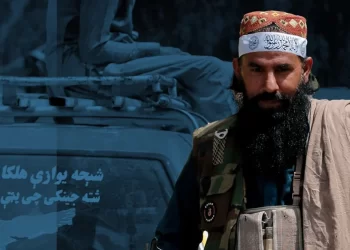
In February 2020, the Trump administration finalized the Doha agreement with the Taliban, and within a year and a half, the Taliban were able to capture Kabul in August 2021, once again they established the Islamic Emirate in Afghanistan. Having taken over power, the Taliban established the Ministry for the Propagation of Virtue and the Prevention of Vice to implement Sharia codes; prohibited education for girls and work for women; dismissed secular-liberal cadres from administration, schools, and universities, accusing them of being Western spies; discriminated against religious minorities, particularly Hazaras and Shias; showed animosity toward cultural products, including books labeling them corrupting the youth’s minds; and most importantly, forsaken the public legitimacy mechanisms such as election.
After the completion of the US withdrawal and closing of the US mission in Afghanistan, the US continued its engagement with the Taliban, but it needs to rethink if this engagement produced any tangible result. The engagement did not make the Taliban reconsider the above-mentioned policies, initiate intra-dialogue among Afghans, commit to respect and improve women’s rights, and finally elevate minority rights.
looking at the axis of China, Russia, and Iran’s normalization of relations with the Taliban in the last year, there is a concern that the great power competition makes the US close its eyes on the Taliban violations of human rights and women rights and to counter the China, Russia, and Iran axis, Washington may develop its relations with Taliban from engagement to normalization and even recognition of the regime. There are ample totalitarian-authoritarian countries in the world that violate the rights of their citizens but still have normal relations with the international community including the United States. Certain countries in the region already crossed the limit of engagement and normalization of their diplomatic relations with the Taliban and recently Chinese President Xi Jinping personally accepted the credential of Taliban ambassador to China. Many countries that are allies of China, Russia, and Iran axis might follow suit including the Central Asian countries. The trinity of engagement, normalization, and recognition of the Taliban would seal the fate of human rights under the Taliban regime, and it allows them to continue the violation of human rights ignoring the consequences.
Contrary to the trinity of engagement, normalization, and recognition, this article argues that the US and its allies must take a harder stance against the Taliban and try the stick rather than the carrot policy. The Taliban as a radical -extremist regime, only understands the language of coercion and crude force rather than the language of diplomacy and tradeoffs.
History shows that engagement with the Taliban does not work. Osama bin Laden took refuge in Afghanistan in 1996 and orchestrated the bombing of US embassies in Tanzania and Kenya in 1998 but the US request to extradite him or even expel him from Afghanistan did not work. Later Bin Laden was able to establish jihadi camps across Afghanistan and most importantly in Nangarhar and Kunduz provinces, which allowed him to plan and execute the 9/11 that killed thousands of American civilians. Again, the US engagement with the Taliban to extradite Bin Laden post 9/11 turned on deaf ears, and the Taliban insisted on keeping him in Afghanistan and denied his role in the 9/11 terrorist attack. When the US started bombing the Taliban positions, they budged and contacted the US’s local Afghan allies including Hamid Karzai, former president of Afghanistan that they were ready to negotiate with the US without terms and conditions.
It seems the current US engagement with the Taliban is justified based on the Doha agreement signed between the US and the Taliban in February 2020. preventing international terrorist groups from taking sanctuaries in Afghanistan, not allowing Afghanistan soil to be used against the United States and the intra-Afghan dialogue to form the broad-based government were the major elements of the agreement. Nearly two and a half years after the Taliban’s takeover of Afghanistan, The Taliban have not honored any of those elements. One, Ayman al-Zawahiri, the successor of Osama Bin Laden was killed by an American drone in downtown Kabul in 2022 and it proves the Al-Qaeda presence in Afghanistan. Two, the Taliban do not want to share power with others, and still the caretaker government is controlled and monopolized by the Pashtun Taliban forces. Three, women’s and human rights are grossly violated and the Taliban adding more restrictions on women day by day. It proves that engagement, normalization, and recognition do not work. It is the time for the US and its allies to take an oppositional approach, and they include:
First, start drawing the redlines for the Taliban. The redlines should be human rights, women’s rights, minority rights, and the broad-based government. Second, in the absence of respecting the redlines by the Taliban, the US and its allies should think about preparing the tough resolutions to be passed by the UN and most importantly the United Nations Security Council as they did in the 1990s and early 2000s. Third, the US and its allies should continue international aid to the people of Afghanistan but that aid should be distributed by the UN agencies or through recognized local NGOs. Now the money goes to the central bank of Afghanistan and the Taliban spends it on its armed forces and procuring arms and ammunition. Fourth, the US and its allies should contact the Taliban opposition groups including the Afghanistan Freedom Front (AFF), and provide them with international stages to share their thoughts and suggestions. Fifth, if all the above formulas do not work, it is for the international community and the US to even think about arming the Taliban opposition groups to stand against the Taliban regime and even to assist them through surgical strikes. This does not mean regime change but this mechanism would make the Taliban come to the table and initiate serious talks with the people of Afghanistan to form a government that should be broad-based, inclusive, and representative of all sections of Afghan society. Sixth, the last option can be the regime change helping the people of Afghanistan to be liberated from the totalitarian theocratic regime of the Taliban.