• 8AM.MEDIA
  • ویب‌سایت فارسی
  • پښتو ویب‌پاڼه
  • اۉزبېکچه ویب‌سایت
  • Podcast
Monday, October 12, 2026
Hasht-e Subh
  • Home
  • News
    • Afghanistan News
    • World News
  • Opinion
    • Editorial
    • Analysis
  • Reports
    • Daily Reports
    • Investigative Reports
  • Society
    • The story of people
  • Women’s Word
  • Columns
    • Three Years After Afghanistan’s Fall: The Taliban’s Resurgence
    • Towards Equality
    • The Resurgence of the Taliban: Two Years Since Afghanistan’s Fall
    • Hebatullah Report Special Edition
    • Resistance for Education Special Edition
    • Special Column on Taliban’s Education Curriculum
    • Nawroz
  • Interviews
  • Contact Us
    • About Us
    • 8AM MEDIA Annual Awards
    • Submit an Article to Hasht-e-Subh
  • 8am.mediaBack
Subscribe
No Result
View All Result
  • Home
  • News
    • Afghanistan News
    • World News
  • Opinion
    • Editorial
    • Analysis
  • Reports
    • Daily Reports
    • Investigative Reports
  • Society
    • The story of people
  • Women’s Word
  • Columns
    • Three Years After Afghanistan’s Fall: The Taliban’s Resurgence
    • Towards Equality
    • The Resurgence of the Taliban: Two Years Since Afghanistan’s Fall
    • Hebatullah Report Special Edition
    • Resistance for Education Special Edition
    • Special Column on Taliban’s Education Curriculum
    • Nawroz
  • Interviews
  • Contact Us
    • About Us
    • 8AM MEDIA Annual Awards
    • Submit an Article to Hasht-e-Subh
  • 8am.mediaBack
No Result
View All Result
Hasht-e Subh
No Result
View All Result

The Importance of Popular Resistance Against the Taliban

By: Sorkh Kohi

Moqim mehran Moqim mehran
28 October 2023 - Solar Hijri Date: 1402/08/06 [t_time:1698502049]
The Importance of Popular Resistance Against the Taliban

Ebrahim Noroozi/AP Photo

Despite two years since the Taliban’s resurgence in Afghanistan, this group is still not recognized internationally, with no single country recognizing its authority. The Taliban group, having seized power through the use of force and continuing to rule the people with this method, does not have internal legitimacy either. The Taliban tried to widen the existing gap between themselves and the people and marginalized the people by applying severe restrictions. However, a part of the Taliban leadership has realized this point thereby trying to partly fill the void of domestic illegitimacy. These Taliban leaders, who are called “moderates”, do not have the power to exert pressure on their Supreme Leader Mullah Hibatullah Akhundzada to view the disaster he has inflicted upon the unfortunate people of Afghanistan realistically and eschew being obstinate.

However, even the “moderate” Taliban are not very interested in the central role of individuals in political decisions and do not believe in sharing power with their political opponents. They consider their regime to be comprehensive and legitimate, and so far, they have not given any importance to internal and external demands in connection with the establishment of an all-inclusive government. That is, the Taliban, whether they are extremists or so-called moderates, are inseparable from each other. They have repeatedly pointed out that there is no stark difference between the two factions. Taliban Deputy Foreign Minister Sher Mohammad Abbas Stanikzai, who is called a “moderate” Taliban member because of supporting women’s education, every time the tensions between the Taliban factions heated up, was the first to call the news about the existence of a divide among the Taliban leadership as rumors asserting that there is unity in the ranks of this group.

Therefore, the Taliban is an anti-people group as a whole, with no remarkable difference existing between its small and large factions. Only the faction that is called “moderate” has more political realism; therefore, compared to the radical faction, it is more apprehensive and afraid of the possibility of the collapse of this group. The extremist faction of the Taliban, both because of its low political consciousness and because of its greater power, which it thinks is an immunity maker, acts fearlessly while consciously ignoring the consequences of the policy of repression and subjugation.

Is it possible to benefit from the political factionalism of the Taliban? I believe that if it can be done, it should be done. We must utilize all the fields and possibilities to challenge and finally topple the Taliban, which can include exploiting the existing gaps among the Taliban. However, it can be feasible when there is a high political-military weight in the power equation in Afghanistan. It should become a force whose political and military presence is undeniable and which no country can underestimate.

The political movements that try to challenge the Taliban should not be established only in foreign countries aiming at exploiting the people again with the support of foreigners and a shift in their foreign policy. Such currents, even if they come to work with the support of foreigners, will still go through the same fate as the technocrats supported by the Westerners in Afghanistan. Political currents dependent on foreigners are short-lived and only appear in politics when the foreign masters see fit. People’s resistance should not be in the hands of foreigners and should be carried out with the assistance of external powers. This is because foreigners pursue their own goals and interests in any event and these interests can be changed. Popular resistance must rely on itself and act with complete independence.

Unfortunately, despite more than two years since the Taliban’s return to power in Afghanistan, there have not been many indications of true popular resistance against this group. The Taliban are still in control of the situation, making the circumstances difficult for the political opponents of this group. It is as if everyone is weary of genuine political activity, except the Taliban, who are strengthening their foothold on Afghan soil with extreme enthusiasm and motivation. They have established a strict rule based on severe suppression of civil and democratic demands, which can be best called security with a bayonet.

Within this type of security, only the military aspect is considered. This is a repressive order whose main element is fear, with the agents of this enslaving order, investing the most in the politics of terror and intimidation, to the extent that people are even afraid of their own shadow. Although this type of policy can be functional in the short term, it will not be effective in the long term and will eventually face popular resistance. All closed and authoritarian regimes in history have undergone such a fate, and the Taliban cannot be excluded from this case.

The collapse of the Taliban is contingent on the intelligence and political courage of the people who are constantly overwhelmed by the Taliban. If the people have not completely lost the courage to rebel against the Taliban regime, the collapse of the Taliban will happen much sooner than expected. Several decades of war and destruction in which Islamic fundamentalists played an essential part have increased people’s knowledge of them, with a large portion of today’s villagers defying the gloomy policy of the school-burning ignoramuses and inwardly blind murderers.

People have understood that the school is enlightening and the bridge and road were built for their convenience. Villagers who called the school “the devil’s nest” during the Mujaheddin era and on the contrary sent their children to religious schools, now want to reopen the schools for girls. This development is of paramount importance in Afghanistan under the rule of the Taliban, particularly when the Taliban have deprived women of the right to education.

If you live in Afghanistan under the control of the Taliban, you can well recognize the concealed anger of the people against this group. Only a trained political force is needed to awaken and manage this dormant anger. Such a force has not yet appeared in the political sphere of Afghanistan, which grants strength to the Taliban and more suffering to the people. Now it has become widely known that the Taliban have no alternative. If we cannot create the political alternative needed to manage people’s anger against the Taliban, then we must accept that this group cannot be superseded.

ShareTweetSendSendShare

Related Posts

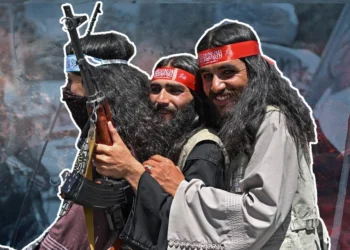
Three smiling Taliban members in red headbands stand close together, one of them carrying a rifle, as opposition to the group’s rule grows. (Photo credit: AFP)
Analysis

Taliban’s Rule Is Multiplying Opponents, Not Supporters

12 October 2026 [t_time:1791828037]
Women’s dresses hang on display in Kandahar amid the Taliban’s ban on men sewing women’s clothing. (Photo credit: Exclusive)
Afghanistan News

Taliban Ban Men from Sewing Women’s Clothing in Kandahar

12 October 2026 [t_time:1791821245]
Pakistan’s Information Minister Attaullah Tarar says more than 20,000 terrorists have taken refuge in Afghanistan. (Photo credit: @TararAttaullah)
Afghanistan News

Pakistan Says Over 20,000 Terrorists Have Taken Refuge in Afghanistan

12 October 2026 [t_time:1791819015]

Latest

Loading latest news...

Popular stories

  • An aerial view shows collapsed buildings and widespread damage following an earthquake in Panama (Photo: Reuters)

    More Than 200 Aftershocks Recorded in Panama Since Friday’s Earthquake

    Share
    Share Tweet
  • UN Report Reveals Shifts in Family Attitudes and Rise in Domestic Violence in Afghanistan

    Share
    Share Tweet
  • Axios: Trump Expects Ukraine Not to Attack Russian Oil Refineries

    Share
    Share Tweet
  • The Politics We Inherited: Rethinking Afghanistan’s Political Culture

    Share
    Share Tweet
  • Pakistan and the Yemen War: Balancing Between Riyadh and Tehran

    Share
    Share Tweet

Podcast

Insights
Insights

Join Lynne O’Donnell for 8AM’s podcast series, Insights.
Lynne talks with generals, diplomats, soldiers, journalists, politicians, activists, people who have front row seats for conflicts around the world, and citizens with a story to tell, happy or sad. For this first series, Afghanistan is the focus. Lynne and her guests talk about the collapse of the republic in August, 2021, and the impact since — for the people of Afghanistan, for the security of the region, for the safety of the world. It’s important, interesting and insightful.

Insights/22: Controlling the Narrative with Mina Sharif
byinsights8am

Controlling the Narrative

Lynne O’Donnell talks with Mina Sharif, author, activist, women’s rights campaigner, educator and mentor. They discuss who controls the narrative and who speaks for Afghanistan’s people when the Taliban appear to have seized control not only of the country but of the message, too.

Have a listen

Insights/22: Controlling the Narrative with Mina Sharif
Episode play icon
Insights/22: Controlling the Narrative with Mina Sharif
Episode Description
Episode play icon
Insights/21: Media Meltdown with Zahra Joya
Episode Description
Episode play icon
Insights/20: Terror Inc with Scott Richards
Episode Description
Episode play icon
Insights/19: Busting Stereotypes with Bushra Gohar
Episode Description
Episode play icon
Insights/18: Media Matters with Waliullah Rahmani
Episode Description
Episode play icon
Insights/17: What Goes Around Comes Around with Sima Samar
Episode Description
Search Results placeholder
Hasht-e Subh

8AM Media, also known as Hasht-e-Subh Daily, stands as Afghanistan's premier independent and non-profit newspaper, resonating as a beacon of journalistic integrity since its establishment in June 2007 by esteemed Afghan journalists and human rights advocates. With a steadfast commitment to citizen journalism and civic education, Hasht-e-Subh Daily has earned its place as the most esteemed publication in the nation.

Publisher: Sanjar Sohail
Email: [email protected]
Executive Director: Parwiz Kawa
Email: [email protected]

Read More

Taliban’s Rule Is Multiplying Opponents, Not Supporters

13 Workers Detained in Parwan, Fate Unknown After 26 Days

Discrimination in Helmand’s Education Centers: Taliban Members Receive Better Facilities, Students Say

Taliban Ban Men from Sewing Women’s Clothing in Kandahar

Pakistan Says Over 20,000 Terrorists Have Taken Refuge in Afghanistan

Editor’s Choice

Every Saturday morning, 8AM MEDIA English Services Department will guide you through the week’s biggest stories from Afghanistan and the international community.

Subscribe

© 2026 - ©Hasht-e Subh Daily

No Result
View All Result
8am.Media
پښتو ویب‌پاڼه
ویب‌سایت فارسی
اۉزبېکچه ویب‌سایت
  • Home
  • News
    • Afghanistan News
    • World News
  • Opinion
    • Editorial
    • Analysis
  • Reports
    • Daily Reports
    • Investigative Reports
  • Society
    • The story of people
  • Women’s Word
  • Columns
    • Three Years After Afghanistan’s Fall: The Taliban’s Resurgence
    • Towards Equality
    • The Resurgence of the Taliban: Two Years Since Afghanistan’s Fall
    • Hebatullah Report Special Edition
    • Resistance for Education Special Edition
    • Special Column on Taliban’s Education Curriculum
    • Nawroz
  • Interviews
  • Contact Us
    • About Us
    • 8AM MEDIA Annual Awards
    • Submit an Article to Hasht-e-Subh
  • 8am.media

© 2026 - ©Hasht-e Subh Daily