Some residents of Balkh assert that poverty and unemployment have caused a decline in male student enrollment in the province. They attribute this decrease to ongoing social challenges and escalating poverty and unemployment over the past three years, leading to widespread distress and reduced school attendance. Families of students in Balkh province confirm that persistent unemployment has prevented their children from attending school.
Sharif (pseudonym), a teacher in Balkh province, observes a decline in student attendance compared to previous years. He notes a noticeable decrease in classroom presence, with class sizes shrinking from around 50 students to only 20 to 25.
Suleiman, a youth in Mazar-e-Sharif, the capital of Balkh province, shares the plight of many deprived students. He reveals that despite having just one year left to graduate, unemployment forced him to drop out of school.
The dropout student explained, “I reached 10th grade when our economic situation worsened, my father lost his job, and we had to gradually sell some household items. We struggled through a challenging year, but I couldn’t continue this year. Now, I must assist my unemployed and elderly father, working alongside him. This situation compelled me to leave school in my final year. Despite the difficulty, I had no other option. Who willingly forsakes their education? Life’s challenges undoubtedly force tough decisions.”
Suleiman expresses, “I’m eager to finish my education, but currently, the future looks grim. If conditions improve in the next two or three years, perhaps I can resume my studies; otherwise, I’ll be deprived of education permanently.”
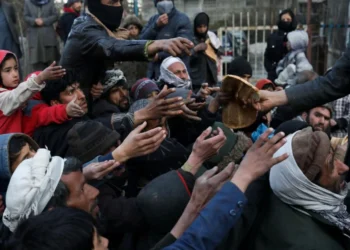
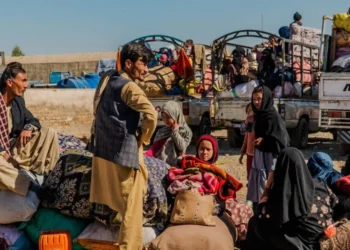
Many residents in the country are compelled by the lack of job opportunities to withhold education from their children to avoid hunger and send them to work.
Khair Mohammad, residing in Mazar-e-Sharif city, admits to keeping his 11 and 13-year-old sons out of school since the start of the academic year and sending them to work. He, a daily wage laborer, attributes his children’s lack of education to unemployment.
Khair Mohammad shares, “One of my kids was in 7th grade, and the other in 5th grade. Times are tough for us, and there’s no work. I used to work myself, and we could find some bread, but now there’s no work. This year, I instructed the kids not to attend school, or else we’d go hungry. Now, they both work in a Bolani kitchen, earning 3,000 Afghanis each per month.”
This Balkh resident says, “Everyone wants their children to be educated and succeed. But what can we do, fate has other plans. Now they only study a bit of religious education, they go to the mosque every morning and then come back to work. I’m illiterate myself, I’ve seen hardships in life, and I know education can provide a better life for my children. I hope things get better, and I can send them back to school.”
It’s worth mentioning that over the past three years, unemployment has been on the rise, and despite repeated promises, the Taliban have yet to create job opportunities for citizens. Currently, many families have prevented their children from going to school due to poverty and hunger.
You can read the Persian version of this news report here:
افزایش بیکاری و اثرات آن بر مکاتب؛ شمار دانشآموزان پسر در بلخ کاهش یافته است