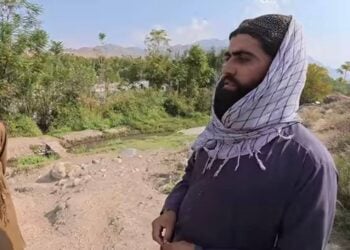
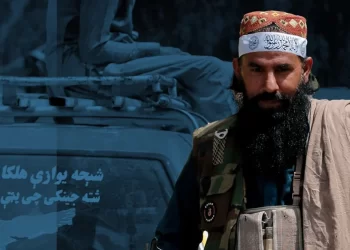
Abdul Hamid Khorasani, a Tajik-origin member of the Taliban originally from Panjshir province, who has been widely supported by Serajuddin Haqqani, has always been a prominent figure within this group, frequently appearing in the media and social networks. He is willing to grab the attention of both mainstream and niche media at any cost, hence he is always engaged in taking positions and expressing opinions on various issues. Sometimes, these expressions cause him headaches and lead Taliban authorities to pressure him to limit his activities. In the latest incident, Hamid Khorasani spoke out against ethnocentrism within the Taliban ranks and expressed support for non-Pashtun people’s protests against the Taliban in Badakhshan province. This stance has prompted Taliban authorities to consider disarming him and either completely remove him from the scene or further restrict his activities. The general perception is that his previous services to the Ministry of Interior and Taliban intelligence for nearly three years have shielded him from serious repercussions against his controversial positions. Taliban security and intelligence authorities fully acknowledge his role in this regard. Without his presence, it was difficult for Taliban security and intelligence apparatuses to identify and apprehend youths who were suspected of wrongdoing.
Khorasani was initially opposed to the Taliban, but it is said that during his time in the prisons of the previous government, he became inclined towards religious extremism. Particularly after meeting Zaher Daei, a Salafi cleric, he leaned towards religious extremism, which ultimately led to his joining the ranks of the Taliban.
Over the past three years, Abdul Hamid Khorasani has been actively involved in the identification and arrest of hundreds of youths from Panjshir and northern areas who were suspected of opposing the Taliban in any way. He combed the streets of Kabul and conducted raids in every alley and neighborhood. He is one of the main suspects in the capture and killing of Akmal Amir, a well-known commander opposed to the Taliban and his associates. For youths who are constantly under Taliban suspicion, the name Hamid Khorasani recalls brutality, ruthlessness, and insatiable greed. During this time, he participated in the arrest of youths, stormed people’s homes with tanks and cannons, and violated the privacy of families. Some Panjshiri intellectuals also ended up in prison as a result of his efforts and were subjected to harassment and persecution.
Taliban splinter groups seek to obtain weapons from suspected individuals during detentions and have a hand in selling these weapons. Therefore, Taliban fighters make every effort to arrest citizens on baseless charges and extort weapons or money from them. Fighting against armed opponents of the Taliban has become a pretext for Taliban members to engage in tormenting civilians and making money. Hamid Khorasani also operated in this manner, endeavoring to extract weapons or money from detainees in exchange for their release.
Abdul Hamid Khorasani was previously engaged in sensational displays and unlawful protests even before the resurgence of the Taliban regime. In those chaotic times, where everyone had carved out their island, he had carved out his realm of influence. At that time, Amrullah Saleh claimed that he was involved in extortion and coercion of ordinary citizens. Several years ago, he established an entity called the “Islamic Resistance Movement” and gathered a group of enthusiastic and armed youths. By participating in demonstrations and protests orchestrated by failed politicians, he would receive money from some of them. For a while, Ahmad Zia Massoud and Atta Mohammad Noor would pay him to work in their favor and publish their pictures on banners. Every year, on the anniversary of Ahmad Shah Massoud’s assassination, Hamid Khorasani would organize an armed caravan and roam the streets of Kabul, spreading fear and terror. People always complained about this, but there was no institution capable or willing to control the situation. At that time, no matter how much influential figures urged him to desist from these activities, he turned a deaf ear to them. Politicians who were dissatisfied with their share of power would pay him to stage these spectacles and showcase their power to the ruling elite. Some of these politicians would say that if these youths didn’t make noise in the streets, nobody would pay attention to them. This strategy seemed to be working for these politicians.
One of the clear aspects of Khorasani’s performance is that he lacks intellectual stability and mental coherence. Perhaps the pressures he faced during his imprisonment under Amrullah Saleh’s vice presidency have caused him psychological and mental disturbances. His emotional and passionate expressions indicate his troubled and restless mind. When Latif Pedram represented Badakhshan in parliament, he would take a staunch stance on certain national issues, provoking Pashtun nationalists, and some tried to discredit him. During those days, Abdul Hamid Khorasani, leading an armed caravan, escorted Pedram to the parliament building and warned his detractors not to harm him. However, shortly thereafter, when Khorasani escaped from prison and hid in the mountains of Panjshir, he made ugly accusations against Pedram and accused him of espionage. He also criticized the Taliban during the Republic and opposed the presence of Pashtuns in Panjshir, but later he wholeheartedly served the Taliban and rendered services to them for monetary gain.
He is also involved in the seizure of vehicles and properties of individuals who have fled the country. Khorasani currently resides in Haji Homayoun’s house, the owner of Khurshid Television, and is said to be the cousin of Amanullah Guzar. He resides in the Khair Khana area. Has turned part of this house into his sanctuary and created a place for accommodating his bodyguards and hosting guests. He has also confiscated Land Cruisers belonging to the former presidency’s first deputy and now uses them as his vehicles. Khorasani has repeatedly released Panjshiri and northern youths after their arrest and torture in exchange for money. Describing himself as always speaking out against corruption in the previous government, he is now deeply entrenched in corruption himself, busy accumulating money through various means. He, who once suffered economic hardship, is now affluent and has married numerous women.
The Taliban are vigorously suppressing critics and show no tolerance for dissent. They seem intent on completely neutralizing Khorasani this time. In the past, there have been one or two attempts to isolate him. Taliban intelligence knows that Khorasani cannot serve their administration any longer. Khorasani has played a significant role in identifying suspects and their whereabouts, cooperating with Taliban security and intelligence apparatus in apprehending and imprisoning youths. Now, the Taliban intelligence apparatus doesn’t require Khorasani’s further cooperation since they have had enough time to establish and expand their networks in Kabul and the provinces. While Khorasani’s assistance was crucial in the early days when the Taliban were unfamiliar with the region, the expiration date of such individuals has passed. Taliban intelligence has managed to infiltrate its networks into various regions of Afghanistan. Apart from the inherent violence and discord within ideological groups, whenever these groups are liberated from fighting external enemies, they start internal purges and eliminate internal rivals under various pretexts. Nonetheless, some analysts believe that Khorasani’s criticism of the Taliban’s ethnocentrism is a ploy to deceive the public and regain his credibility among the people, aiming to restore his lost popular support base.
If Abdul Hamid Khorasani’s activities are truly prevented, the youth of Panjshir and northern Kabul will breathe a sigh of relief. Until now, Khorasani has overly exerted himself in the pursuit and punishment of the people in these areas, plunging numerous families into the depths of sorrow and grief. During a time when Khorasani had more authority within the Taliban regime, the arrest and imprisonment of Panjshiri and northern youths in Kabul occurred more frequently than it does now. People believe that this individual has had comprehensive and close collaboration with Taliban intelligence to create fear and terror among the youth of these areas. At the peak of his power, he even had personal prisons and would detain and interrogate citizens in these prisons before handing them over to the hellish Taliban intelligence.
You can read the Persian version of this analysis here: