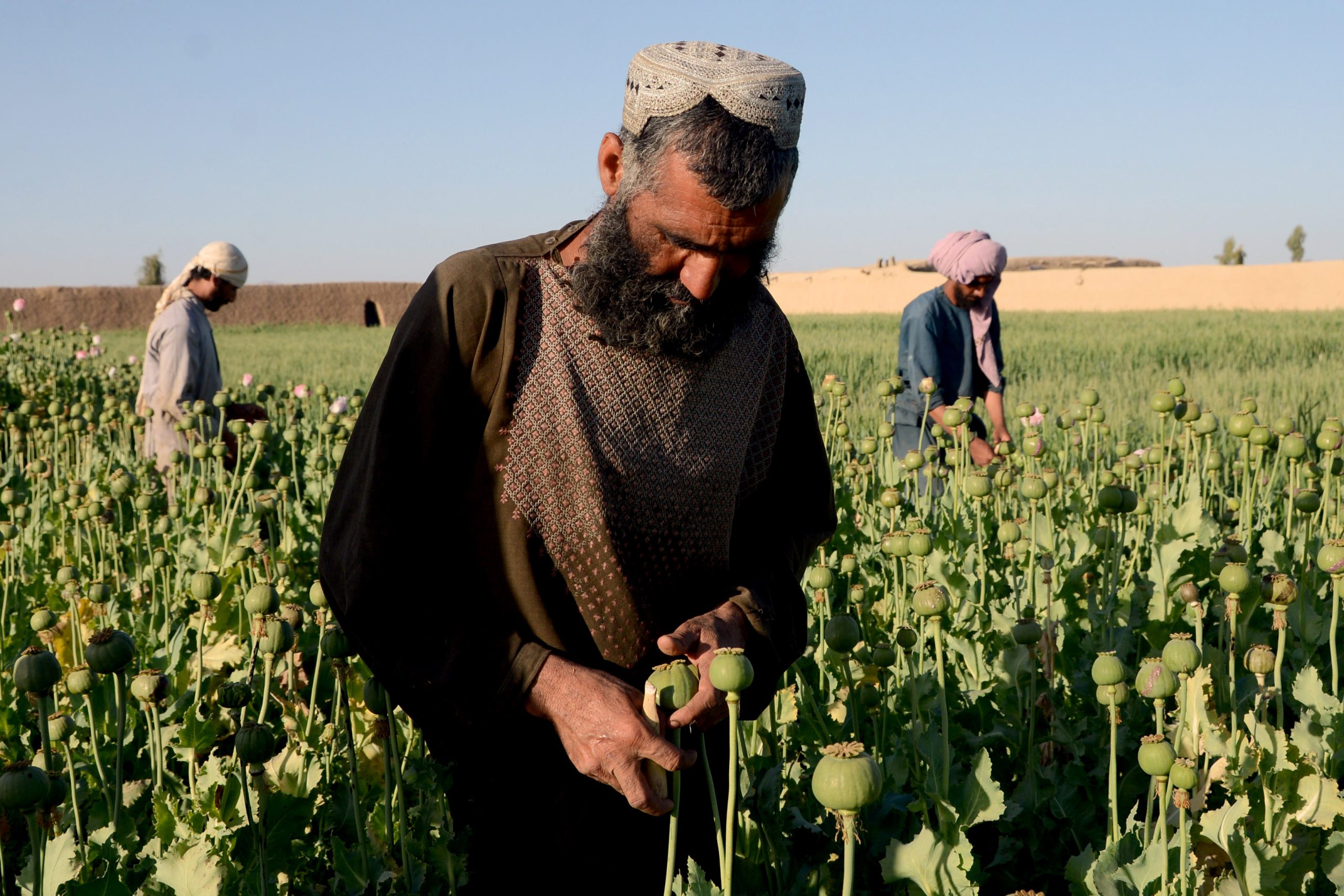
The latest United Nations Office on Drugs and Crime (UNODC) report revealing a 95% reduction in opium cultivation in Afghanistan has triggered substantial reactions. Some experts argue that the Taliban heavily rely on opium as their primary funding source, and given the absence of viable alternatives, such a steep reduction appears unrealistic. According to them, the Taliban have seized control of opium cultivation, procurement, and trade, leading to significant profits. Meanwhile, sources in the northeastern region of the country claim that not only has opium cultivation not decreased, but it has also seen a considerable increase. This occurs as a previous report from this organization highlights an unprecedented surge in the trafficking and production of industrial drugs, specifically methamphetamine. The UNODC states that industrial drug production demands minimal land and labor, making transportation and concealment easier compared to substances like opium.
The United Nations Office on Drugs and Crime (UNODC) has reported a 95% reduction in opium cultivation in Afghanistan in its recent findings. According to the report, the decrease in opium cultivation has led to an increase in its market price. The organization also added that the production and supply of opium have decreased from 6,200 tons in 2022 to 333 tons in 2023.
However, some sources claim that opium cultivation and trafficking have not only not decreased but have increased. One source, who wishes to remain anonymous, told the Hasht-e Subh Daily that this report was being released while the opium harvesting season concluded several months ago. According to these sources, satellite images that may have been used in the report did not assess the opium cultivation season in various provinces.
A source in the northeastern region of the country, who prefers not to disclose their name and province, spoke to the Hasht-e Subh Daily, stating: “This year, I’ve had a good yield of opium. The Taliban collected a tithe from this opium, and the people were allowed to do business. We sow the seeds in autumn, and by spring, it becomes green.” He further mentioned that this year, the price per kilogram of opium has increased significantly, ranging from two to three times in certain areas. According to him, currently, a kilogram of opium paste is being sold for 30,000 to 35,000 Afghanis, whereas last year it was priced between 5,000 to 10,000 Afghanis. This source added that the Taliban do not prohibit opium cultivation and trade under any circumstances. He believes that if the group were to ban opium cultivation, they would lose a significant source of their financial income.
Nevertheless, one of the farmers in Ghor province attributes the reduction in opium cultivation to the lack of water and increased plant pests. He states, “For the past few years, opium hasn’t yielded good results. It’s a dry year. Opium requires a lot of water, which is why it was cultivated much less this year. There were no obstacles, but it didn’t produce sap. There is a disease it’s susceptible to, that’s why there was less opium cultivation this year. If people had known the high prices, they would have surely grown opium on all their lands.”
However, Dr. Fayaz Gheyasi, a former Afghan diplomat in Tajikistan, also dismisses the United Nations report on the reduction of opium cultivation as unrealistic and an attempt to whitewash the Taliban in the West. According to Mr. Gheyasi, narcotics have been a significant source of financial support for the Taliban throughout the two decades of the war against the former Afghan government and international forces, and the substantial reduction in opium cultivation and production is unbelievable. This former Afghan diplomat adds that none of the professional and well-known drug traffickers have been apprehended or imprisoned by the Taliban so far, and the fact that the Taliban continue to receive a substantial tax from drug dealers in various provinces has raised numerous doubts and suspicions regarding the United Nations report.
Mr. Gheyasi emphasizes that the Taliban leaders are involved in opium trafficking, earning millions of dollars annually from its sales. According to him, the Taliban change their policies regarding opium cultivation and trafficking, and they control these activities. They are directly involved in drug trafficking and collaborate with drug cartels. Furthermore, they do not permit international observers to investigate these activities.
On the other hand, Khalid Pashtoon, a former representative of Kandahar Province in the Parliament of the previous Afghan Afghanistan, in response to the United Nations report, states that, as someone from the southwestern region of Afghanistan, he can roughly confirm about 50% of the findings in this report.
Mr. Pashtoon, speaking to the Hasht-e Subh Daily, says, “I can confirm a 50% reduction in opium cultivation across Afghanistan based on the information I have from my sources and friends. However, another 50% has been exaggerated by the United Nations and the Taliban to favor their cause.” According to him, the Taliban and their supporters are striving to monopolize opium cultivation, sales, and trafficking to gain greater benefits.
This former parliament member adds that the Taliban, their families, and supporters are currently cultivating opium in large hidden compounds, each containing multiple acres of land, in remote regions in the southwest of the country, keeping it out of the public eye. He mentions that the leadership of this group is involved in the process of converting opium into industrial drugs. Mr. Pashtoon states, “There is a bush called Oman that the Taliban use to convert opium into crystal, selling a kilogram for 200,000 Afghanis. Their experts are from Helmand Province, which has gained much notoriety these days.”
This former parliament member emphasizes that the buyers of opium paste include the Taliban and high-ranking members of the group at the ministerial, provincial governor, and senior commander levels. They store opium paste in their warehouses and sell it at high prices. According to him, the reduction in opium cultivation is not due to the Taliban’s commitment to the international community, but rather because this group is seeking higher profits, and, as a result, they have monopolized opium cultivation, sales, and purchases. Mr. Pashtoon adds that the Taliban’s storage facilities are currently filled with opium paste from previous years, and they sell it at inflated prices.
Previously, the United Nations Office on Drugs and Crime (UNODC) had stated in a report that the trafficking of crystal methamphetamine from Afghanistan and neighboring countries had increased twelvefold. This report was published on September 10 of this year under the title “Understanding Illegal Methamphetamine Manufacture in Afghanistan”. According to the report, the production of industrial drugs does not require much land or a large workforce, and it is easier to transport and conceal than opium-type drugs. The report states, “Afghanistan is a major producer of methamphetamines in the region, and a reduction in opium cultivation could lead to a shift towards the production of industrial drugs, from which various parties will benefit.”
Meanwhile, some countries in Central Asia have claimed that the drug trade in Afghanistan, under the control of the Taliban, is thriving. According to them, Afghanistan is one of the world’s largest producers of heroin and methamphetamine, accounting for approximately 80% of the global drug market.