
Iran has been a host to millions of Afghan refugees for a significant period. While certain sources suggest that there are over eight million Afghan nationals in the country, official figures dispute this, putting the number at five million as stated recently by Ahmad Vahidi, the Minister of Interior of the Islamic Republic of Iran. Regardless of these statistics, what remains undeniably clear is the treatment these Afghan refugees receive – marked by arbitrary deportation and denial of basic refugee rights. Although the mistreatment of Afghan refugees by the Islamic Republic is not a new phenomenon, recent times have witnessed a heightened intensity in these actions. Notably, the distressing shift is that not only is this maltreatment orchestrated by the Iranian government, but also by its citizens, traditionally known for their gentle demeanor, who have now risen against Afghan refugees.
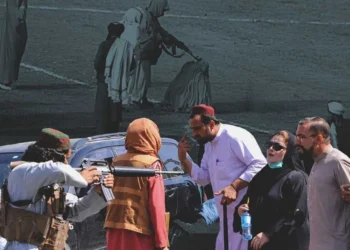
On October 6, a group of Iranian citizens took to the streets in the Iqbaliya neighborhood of Qazvin Province, protesting the increasing presence of Afghans. They chanted slogans such as “Cannons, tanks, firecrackers; Afghans must be expelled,” a phrase reminiscent of the “Women, Life, Freedom” movement which protested against the Islamic Republic, albeit with a different target: “Cannons, tanks, firecrackers; The mullah should be removed.” Shockingly, these protesters even attacked the homes of Afghan residents in the Iqbaliya neighborhood, vandalizing doors and windows with stones and sticks. Allegations have surfaced that a few months prior to this incident, Mikael Salmani, the mayor of the region, labeled Afghan refugees as a security and health threat, indicating the active involvement of the Iranian government. Moreover, media reports have highlighted instances where Afghans were physically assaulted by Iranians in various cities, leading to police intervention and subsequent arrests of the perpetrators.
Numerous factors contribute to the Islamic Republic’s mistreatment of Afghan refugees, with one of the primary reasons being Iran’s economic vulnerability resulting from international sanctions. Iran has been under economic sanctions imposed by Western governments and institutions, especially since 2000, owing to tensions created by its proxies in the Middle East. If these sanctions had been effective, Afghans might not be facing the dire situation they are in today.
Two significant factors can be identified in this context:
1- Covering up Failures
There exists a profound and seemingly insurmountable gap between the Iranian people and their government, exemplified by events such as the tragic killing of Mahsa Amini by the Irshad Police, widespread street protests, and the formation of the Women, Life, Freedom movement. The emerging wave of “anti-Afghanism” in Iran may well be orchestrated and guided by the Islamic Republic. It is implausible for citizens who are unable to voice their legitimate demands due to fear of repression from the government to take to the streets to expel Afghans, whose presence is not inherently harmful. If the Islamic Republic is not directly leading this anti-Afghan sentiment, it is certainly aligning itself with it, evident in the absence of a clear reaction from the government. Participating in street protests in Iran is perilous and costly, often resulting in violence, arrests, and trials. Yet, the recent protest in Qazvin suggests a level of organization that aligns with the desires of the Islamic Republic. It is worth noting that Afghan refugees have generally held positive perceptions of Iranian citizens, but fear and panic accompany them when it comes to interactions with the Islamic Republic and its police force.
To divert attention away from the acute domestic challenges that underscore its limitations, Iran may have deliberately fostered this wave of anti-Afghan sentiment, which has gained traction. For instance, on October 1, Armita Gravand, a 16-year-old student, fainted after being assaulted for not wearing the mandatory hijab at Shuhada Square station of the Tehran metro. She was rushed to Fajr Hospital in the east of Tehran. This incident mirrored the tragedy that led to Mahsa Amini’s death the previous year. Armita Gravand’s ordeal alarmed the Islamic Republic to such an extent that Maryam Lotfi, a reporter for Shargh Daily, who visited the hospital to prepare a report, was detained for a day before being released. The Islamic Republic hastily presented Gravand’s parents before state media cameras in an attempt to counter the reports from the people and unbiased media outlets. This incident gained significant international media coverage and elicited strong reactions from human rights organizations and governments globally.
2- Dealing with the Taliban
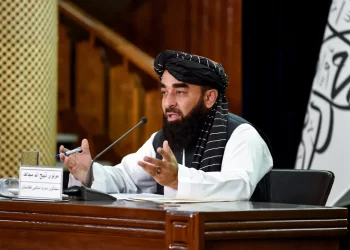
The Islamic Republic of Iran’s expulsion of Afghan refugees since mid-August 2021 has garnered a surprising response from the Taliban. Strangely, the Taliban appear content with this expulsion, perhaps because the Afghans leaving for Iran are disillusioned with the Taliban’s oppressive regime, making them potential threats in the eyes of the Taliban leadership. The mass deportation of refugees provides the Taliban with an opportunity to target the soldiers of the previous government, often arresting and even killing them at border crossings. The Taliban’s silence on this issue seems to signify an acknowledgment of this claim.
While the Taliban vehemently opposed the Pakistani government’s expulsion of Afghan refugees and sought intervention from human rights institutions, they have yet to take a clear stance on the mistreatment of Afghan refugees in Iran. In contrast to Pakistan, where the government alone has acted against Afghans, both the Iranian government and its citizens have subjected Afghans to humiliation and deportation, worsening their plight.
If the current wave of anti-Afghan sentiment in Iran persists, the situation for Afghans is likely to worsen further. Even those with legal documents to stay in Iran face difficulties; they are denied bus or train tickets, forcing them to rely on costly, small, high-speed vehicles for transportation. Recent developments have seen the exclusion of Afghan students from some state university dormitories, a stark contrast to students from other countries who are readily accepted. The hurdles faced by Afghan refugees stem from this new wave of anti-Afghan sentiment.
The presence of Afghan refugees in Iran has historically been more advantageous than detrimental for the country. Afghans in Iran form a productive and capable workforce, willing to endure grueling labor for minimal wages, performing tasks that many Iranian citizens shun. In this context, the absence of Afghans could prove detrimental to Iran’s economy, labor force, and overall livelihood.
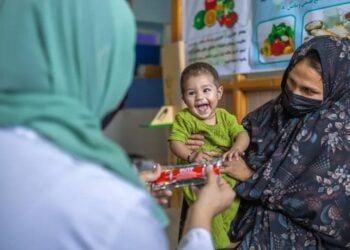
Surprisingly, by officially acknowledging the Afghan refugee population to be five million, Iran receives substantial aid from international organizations. Paradoxically, these Afghans, even those with valid residence documentation, are deprived of essential services such as banking and telecommunication. While Iran could easily organize the Afghan population by distributing ID cards, it refrains from doing so. This calculated decision, however, serves Iran’s security and economic interests. Reports suggest that Iran deliberately avoids granting residency documents to Afghans, as their legal presence would necessitate shared responsibilities between the government and the refugees. Without such documents, the government can maintain control over the refugees, ensuring their compliance and low demands. This situation persists because the Islamic Republic of Iran prefers to keep Afghan refugees in a vulnerable, obedient state; legality would empower them to voice their concerns, potentially leading to immediate expulsion due to their currently illegal status.