Mullah Muhammad Omar, the founder of the Taliban, was an uneducated and uninformed Mullah who taught children in one of the remote areas of Kandahar before founding the group. Moreover, he did not have a charismatic personality, nor did he benefit from the knowledge, eloquent expression, or achieve a great victory in his lifetime.
It is said that he participated in the wars against the Soviet Union for a while and was wounded, causing him to lose one of his eyes. His hardcore followers say that he was so brave that he pulled his injured and bleeding eye out of his skull and threw it away. The story of his fighting against the Red Army is likely to have been made up by his endorsers. The main question is, what happened when such a person suddenly became the center of power in Afghanistan and “Amir al-Momineen”?
Mullah Omar’s friends in the Taliban group attribute his becoming a leader to divine factors. Recently, in a gathering held by the Taliban on the occasion of the death anniversary of Mullah Omar, senior Taliban officials, while delivering speeches, told stories about the erudition of Mullah Omar. Taliban’s Defense Minister Mullah Yaqub Mujahid, while talking about his father, said that he had been chosen by God to be a leader. Another speaker said that when more than a thousand mullahs pledged their allegiance to Mullah Omar, the roosters of Kandahar sang a song to welcome the event. There are many such stories among the Taliban, and we have only been able to access a small part of them through the media.
These stories did not happen after Mullah Omar’s death; during his lifetime, similar stories were shared among his followers also. Mullah Ehsanullah Ehsan, one of the Taliban commanders, who was killed early in the north of Afghanistan, was said to be the first person to call the leader of the Taliban “Amir al-Momineen,” and then this nickname became popular. In a conversation with a delegation of Pakistani Mullahs who came to Afghanistan, Mullah Ehsanullah claimed that the emergence of the Taliban was followed by an inspiration that some religious disciples dreamt of: “One of the caliphs of Sheikh Muhammad Ibrahim Mujjadidi, the owner of a famous mosque in Kabul and was arrested and killed at the beginning of the communist rule, dreamed that Islam came to Rabbani, Massoud, and Hekmatyar and asked them to defend and guard it, but they all apologized for this. After that, Isla, with the same beautiful face, went to a student in one of the religious schools and asked for his support. That student offered him his neck and said that he was ready to sacrifice for the sake of Islam. Islam said that it needed his sacrifice. These good pieces of news led to the formation of Tehreek-e-Taliban” (From the dream of the Mullah to the Emirate of Believers, Mawlawi Hafizullah Haqqani, p. 102).
The details of the inception and expansion of the Taliban group in the 90s, as well as the story of its return in August 2021, have often been associated with ambiguity and complexity. Even though many books have been devoted to the research of this group, there are still some realities yet to be known. One of those cases about which there are many stories and hadiths is the incident of Mullah Omar becoming the leader and Amir al-Momineen.
Ahmad Faluddin, a reporter for Al Jazeera Qatari TV, wrote a book about the Taliban group and its founder called “Hajar al-Arze” and published it after the Taliban’s victory. The author of the book is a supporter of the Taliban, and therefore, throughout his book, he has not raised any words against the official narrative of the Taliban. However, to shed light on the story of Mullah Omar becoming Amir al-Momineen, I am quoting a story from the mentioned book.
At the end of March 1996, after the Taliban captured Kandahar and its surrounding areas, Tehreek-e-Taliban invited 1,200 mullahs to come to Kandahar. Men with long beards and turbans flocked to Kandahar from various regions to decide the future of Afghanistan. Several questions had to be answered in this Mullahs-run grand Meeting (Jirga): Is it legal to declare Jihad against the government of Burhanuddin Rabbani, who holds the power in Kabul? Who should issue this fatwa? What is the ruling on women’s education and work from the perspective of Islam? Days passed one after another, and the Jirga underwent long discussions and debates, but none of the 1,200 mullahs could reach a single result.
Mullah Omar was thinking about how to unify the mullahs of the Jirga and what tools to use to unite them on a single promise. He found himself thinking that a few kilometers away from the venue of the jirga, there was a cloak and a robe in a golden box, and he could use them to achieve his goal.
After negotiating with the guardians of the “Mubarak Kherqa” (cloak), Mullah Omar managed to enter the pilgrimage and get the cloak. Shah Wali, who is aware of the cloak, told the New York Times: “When Mullah Omar entered the pilgrimage and his eyes were caught by the cloak, he was trembling. When he wanted to pray, he made a mistake in identifying the Qibla. Shah Wali turned his face towards Mecca.
Mullah Omar took the cloak and asked the people through “Sadai Shariat” radio to come to see the cloak of the Prophet of God. People came from various cities to see the cloak. It is believed that the robe belongs to the Prophet of Islam, and it was gifted by the Emir of Bukhara to Ahmad Shah Durrani. In more than 250 years, this garment has only been pulled out of the box three times. Once, when Amanullah Khan wanted to prepare the tribes for war, the second time when cholera was breaking out in Kandahar in 1939, and the third time was in 1996 at the hands of Mullah Omar.
On the morning of April 4, 1996, Mullah Omar appeared from the top of a building, and all the Mullahs participating in the Jirga were looking at him. While wrapping himself in the robe of the Prophet of God, he gave a speech, then held the robe up in his hand for all to see. Screams arose from everywhere, and those present began to cry. Some of the attendees raised their turbans or hats in an effort to have their clothes blessed with the clothes of the Prophet of God. The people in this gathering chanted Mullah Omar’s name aloud: “Amir al-Momineen! Amir al-Momineen!” From that day onwards, Mullah Omar was nicknamed “Amir al-Momineen”. Before that, only several Mullah Omar’s relatives called him “Amir al-Momineen”, but after a large number of people in this gathering chanted “Amir al-Momineen” while wearing the robe of the Messenger of God, he officially became Amir al-Momineen.
The sudden appearance of Mullah Omar is due to many factors. Certainly, foreign and intelligence factors played an effective role in Mullah Omar’s growth, whereas other factors cannot be overlooked. During the two decades that he was the leader of the Taliban, legends were attributed to him to help him manage his organization without a headache. Although it is said that during Mullah Omar’s secret life after 2001, he was cut off from external events and did not have much control over the situation, he was certainly known as the spiritual leader of the Taliban until the last moments of his life, and no one has the right to deviate from his orders.
The strategists who brought the Taliban to the stage nearly thirty years ago had a clear understanding of Afghan society. They had realized that the country’s residents, due to ignorance and illiteracy, cultural poverty, lack of critical thinking, and restrictions on superstitions that spread in the name of religion, may easily fall prey to metaphysical legends and believe fake scenes. They knew that the people of Afghanistan could be manipulated by religious slogans and occult fairy tales.
According to historical reports, when the heads of the tribes appointed Ahmad Shah Durrani as their patriarch during a ceremony, they did so in a completely spiritual and religious atmosphere. A person named Sabershah Kabuli, who was one of the famous followers of the Tariqa at that time, installed a stalk of wheat on Ahmad Shah’s hand, and in such an atmosphere, Durrani became the king. It seems that the Taliban scriptwriters, during the days of Mullahs’ pledge of allegiance to the Taliban in the spring of 1996, had a partial view of Ahmad Shah Abdali’s story and probably followed it.
Now that the Taliban have achieved victory, they need to coerce the people who are not members of their group into accepting their narratives about religion and the world. They believe that storytelling and the creation of metaphysical narratives are one of the shortcuts to subjugating the masses. All this emphasis of the Taliban on the spiritual status of Mullah Omar demonstrates that the Taliban are still in need of Mullah Omar to consolidate their narrative. The normal people of Afghanistan are unable to distinguish between right and wrong and have a critical approach to different narratives. Such narratives are made to appeal to the masses and can easily dominate people’s thoughts.
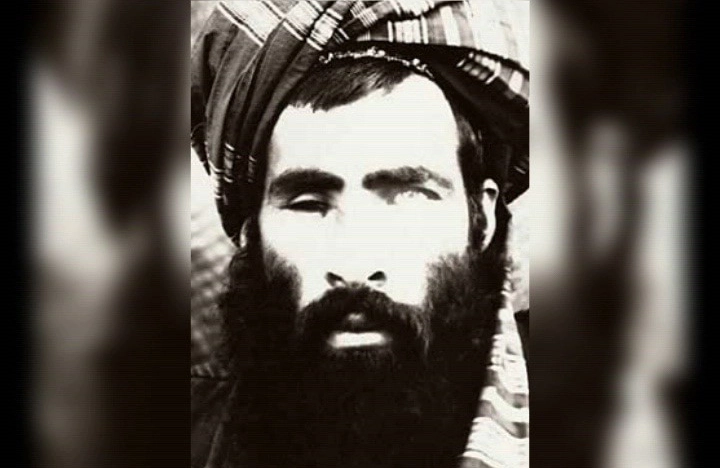
Mullah Omar was a mysterious, aloof, and reclusive person and was rarely seen in gatherings. He considered photography and filming forbidden, and thus, only one authentic image of him remained in his entire life. Mullah Omar’s mystery paved the way for the spread of rumors and legends among his followers, thus making him a holy man. Mullah Hibatullah Akhundzada, the current supreme leader of the Taliban, is also trying to create an aura of sanctity and ambiguity to his personality by following Mullah Omar, as he is afraid of his image being spread by the media.
The non-appearance of Mullah Hibatullah in the media is also due to security concerns. The Taliban think the leader’s inaccessibility has the advantage of increasing his prestige and greatness among the followers, especially if that leader belongs to an organization that is individual-oriented and has all the qualifications and power to be concentrated in the hands of one person. Such organizations need powerful leaders to keep themselves from falling apart.
Sometimes, some experts who are concerned with reforming and improving society and seek to find shortcuts and low-cost ways to put the country on the trajectory of development and evolution, suggest that the right way to deal with extremism and violence is to turn to Sufi thoughts and ideas. Initially, it seems acceptable, but if we examine the case of the Taliban, we find that a large part of the Taliban forces is affiliated with the Sufi dynasties and caliphs of the Tariqa, which not only has caused a decrease in their violence and extremism, but this group has surpassed others in terms of violence. Perhaps the only group that has competed with the Taliban in the spread of violence is the Islamic State-Khorasan (ISS-K). According to this point, it can be claimed that Sufi’s thoughts do not yield useful results in the mirage of Afghanistan. This backward land is susceptible to any thoughts and quickly leads to destruction and pollution.