Several residents of Lashkargah, the capital of Helmand province, say that when the Ahmadshahi Mina township was established, they were recognized as eligible to receive a plot of land to build a house, but have now been denied residential plots. According to them, a man named Raz Mohammad Salehi, who has taken charge of the township’s distribution plan, interferes in the land distribution process with the backing of the Taliban governor, the Taliban’s security commander, the mayor, and several other Taliban officials, and asks applicants to give up part of their land. Meanwhile, documents obtained by the Hasht-e Subh Daily show disagreements among the Taliban’s Complaints Review Committee, the representative of the plan, and a number of ownership claimants over how plots are distributed, the validity of documents, and the share of holders of allotment deeds and payment receipts.
Several Lashkargah residents say that the Taliban governor, the Taliban’s security commander, the mayor, and several other Taliban officials in Helmand are taking back residential houses that were distributed to employees in the Ahmadshahi Mina township during the former government, through a man named “Raz Mohammad Salehi”.
These Lashkargah residents stress that Raz Mohammad Salehi now tells people who hold payment receipts that they have no rights. They say Salehi told them, “Your republic is finished, and you have no standing.” According to these residents, Salehi, in contrast, distributes half-plots to people who hold allotment deeds or other documents.
Helmand residents say Raz Mohammad Salehi is a civilian who enjoys the support of the Taliban governor and several other senior officials of the group. According to sources, Salehi also allocates a portion of the residential plots to these officials as their share and privilege.
This comes as the former government established a township named “Ahmadshahi Mina” in Helmand province in 2013 for civil service employees who did not own a home, and distributed residential plots to them so that they could build houses there. At that time, a large number of employees and teachers paid the cost of their residential plots, but a number of others could not pay for their plots because of economic hardship. One month later, two powerful local men named Raz Mohammad Salehi and Mohammad Dawood halted work on the township.
The affected people say that Salehi acts as an extortionist for local Taliban officials and holds no official post in the group’s regime.
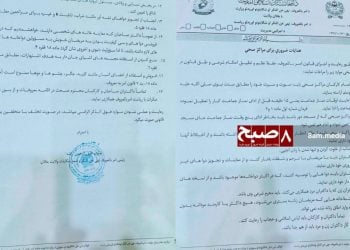
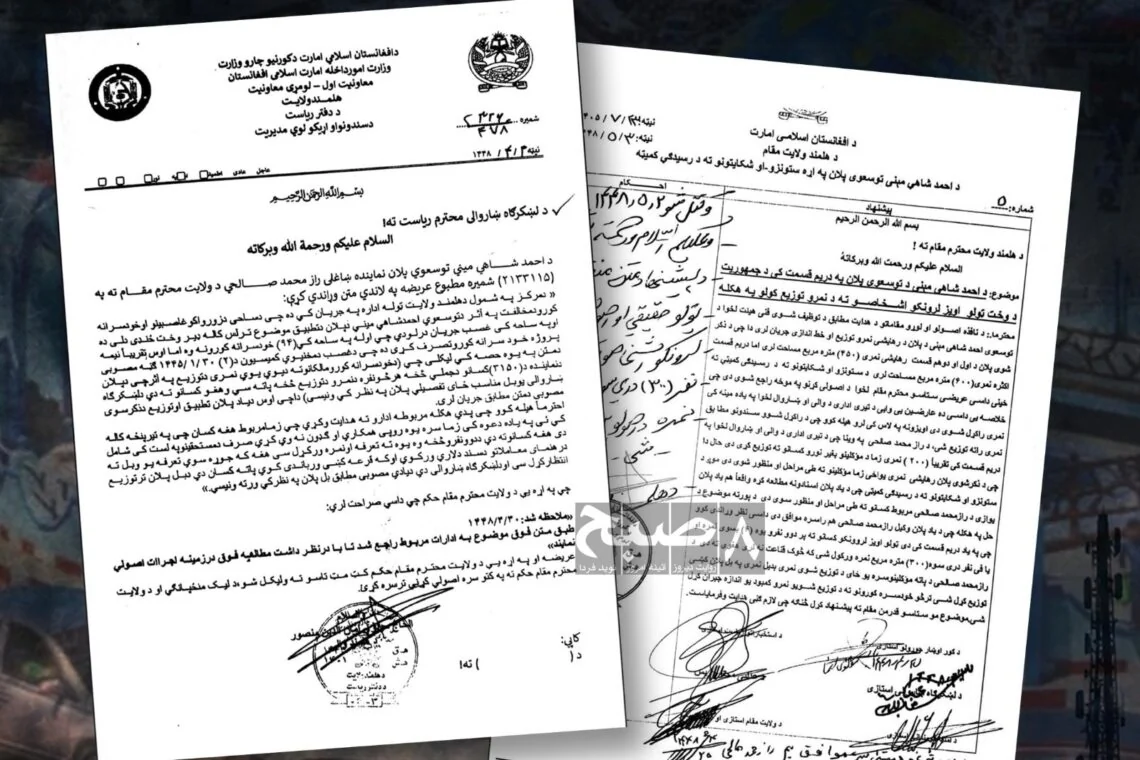
At the same time, letters that the Hasht-e Subh Daily has obtained about the development of this township show that the process of distributing land plots in the township faces disagreements among the representatives of the plan, the Complaints Review Committee, and several ownership claimants. In one of these documents, the office of the Taliban governor approved a proposal to distribute 300 square meters of land to each genuine and eligible holder of an allotment deed. In another letter, however, the representative of the plan has called for limiting the distribution of plots to several individuals and relocating the other claimants to an alternative plan.
According to the first document, the Review Committee for Problems and Complaints of the Ahmadshahi Mina Development Plan, after examining the documents, has announced that the residential plots in the first and second phases of this plan measure 450 square meters, while most of the plots in the third phase measure 600 square meters.
In its proposal to the Taliban governor in Helmand, the committee said that a number of people claim that, during the former government, plots in this township were allocated to them by the then governor and mayor, and that they also hold the related allotment deeds. They have demanded land based on their documents.
In the same proposal, quoting Raz Mohammad Salehi, the representative of the Ahmadshahi Mina development plan, it is stated that during the former administration, about 200 plots in the third phase were distributed to people other than his clients, whereas, according to him, the administrative procedures and approval of residential plots in this plan had been completed only for his own clients.
However, this document shows that the Taliban’s Complaints Review Committee, after examining the documents, has confirmed that the administrative and approval procedures for the plan in question were completed only for people connected to Raz Mohammad Salehi.
To resolve this dispute, the Taliban’s Complaints Review Committee in Helmand has proposed that all allotment deed holders in the third phase of the plan be given one 600-square-meter plot for every two people, or that 300 square meters of land be distributed to each person individually.
The proposal also states that those who do not agree with this approach can obtain plots in an alternative plan, together with the other “remaining clients of Raz Mohammad Salehi”. One of the letters from the Taliban governor’s office also confirmed this proposal and stated that 300 square meters of land should be distributed to each genuine and eligible individual holding an allotment deed.
But a second letter, sent by the head of the Taliban governor’s office in Helmand to the Lashkargah municipality, presents a different account of the dispute over the distribution of land plots. The letter states that Raz Mohammad Salehi claimed in a petition that, because of opposition from local strongmen, land grabbers and unauthorized construction, the implementation of the Ahmadshahi Mina township development plan has faced problems for more than a year. He said that initially there were 94 unauthorized houses in the area, but that now nearly half of the project has been taken over by unauthorized houses.
In his petition, the representative of the plan also cited Resolution No. 2 of the Taliban’s Land Grabbing Prevention Commission, dated 30/1/1445 in the Hijri lunar calendar (approximately 17 August 2023). According to the quotation included in this letter, people who are deprived of land as a result of distributing plots to the owners of unauthorized houses must be given plots in another suitable location within a detailed plan by the Taliban’s municipality in Lashkargah.
In another section of his petition to the Taliban governor’s office, Raz Mohammad Salehi demanded that people who, according to him, have had no financial involvement or participation in the land dispute over the past five years and have merely been placed on the list of eligible people be denied plots in the current section of the township. In another part of the petition, he proposed that one out of every two people receive a payment receipt and a land plot, and that the others wait until plots are distributed in the next plan.
This comes after several Kabul residents said that a businessman from Khost province, claiming ownership of 200,000 square meters of land in Parcel 2.2 of Kabul New City, had destroyed and seized about 200 residential plots and several other areas.
Note: The original text used the jerib (1 jerib = 2,000 square meters) and the biswa (1 biswa = 100 square meters), both converted to square meters.
You can read the Persian version of this report here:
شهرک احمدشاهی مینه لشکرگاه؛ چرا کارمندان پیشین از دریافت نیمی از سهم زمین محروم میشوند؟