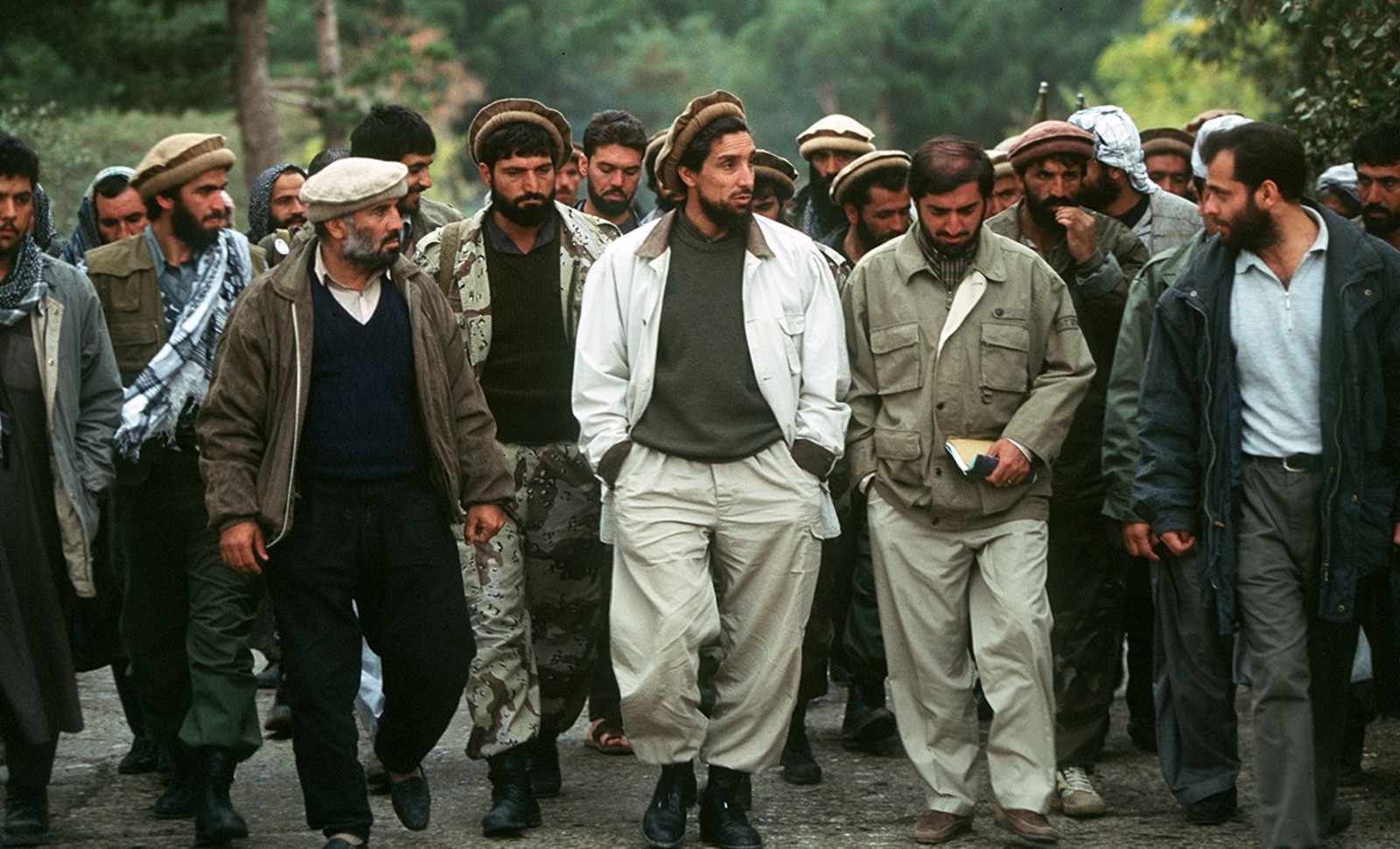
September 9th marks the anniversary of the assassination of Ahmad Shah Massoud, the charismatic leader of the resistance against the Taliban in the 1990s. With the resurgence of the Taliban in Afghanistan, Massoud’s legacy has gained renewed attention, underscoring the enduring relevance of his ideals. Discussing justice and equality in society serves as an indicator that these values are at risk, prompting the need to emphasize their significance. The extensive discourse surrounding Massoud’s life and career on social media and in foreign media outlets today underscores the precarious state of these values, making it imperative to invoke Massoud to underline their importance.
Recently, a viral video featuring Massoud’s speech seemingly describes the plight of individuals under Taliban control. In a friendly yet earnest tone, he emphasizes, “If a person possesses bread, water, and shelter, but finds himself imprisoned or devoid of dignity and authority, none of these comforts bring true satisfaction. Freedom, personal authority, and independence hold far greater value, enabling individuals to endure even poverty and hunger.”
The actions of the Taliban in recent times evoke Massoud’s warnings, intensifying our sense of his loss. In times of victory, individuals may boast of their accomplishments and honors, but challenging moments and significant setbacks expose the true essence of leaders, revealing their genuine character for all to see. Adverse days effortlessly unveil the authenticity of leadership claims.
It is regrettable that since Massoud’s passing, several claimants to leadership have exploited his reputation. Some capitalize on their familial ties to advance personal agendas, while others, concealing their corruption and ineptitude, assert alignment with Massoud. A third group seeks to employ Massoud’s legacy to undermine domestic rivals. The pivotal question is: To what extent do those who proclaim leadership in the Taliban opposition front and attempt to associate themselves with Massoud genuinely uphold the values he represented? Do these claimants truly qualify as Massoud’s followers?
One of Massoud’s standout attributes was his unyielding determination. Amidst the direst circumstances, when defeat seemed inevitable, he would emerge among his supporters with unwavering resolve, instilling hope and providing a clear vision to galvanize them into making history. He toiled ceaselessly, engineering unexpected turnarounds even in the direst situations to shift the tide in his favor.
In stark contrast, contemporary contenders readily succumb to their adversaries, espousing resistance and standing firm in their rhetoric but failing to translate these words into action. In August 2021, the Taliban swiftly overtook all of Afghanistan except Panjshir in a mere 10 days. Yet, those who claimed to follow in Massoud’s footsteps made no concerted effort to prevent the fall of cities and villages into the hands of the Taliban. During the Panjshir battle in mid-August 2021, we witnessed those who vociferously championed slogans like, “Is there a duelist?” fleeing earlier than others. Can such individuals rightfully regard Massoud as their role model?
Massoud believed in the significance of foreign support in both military and political struggles. However, he recognized that internal stability was equally vital. He understood that without establishing a firm foothold within the country, foreign nations would not heed his warnings about the dangers posed by the Taliban. Initially, during the early years of resistance, foreign powers exhibited limited interest in forming connections with Massoud’s Front. Yet, when they realized that Massoud could challenge the Taliban and undermine their authority, they dispatched delegations to northern Afghanistan to negotiate with him. At the outset of the Jihad, the Panjshir Front faced severe logistical and weaponry challenges. Through Massoud’s unwavering dedication and relentless efforts, the world gradually acknowledged the significance of his front, often sidelining the leadership of the Jamyat-e-Islami party. Conversely, today’s opposition leaders to the Taliban, who ostensibly consider Massoud their role model, place excessive reliance on foreign support, undervaluing the role of internal factors in the equation. Contrary to their media declarations, they pin their hopes on foreign intervention to persuade the Taliban to incorporate other ethnic and political groups into the political framework.
In the harshest conditions of Afghanistan, Ahmad Shah Massoud stood resolute, unwavering in his commitment to the cause. During the years of the jihad against the Soviet Union, he refused even to contemplate leaving for Pakistan. It was only after the Red Army’s defeat and the end of Najibullah’s regime that he ventured to Pakistan to engage in negotiations with Pakistani leaders and fellow jihadis. Massoud recognized that when soldiers sensed their commander’s absence, their morale to resist would waver. He did not just preach; he wholeheartedly practiced what he preached. When he spoke of resistance, he dedicated himself to the cause like no other.
However, the leaders and commanders claiming to inherit Massoud’s legacy have exhibited a stark departure from his example. During the Taliban’s onslaught on Afghan cities, they not only failed to stand by the people but also suffered a moral collapse by shamefully fleeing the country, seeking refuge in secure havens far removed from the people. This abandonment was not just a political and military failure; it was a betrayal of the trust placed in them. Consequently, millions of people living under the Taliban’s oppressive rule, despite their disdain for the regime, have grown disillusioned with the leaders who purport to be Massoud’s successors. These leaders are seen as indulgent, self-serving, and beholden to a close-knit circle, oblivious to the plight of the people.
In a country where the majority struggle to provide for themselves and their families, a leader’s simplicity carries profound significance. One of the secrets of success among early Muslim leaders during the inception of Islam was their simplicity and people-centric approach, in stark contrast to the prevailing aristocracy. Massoud, too, led a modest life, leaving no trace of worldly wealth. He mingled with the people, fostering a deep connection. Regrettably, his successors have used his name and reputation to amass millions of dollars, distancing themselves from the people and erecting opulent, exclusive enclaves. This raises a fundamental question: To what extent are those who currently boast of following Massoud and exploit his name to strengthen their positions willing to sit down with ordinary, struggling citizens and empathize with their hardships? A substantial portion of the funds that flowed into Afghanistan over the past two decades found its way into the pockets of these leaders who claim to emulate Massoud. This influx of wealth suddenly injected a sense of aristocracy into their ranks, alienating them from the people. A leader’s detachment from the people undermines their credibility over time and renders their pronouncements impotent in society.
One critical factor contributing to the downfall and ineffectiveness of leaders is their entourage of corrupt, opportunistic sycophants who lack a commitment to collective values. When leaders are surrounded by such individuals, their credibility inevitably erodes. The successors of Massoud fell victim to this perilous trap. Undoubtedly, genuinely effective leaders who have transcended such sycophantic circles can salvage their credibility. In contrast, corrupt, immature, and self-serving leaders tend to surround themselves with like-minded individuals who unconditionally endorse their decisions and refrain from criticism. Perhaps Massoud faced challenges in this regard, but his engagement with diverse social, political, and intellectual groups prevented his immediate circle from shaping his perceptions entirely. On the contrary, Massoud’s heirs were ensnared by exploitative, flattering, and avaricious advisors, who manipulated the leaders’ perspectives to suit their interests. While Massoud remained tirelessly active, forging coalitions and attracting new allies for his cause, his heirs not only failed to expand the resistance line but also accumulated a history of making adversaries and breeding aversion.
In the past two years, our compatriots, particularly those residing within Afghanistan, have endured a litany of hardships and calamities. The return of the Taliban has inflicted suffering and poverty upon the majority of the Afghan populace. The Taliban’s primitive and medieval approach to governance has transformed Afghanistan into an immense prison and a harrowing place of torment for its inhabitants, stripping dignity from over thirty million people. At such a critical juncture, Massoud’s absence is palpable more than ever before.
Unfortunately, those leaders who oppose the Taliban and simultaneously claim to follow in Massoud’s footsteps not only fail to embody his values but also display a lack of respect for Massoud’s principles and customs. They exploit Massoud’s name and reputation to bolster their standing in the eyes of the people, relying heavily on Massoud’s legacy while lacking his courage, resilience, righteousness, and piety. The harsh reality we confront is that with such leaders, the prospects of victory over the Taliban are exceedingly slim. These leaders have no alternative but to learn from the past, engage in self-critique and reform, and reassess their conduct. Only then might the people heed their words and follow their guidance with genuine commitment.