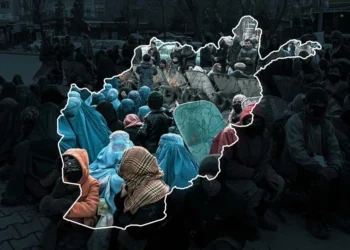
Afghanistan today is not facing a political crisis alone. It is caught in a far deeper crisis: the crisis of collective life itself. People living under the weight of Taliban rule, poverty, unemployment, fear, displacement, and the absence of any visible future need solidarity, trust, and social organization more than ever. Yet at precisely this moment, part of the country’s ethnic and political elite is once again chasing its own share of land, name, flag, and power, rather than thinking about how to save its people.
The issue is not that historical memory, geographical names, or cultural identities are unimportant. The issue is that no name, on its own, puts bread on the table, secures freedom, or pulls a society out of fear. The belief that changing the name and flag of a region will change the lives of its people is like the dream of a hungry man who goes to bed with an empty stomach and dreams of Qabuli Pulao piled high with tender meat and raisins. When he wakes, there is no pilaf, no meat, no raisins. Only yesterday’s empty pot remains, with a spoon that has long since grown tired of idleness. A politics that changes nothing but names, while failing to deliver bread, security, justice, or freedom, is nothing more than this dream of the hungry.
Afghanistan today is not in an ordinary predicament. The Taliban are not merely a political force. They are a public calamity. They have shut down girls’ schools, barred women from work and public life, silenced freedom of expression, pushed the economy to the edge of collapse, and forced society into fear and silence. This calamity has not fallen on a single ethnic group, language, or region. Its shadow stretches across all the people of Afghanistan.
Despite this, it is striking that some still insist the Taliban have brought security. But this is not security. It is only violence in a new form. The Taliban, as if doing the country a favor, have stopped the mass bombings, the street killings, and the terror attacks, and have now found other ways to make victims of the population: closing schools, erasing women, silencing dissent, running extrajudicial tribunals, deepening poverty, extinguishing hope, and turning society into a vast prison. A security built on fear, silence, and deprivation is no security at all. It is the quiet of the grave.
So what is our ethnic and political elite doing in the face of all this? Are they thinking about how to save the people? Are they working to build a broad civil, political, and humanitarian front against the Taliban? The answer is plain: no. Many of these same figures are once again using the wounds of the population as bargaining chips. Instead of freeing the people from Taliban captivity, they want to lock each ethnic group in its own cage and call it freedom.
This is not a new experience for the people of Afghanistan. During the civil wars, we saw how ethnic, factional, and regional slogans produced ruin rather than liberation. Each group, claiming to save the people, carved out its own territory, and ordinary citizens ended up as the principal victims. Repeating that same logic today, dressed in new names and more polished faces, is nothing less than a return to the same catastrophe.
One historical truth must not be forgotten. This is a land of peoples, languages, memories, mountains, plains, tribes, cities, and diverse identities. No power in this geography has ever built a lasting order by denying that reality. Ethnic colonialism has not worked in this land, and it never will. Every force that has tried to impose a single ethnicity, a single narrative, a single language, or a single center on this diversity has either met resistance or left behind a fragile order saturated with hatred.
From Genghis to Timur, and from Timur to Ahmad Shah, many powers have crossed this soil or built states on it. But history shows that political durability here has been possible only when power did not collide with the indigenous structure of society. Whenever rulers tried to eliminate ethnic groups, push them to the margins, or dissolve them into an imposed identity, the outcome was not nation-building but rebellion, distrust, and collapse. Afghanistan cannot be built on the logic of ethnic dominance. This land can only escape the cycle of war and repetition by embracing pluralism, ensuring justice among ethnic groups, and treating all citizens as equals.
The problem in Afghanistan has never been confined to borders and names. The real problem is that we built a state but never built a nation. Systems came and went, but the relationship between the people and power never changed. The citizens of Afghanistan have repeatedly been cast as subjects, followers, fighters, victims, refugees, or tools of political mobilization, but have rarely had the chance to be recognized as equal citizens. That is why each time a system collapsed, society was thrown back into helplessness.
The Taliban are the violent and unmasked face of this same historical crisis, but the crisis of Afghanistan runs deeper than the Taliban. If the same old conceptions of power, ethnicity, religion, women, the state, and citizenship survive their rule, the country will enter another cycle of repetition. The real danger is that some may arrive in the name of salvation only to build, once again, a structure that does not rest on the people. A structure that, before delivering justice, becomes tangled in claims to shares, the rivalry of inner circles, and the division of power.
All ethnic groups in Afghanistan share responsibility for confronting the Taliban. Tajiks, Hazaras, Uzbeks, Turkmens, Pashtuns, Baluchs, Nuristanis, Pashais, Aimaqs, and others are all victims of a shared catastrophe. No ethnic group can be liberated through poverty. No language can find dignity through the closing of schools. No religion can hold its head high through the silencing of women. No region can find a future under the rule of fear.
Within this picture, the Pashtun community carries a particular responsibility. Not because the Taliban represent all Pashtuns, but because the Taliban have come to dominate the country under Pashtun names and symbols, and the moral and political cost of this falls on the shoulders of millions of poor, marginalized, and powerless Pashtuns. The majority of Pashtuns share neither in the palaces of the Taliban, nor in the trade of power, nor in intelligence dealings. They too live in poverty, unemployment, illiteracy, and fear. But unless a clear and collective voice rises from within the Pashtun community against the Taliban, the charge of harboring Taliban sympathies will continue to weigh on them, and the distance between ethnic groups will only grow wider.
The central question is this: Is this situation the determinism of history or the foolishness of the elite? History has left many wounds: colonialism, imposed borders, foreign intervention, despotic governments, civil wars, and the Taliban are all part of them. But no history forces people to live in hatred forever. What turns the wound of history into the prison of the present is the foolishness and self-interest of an elite that fears the awareness of its own people.
In such circumstances, the public duty of the people of Afghanistan is to refuse to be fooled by the ethnic marketplace and to stop handing their fate back to dealmaking elites. The salvation of this land will not arrive through foreign conferences, political communiqués, or the slogans of worn-out leaders. The people themselves must work toward unity and the creation of coherent social structures, from the neighborhood, the village, the city, the university, the mosque, the school, the bazaar, and civic gatherings.
The real enemy of the people is not their ethnic neighbor. The real enemy is the Taliban, who have taken life hostage; the elite that trades in ethnicity; the despotic mindset that refuses to recognize the human being as a citizen; and the colonial mentality that turns the people into instruments of larger games. Unless people draw closer to one another from within, build social trust, and weave civic networks across ethnic lines, every new wave of opportunists will exploit this same fragmentation.
This is why building a social front on Afghan soil is of vital importance. This front must not be merely a front of guns, slogans, or political leaders. It must be a front of awareness, trust, solidarity, and social organization. From village to city, from mosque to university, from bazaar to neighborhood, the people must forge bonds founded not on ethnicity, language, or region, but on shared suffering, shared freedom, and a shared future.
The people of Afghanistan must by now understand that any transformation steered entirely from outside almost always carries hidden interests with it. The experience of recent decades has shown that imported change, however attractive its initial slogans, tends to produce dependency, corruption, proxy war, and a repetition of catastrophe. No external power gifts freedom to a nation without cost and without self-interest.
Afghanistan needs free human beings more than new names. It needs justice more than a new flag. It needs trust more than a new map. A nation is built when people move from ethnicity to citizenship, from hatred to solidarity, from fear to awareness, and from blind obedience to the elite toward collective responsibility. The future of this land must not be imported, must not be imposed, and must not be traded in closed-door meetings. It must be built from the depths of the people’s suffering, wisdom, resistance, and shared will.
You can read the Persian version of this analysis here:
از دکانداری قومی تا ضرورت جبهه اجتماعی