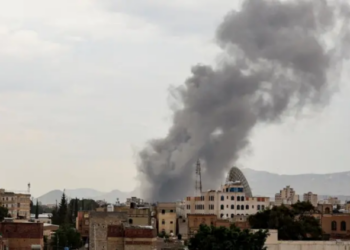

Tensions between the Taliban and Pakistan continue, with airstrikes and military clashes intensifying in Nangarhar, Paktia, Khost, and Paktika. Residents of Kabul say they cannot sleep at night due to fear of Taliban anti-aircraft fire and Pakistani warplanes, living in a state of constant dread. Both the Taliban and Pakistan hold each other responsible for the attacks and claim to have inflicted heavy casualties on one another. The Taliban claim to have seized checkpoints and shot down Pakistani drones, while the Pakistani military reports that hundreds of Taliban fighters have been killed and the group’s equipment destroyed. Meanwhile, Taliban-controlled media outlets are spreading false and fabricated news in an attempt to portray the situation in the group’s favor. Security experts warn that the Taliban lack the capacity to operate military equipment left behind by the previous government, and that Pakistan is attempting to destroy that equipment through bombardment.
Some Kabul residents shared video footage with the Hasht-e Subh Daily last night, saying they are deeply alarmed by Pakistani warplanes and Taliban anti-aircraft fire, and that sleep has been robbed from their eyes. According to Kabul residents, Taliban fighters have caused widespread fear among the population through their anti-aircraft fire, and many people are worried they could be struck by Taliban rounds.
This comes even as Inayatullah Kharazmi, spokesperson for the Taliban’s Ministry of Defense, and other Taliban spokespeople stated last night that they had conducted air defense operations against Pakistani warplanes and urged people not to be concerned. Security experts, however, note that while the Taliban have prepared air defense systems, they appear to be facing a shortage of ammunition as well.
The Taliban also announced last night that fighting had broken out in Torkham. The group stated that its fighters had targeted key Pakistani military positions using heavy and laser-guided weapons.
The group continues to disseminate misinformation and fabricated reports through its spokespeople and controlled media outlets. Last night, following the roar of Pakistani warplanes and Taliban anti-aircraft fire, some Taliban-controlled media declared that Taliban drones had struck Islamabad and Peshawar in Pakistan.
One such outlet wrote: “Unmanned aircraft of the Afghan forces have begun strikes on Islamabad and Peshawar.”
Meanwhile, Besmillah Taban, a security researcher and former Director General for Combating Criminal Offenses at the Ministry of Interior Affairs of the previous government, told the Hasht-e Subh Daily: “The Taliban not only lack the necessary capacity to manage and operate the military equipment left over from the Republic, having sidelined the trained forces who knew how to use it, but they were also entirely unprepared for a situation like this. They assumed Pakistan’s strikes would be limited to targeting TTP gathering points, and had focused all their efforts on protecting those.”
The security researcher added, “Now that they find themselves in this situation, they are merely trying to give people a false sense of air defense by mounting DShK and PKM machine guns. If Pakistan’s attacks continue, the Taliban will be unable to procure new ammunition, and even beyond that, we will not see anything more than small arms fire against Pakistani aircraft. Furthermore, targeting Taliban supply depots and command centers has created severe disarray at various levels of the group, and their current efforts are focused more on protecting their leadership than on the people of Afghanistan or state infrastructure.”
Continued Fighting and Taliban Statements
Hamdullah Fitrat, deputy spokesperson for the Taliban, described the Pakistani military as a “savage regime” and stated that in Saturday night’s strikes on Paktia and Nangarhar, three people were killed, including a woman, and three others were wounded. He added that Pakistani drones targeted civilian homes in the Ghanikhel district of Nangarhar, destroying four houses. Fitrat wrote on X yesterday that the second strike was carried out in Dand Patan, Paktia, and involved a rocket. He said the victims of that attack were also civilians.
Taliban-controlled national television, RTA, also reported on Saturday night that at least 52 civilians, including women and children, were killed as a result of Pakistani strikes. According to the report, at least 66 others were also wounded.
Separately, the Taliban’s Ministry of Defense announced yesterday that, as part of what it called “retaliatory strikes,” it had conducted offensive operations against Pakistani positions in Nangarhar, Paktia, Khost, and Kandahar. According to the ministry, at least 32 Pakistani soldiers were killed and dozens more wounded as a result of these strikes. The Taliban also claimed that several Pakistani military facilities had been damaged.
Inayatullah Kharazmi, spokesperson for the Taliban’s Ministry of Defense, stated on Sunday, the 10th of Hoot, in a post on his X account, that the strikes were carried out by the group’s 203 Mansouri, 201 Khalid bin Walid, and 205 Al-Badr Corps. According to him, Taliban fighters during the operation “seized one tower and four large Pakistani checkpoints” and “shot down two unmanned aerial vehicles and fully destroyed several military assets.”
Taliban Casualty Figures Reported by Pakistan
Attaullah Tarar, Pakistan’s Minister of Information, claimed that as part of the ongoing operation known as “Azm-ul-Haq,” 415 Taliban fighters have been killed and more than 580 wounded to date. He wrote on X yesterday that 182 Taliban outposts had been destroyed and 31 others seized during the operation. He also added that 185 Taliban tanks, armored vehicles, and artillery units had been destroyed, and that various areas of Afghanistan had been targeted in airstrikes.
The Pakistani government also issued a statement announcing that Prime Minister Shehbaz Sharif had convened a high-level security meeting on the situation in Afghanistan and the region. At the meeting, senior officials “carefully assessed the situation in Afghanistan.” According to the statement, security officials presented a detailed briefing on the domestic security situation and also informed the Prime Minister about defensive and security arrangements. The meeting was attended by the Chief of Army Staff, the Minister of Interior, the Minister of Planning and Development, the Minister of Information and Broadcasting, the Minister of Justice, and several other officials and cabinet members.
The Agence France-Presse (AFP) also reported that Pakistan targeted Bagram Airbase in Afghanistan as part of its continued airstrikes.
Taliban airstrikes are ongoing, and after five days, no mediation between the two sides has taken place, with all eyes turning toward Iran and the Middle East. In the meantime, Pope Leo XIV, the leader of the world’s Catholics, expressed concern over the ongoing tensions in his weekly address and called on the Taliban and Pakistan to enter into dialogue immediately. Pope Leo also urged countries around the world to choose the path of dialogue over war.
The Pope also said: “Stability and peace are not built through mutual threats or with weapons that bring destruction, pain, and death, but only through reasonable, sincere, and responsible dialogue.” He added: “Faced with the possibility of a catastrophe of vast proportions, I appeal with all my heart to the parties involved to assume their moral responsibility to halt the cycle of violence before it becomes an irreversible abyss.”
You can read the Persian version of this report here:
استبداد طالبان و حملات پاکستان؛ مردم افغانستان در آتش جنگ و اخبار جعلی گرفتارند