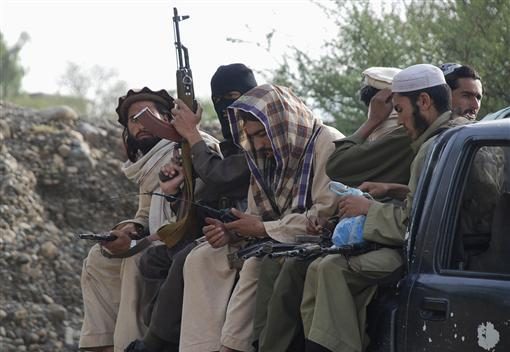
A recent attack by the Tehrik-i-Taliban Pakistan (TTP) on a security outpost in North Waziristan resulted in the loss of several Pakistani soldiers. Prime Minister Shahbaz Sharif and General Asim Munir, the Chief of Army Staff of Pakistan, attended the funeral of the fallen soldiers, personally carrying their coffins and vowing revenge. In response to this attack, the Pakistani military launched airstrikes in the regions of Paktika and Khost, reportedly resulting in civilian casualties. The Taliban, in turn, targeted Pakistani border outposts with artillery fire, claiming the life of one Pakistani soldier. The Pakistani government formally attributed the attack to Afghanistan and alleged that it targeted fighters affiliated with Hafiz Gul Bahadur, a prominent TTP commander. However, Abdullah Shah, a loyalist to Gul Bahadur, claimed in a video that they are currently not operating in Afghanistan but in South Waziristan.
Pakistani authorities did not confine themselves to acknowledging the airstrikes on Afghan soil but also issued stern warnings to the Taliban. Shahbaz Sharif stated that his country would not tolerate any form of cross-border terrorism. While the Taliban hoped that with his return to power, the severity of the TTP issue would diminish, Khawaja Asif, Pakistan’s Defense Minister, cautioned that if the TTP continued to operate in Afghanistan, they would once again target this country’s soil. Jan Achakzai, a former official from Balochistan, went a step further, suggesting that if the TTP persisted in targeting Pakistan, its forces would enter Afghanistan, seize the Wakhan Corridor, and link up with China. Amidst all these reactions, the stance of Pakistan’s Foreign Ministry is noteworthy and deserving of contemplation: “Some elements among the powerbrokers in Afghanistan actively support the Tehrik-i-Taliban Pakistan (TTP) and use them as proxies against Pakistan.”
If we scrutinize Pakistan’s Foreign Ministry’s response, several questions arise, which attempts will be made below to address:
- Why do the Taliban utilize the TTP as a proxy force against Islamabad?
- The Taliban, who have returned to power quite smoothly, expected to be recognized more swiftly than in the past, as they claim territorial dominance and lack any rival forces across the geography. However, this expectation was primarily directed towards Pakistan, as it is seen as yesterday’s and today’s supporter of the Taliban. More importantly, Islamabad has historically shown audacity and recognized the Taliban and then allied itself with Saudi Arabia and the United Arab Emirates. But this time, it announced that it would not act as it did in the past and would await the world’s decision, especially regional countries. The Taliban may speculate that if Islamabad took the first step again, it wouldn’t be alone, and many other countries would accompany it.
- Despite being recognized as the ruling power in Afghanistan for nearly three years now, the Taliban’s dependence on Pakistan has not been completely eradicated. The Taliban assume that engaging in controlled confrontations with Pakistan over the TTP issue or other matters aids them in avoiding being perceived as Islamabad’s puppet, as they were in the past. Moreover, border skirmishes are advantageous for the Taliban, as they portray themselves as defenders of Afghanistan’s territorial integrity. Groups like the Taliban prefer to deceive and manipulate public opinion by feigning patriotism because they have nothing else to offer. For example, after the onset of hostilities, Zabihullah Mujahid, the Taliban spokesperson, released a picture of Mullah Yaqub, the Taliban’s Defense Minister, purportedly seen in his office wearing military attire, while he should have been present at border points. Similarly, Mali Khan Sadiq, the deputy chief of staff of the Taliban, also donned military attire and warned Pakistan that they would not be able to prevent their fighters’ reaction if the attacks were repeated. The Taliban wearing military uniforms, despite being draped in blankets and turbans, warrants attention and can be a form of messaging to show the people that they are serious about defending territorial integrity.
- Imran Khan’s absence, the former Prime Minister of Pakistan, has exacerbated the TTP issue and strained relations between Islamabad and the Taliban. Although Imran Khan, during his tenure, did not formally recognize the Taliban, the warmth in relations between the two sides was palpable. There wasn’t much heat over the TTP crisis during his time. Shah Mahmood Qureshi, the Foreign Minister of Imran Khan’s government, visited some regional countries and claimed to be making efforts to legitimize the Taliban regime. It was during Imran Khan’s government that a one-month ceasefire agreement was signed between Pakistan and the TTP with the mediation of a faction of the Taliban. Imran Khan’s departure from power has affected Islamabad’s relationship with the Taliban because the subsequent government, especially the military, has taken a more serious stance against the TTP and sidelined the negotiation option.
- In response to recent escalations, Imran Khan has also become a proponent of Pakistan’s engagement with the Taliban. He has claimed that regardless of the type of government in Kabul, Islamabad should maintain good relations with it. Khan has continued to assert that his government facilitated talks between the Taliban and the United States and brought an end to two decades of war in Afghanistan. He further added that the Taliban had promised him to resolve the TTP issue. Therefore, when the Taliban see an ally like Imran Khan in prison, they might not be displeased with the prospect of the current Pakistani government being at odds with the TTP.
- Can the Taliban use the TTP as a proxy force against Pakistan?
The apparent issue portrays the Taliban as less capable of utilizing the TTP as a proxy force against Pakistan’s interests, as they are reliant on Islamabad on one hand and this country possesses considerable military power, albeit grappling with challenges in other areas. For the Taliban, gaining international legitimacy is of paramount importance, and they do not want to lose the trust of a supporter like Pakistan. However, what provides a positive answer to the aforementioned question is the content of Pakistan’s Foreign Ministry statement claiming that some Taliban officials use the TTP as a proxy force. The statement does not mention the Taliban as a whole, which is crucial. When the issue of Indian interference is raised, the statement’s content may be somewhat accurate. Asif Durrani, Pakistan’s Special Representative for Afghanistan Affairs, has claimed that India financially supports the TTP through its proxy forces in Afghanistan. Those Taliban officials who use the TTP against Islamabad’s interests might hint at New Delhi, otherwise, it doesn’t seem plausible without foreign support. The Taliban’s efforts to cozy up to India are also noteworthy because they haven’t done so in the past. Durrani’s reference is also to the Taliban mentioned in his country’s Foreign Ministry statement. If this claim is true, the rumor of internal discord among the Taliban cannot be denied.
- Pakistan and the TTP; which group will the Taliban choose?
There is no doubt that Pakistan is a more desirable option for the Taliban compared to the TTP. However, the situation has evolved in a way that they cannot completely distance themselves from this group, as it has become stronger than before. For now, the TTP can easily claim casualties from Pakistani forces with sophisticated attacks launched on a daily or weekly basis, confirming the repeated claims of Islamabad’s authorities: the arming of TTP fighters with new and advanced weaponry. Thus, the Taliban’s Emirates may not be able to control the Pakistani Taliban. Even if they can, they may be wary of them joining ISIS, which would complicate matters further. In a sense, it can be said that the Taliban, like Islamabad, are not capable of making clear, unified, and cost-free decisions in this regard. However, the Taliban do not consent to parting ways with their ideological allies like Al-Qaeda, the TTP, etc., until they become a legitimate government. The outlook for the Taliban’s legitimacy is also bleak, and even if achieved, it’s unclear whether their relationship with other terrorist groups will be severed or not.
The relationship between the Taliban and Pakistan has indeed soured, but it cannot be claimed that the two sides have turned their backs on each other, especially Islamabad, which has always advocated for Kabul’s obedience. A less costly option for Pakistan than military intervention is tacit attention to anti-Taliban fronts, which it does not do, as the Taliban Emirates are still favorable to it.