• 8AM.MEDIA
  • ویب‌سایت فارسی
  • پښتو ویب‌پاڼه
  • اۉزبېکچه ویب‌سایت
  • Podcast
Sunday, October 11, 2026
Hasht-e Subh
  • Home
  • News
    • Afghanistan News
    • World News
  • Opinion
    • Editorial
    • Analysis
  • Reports
    • Daily Reports
    • Investigative Reports
  • Society
    • The story of people
  • Women’s Word
  • Columns
    • Three Years After Afghanistan’s Fall: The Taliban’s Resurgence
    • Towards Equality
    • The Resurgence of the Taliban: Two Years Since Afghanistan’s Fall
    • Hebatullah Report Special Edition
    • Resistance for Education Special Edition
    • Special Column on Taliban’s Education Curriculum
    • Nawroz
  • Interviews
  • Contact Us
    • About Us
    • 8AM MEDIA Annual Awards
    • Submit an Article to Hasht-e-Subh
  • 8am.mediaBack
Subscribe
No Result
View All Result
  • Home
  • News
    • Afghanistan News
    • World News
  • Opinion
    • Editorial
    • Analysis
  • Reports
    • Daily Reports
    • Investigative Reports
  • Society
    • The story of people
  • Women’s Word
  • Columns
    • Three Years After Afghanistan’s Fall: The Taliban’s Resurgence
    • Towards Equality
    • The Resurgence of the Taliban: Two Years Since Afghanistan’s Fall
    • Hebatullah Report Special Edition
    • Resistance for Education Special Edition
    • Special Column on Taliban’s Education Curriculum
    • Nawroz
  • Interviews
  • Contact Us
    • About Us
    • 8AM MEDIA Annual Awards
    • Submit an Article to Hasht-e-Subh
  • 8am.mediaBack
No Result
View All Result
Hasht-e Subh
No Result
View All Result

The Crisis of Curbing Terrorism

By : Sorkh Kohi

Moqim mehran Moqim mehran
18 December 2023 - Solar Hijri Date: 1402/09/28 [t_time:1702967771]
The Crisis of Curbing Terrorism

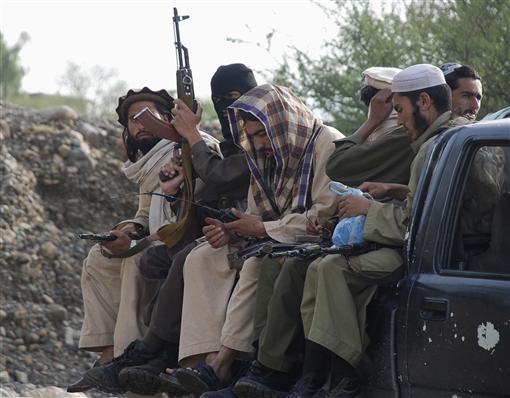
Reuters

With a surge in Tehreek-e-Taliban Pakistan (TTP) attacks on areas of Khyber Pakhtunkhwa Province, the tension between the Taliban and Pakistan has risen again. Pakistani Ministry of Foreign Affairs has summoned the Taliban ambassador, asking the group to hand over the TTP leaders to Islamabad. Previously, John Achakzai, the Minister of Information of Balochistan province of Pakistan, in response to the recent attacks of Tehreek Jihad Pakistan, which is reported to be a branch of TTP, has called for the country’s army to attack targets in Afghanistan. The Taliban, however, in response to the recent statements of Pakistani officials, criticized Pakistan’s government for its failure to provide security for its citizens, adding that they are not responsible for establishing security in that country.

With the re-establishment of the Taliban in Afghanistan, contrary to what Pakistani officials and observers expected, the relations between the Taliban and the Pakistani government were not only satisfactory for both sides but with the escalation of TTP activities and border conflicts, Pakistan’s relations with the Taliban became more tense. This resulted in the government of Islamabad trying to punish the Taliban by starting the process of mass deportation of Afghan refugees. This anti-human act, which caused widespread global reactions, is the only decision that the Pakistani government has implemented thus far to punish the Taliban for not fulfilling their demands. This action adversely affected the refugees more than the Taliban regime in Kabul.

With all the big boasts and warnings of starting military operations with the aim of “eradicating terrorism” in Afghanistan, the government of Pakistan has so far only punished those who have no role in the terrorist and destructive activities of the Taliban, their like-minded and allied groups. But they are the first victims of Islamic extremism, which the Pakistani army has nurtured and managed since the time of the Soviet presence in Afghanistan. Both the Mujahideen during the jihad and the Taliban during the American presence played the role of proxy forces of the Pakistani army. Islamic State-Khorasan (ISIS-K) has promoted the policy of destruction of Afghanistan through these proxy forces. However, the growth of terrorism does not always bring about the desired results for the owners of this deadly industry. The interpretation of a poem by Nasser Khosrow clearly expresses the current situation of the Pakistani military, which says that the charming snake will be ultimately killed by its offspring.

The poisonous snakes that bite Pakistan’s army hard today were bred in the lap of Pakistani Inter-Service Intelligence (ISI) religious schools to carry out the project of brutality and killing in Afghanistan. Now this country has been “conquered” by the proxy group of ISI. Where all these terrorists who were raised in religious schools under the control of the Pakistani military for blowing themselves up to fulfill the duty of “Jihad for God’s sake”, should achieve the “high position of martyrdom”? If the Jihad in Afghanistan is over, how can the thirst for “martyrdom” of thousands of suicide bombers be quenched? At present, Pakistan seems a better place for launching jihad, as the established government is not Islamic from the point of view of the Taliban, and for this reason, it should be overthrown. Religious schools in Pakistan have reached such a level of mass production of suicide bombers and terrorists that now even the ISI as the chief intelligence officer is unable to control it. Especially when the Taliban in Afghanistan, away from the shadow and domination of the ISI, and relying on their own needs through the establishment of religious schools, produce suicide bombers and terrorists, which makes the task of managing terrorism difficult even for the Taliban.

The control of the terror industry has long been lost at the hands of the Pakistani army. This is because the proxy regime of ISI in Afghanistan now manages other proxy groups. Yesterday’s mercenary is today’s master, and yesterday’s master has no choice but to recognize yesterday’s mercenary, who has now broken the leash, to remain the master and ask for help. The half-hearted boasts of the Pakistani government and the Taliban’s disregard for Islamabad’s pressures are a sign of the looming crisis in the management of the terror industry, which is caused by the conflict over the leadership and management of this industry. ISI is still trying to control the leadership of terrorist groups, including the Taliban, and not let these groups do anything independently. Pakistan’s insistence on the Taliban to fight the TTP shows that the Pakistanis want to control the reins of the Taliban as before. But this group is not willing to be mercenaries like in the past and wants a change in the leadership of terrorism. Because the Taliban are currently running a country, ISI should not look at them like an old subordinate and mercenary.

In this regard, Zalmay Khalilzad, the former representative of the US Department of State for Afghanistan’s reconciliation, has recently called for the start of direct talks between the Taliban and the government of Pakistan regarding the TTP and Islamic State-Khorasan (ISIS-K). This seasoned and experienced American agent, who has deep knowledge of Islamic extremist groups, has most likely realized that the crisis of terrorism management is very serious. However, the Pakistani military does not like to understand this fact. They still insist on making the Taliban subservient to them, while the Taliban is not a group that was supported by the Westerners in Afghanistan before the fall of the government. This group now runs a country expecting to be treated like a government. Another thing that the Pakistani Army does not want to know and still insists on is achieving strategic depth in Afghanistan. Therefore, the Pakistani military is constantly trying to establish a regime in Afghanistan that is dependent on Islamabad. However, if we look at today’s events, we find that on the contrary, it was the Taliban who have turned Pakistan into their strategic depth. The Taliban used Pakistan as a strategic refuge in the last twenty years. It was serving as a place where after every failure, they took refuge reinforcing themselves. Now, by supporting TTP, they want to have a refuge for themselves in the tribal areas of Pakistan, so that if they are expelled from Afghanistan, they can go to those areas and mobilize their forces again to attack Afghanistan.
ShareTweetSendSendShare

Related Posts

A young Afghan girl looks on with a serious expression, with the Taliban flag visible beside her (Photo: CNN)
Afghanistan News

International Day of the Girl: Millions of Girls Under Taliban Rule Deprived of Their Fundamental Rights

11 October 2026 [t_time:1791701671]
ICRC workers distributing assistance to the families (Photo: @ICRC_af)
Afghanistan News

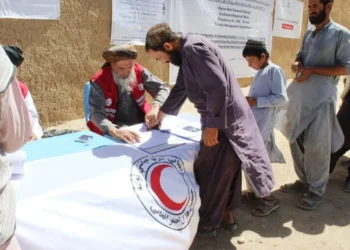
Red Cross: 700 Families Affected by Clashes Receive Cash Assistance in Zabul

11 October 2026 [t_time:1791699817]
A woman standing in front of a window staring ahead (Photo: UN)
Afghanistan News

UNAMA Calls on Taliban to End Discriminatory Treatment of Women

11 October 2026 [t_time:1791698162]

Latest

Loading latest news...

Popular stories

  • An Afghan woman gazes out of her home, reflecting the isolation and challenges faced by women in Afghanistan under Taliban rule. (Photo Credit: 8am.media)

    UN Report Reveals Shifts in Family Attitudes and Rise in Domestic Violence in Afghanistan

    Share
    Share Tweet
  • Pakistan and the Yemen War: Balancing Between Riyadh and Tehran

    Share
    Share Tweet
  • Iraq Reports Export of Two Million Barrels of Crude Oil Through Strait of Hormuz

    Share
    Share Tweet
  • Al-Qaeda Releases Hamza bin Laden Message on 9/11 Anniversary

    Share
    Share Tweet
  • India and Afghanistan: Quiet Diplomacy in the Shadow of the Taliban-Pakistan Tensions

    Share
    Share Tweet

Podcast

Insights
Insights

Join Lynne O’Donnell for 8AM’s podcast series, Insights.
Lynne talks with generals, diplomats, soldiers, journalists, politicians, activists, people who have front row seats for conflicts around the world, and citizens with a story to tell, happy or sad. For this first series, Afghanistan is the focus. Lynne and her guests talk about the collapse of the republic in August, 2021, and the impact since — for the people of Afghanistan, for the security of the region, for the safety of the world. It’s important, interesting and insightful.

Insights/22: Controlling the Narrative with Mina Sharif
byinsights8am

Controlling the Narrative

Lynne O’Donnell talks with Mina Sharif, author, activist, women’s rights campaigner, educator and mentor. They discuss who controls the narrative and who speaks for Afghanistan’s people when the Taliban appear to have seized control not only of the country but of the message, too.

Have a listen

Insights/22: Controlling the Narrative with Mina Sharif
Episode play icon
Insights/22: Controlling the Narrative with Mina Sharif
Episode Description
Episode play icon
Insights/21: Media Meltdown with Zahra Joya
Episode Description
Episode play icon
Insights/20: Terror Inc with Scott Richards
Episode Description
Episode play icon
Insights/19: Busting Stereotypes with Bushra Gohar
Episode Description
Episode play icon
Insights/18: Media Matters with Waliullah Rahmani
Episode Description
Episode play icon
Insights/17: What Goes Around Comes Around with Sima Samar
Episode Description
Search Results placeholder
Hasht-e Subh

8AM Media, also known as Hasht-e-Subh Daily, stands as Afghanistan's premier independent and non-profit newspaper, resonating as a beacon of journalistic integrity since its establishment in June 2007 by esteemed Afghan journalists and human rights advocates. With a steadfast commitment to citizen journalism and civic education, Hasht-e-Subh Daily has earned its place as the most esteemed publication in the nation.

Publisher: Sanjar Sohail
Email: [email protected]
Executive Director: Parwiz Kawa
Email: [email protected]

Read More

Iran’s Foreign Ministry Calls Threats Against Los Angeles and San Diego “Imaginary”

International Day of the Girl: Millions of Girls Under Taliban Rule Deprived of Their Fundamental Rights

Red Cross: 700 Families Affected by Clashes Receive Cash Assistance in Zabul

UNAMA Calls on Taliban to End Discriminatory Treatment of Women

Attack on Saudi Arabia’s King Khalid International Airport Leaves 12 Dead

Editor’s Choice

Every Saturday morning, 8AM MEDIA English Services Department will guide you through the week’s biggest stories from Afghanistan and the international community.

Subscribe

© 2026 - ©Hasht-e Subh Daily

No Result
View All Result
8am.Media
پښتو ویب‌پاڼه
ویب‌سایت فارسی
اۉزبېکچه ویب‌سایت
  • Home
  • News
    • Afghanistan News
    • World News
  • Opinion
    • Editorial
    • Analysis
  • Reports
    • Daily Reports
    • Investigative Reports
  • Society
    • The story of people
  • Women’s Word
  • Columns
    • Three Years After Afghanistan’s Fall: The Taliban’s Resurgence
    • Towards Equality
    • The Resurgence of the Taliban: Two Years Since Afghanistan’s Fall
    • Hebatullah Report Special Edition
    • Resistance for Education Special Edition
    • Special Column on Taliban’s Education Curriculum
    • Nawroz
  • Interviews
  • Contact Us
    • About Us
    • 8AM MEDIA Annual Awards
    • Submit an Article to Hasht-e-Subh
  • 8am.media

© 2026 - ©Hasht-e Subh Daily