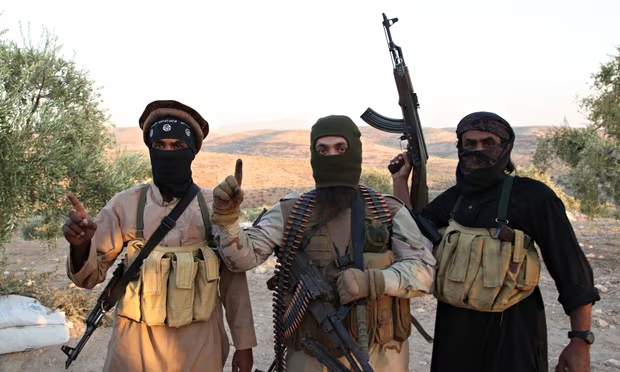
The ISIS threat continues to grow every day, generating larger threats. Communities targeted by this group have suffered significant casualties so far, and it seems they will continue to do so in the future. Since ISIS was defeated by the global coalition in Syria and Iraq, its branch in Afghanistan, known as ISIS-Khorasan, became active. Since then, this branch intermittently targets objectives in Afghanistan. The regional incidents have played into the hands of this group, strengthening it. One significant event was the collapse of the Afghan government to a terrorist group, which shares many similarities with ISIS. Moreover, the Taliban, currently controlling Afghanistan, lacks the plans and capability to effectively combat the ISIS threat, while the possibility of disgruntled fighters joining ISIS has always existed. Consequently, emboldened by the Taliban’s control of Afghanistan and recent political events, ISIS has become more audacious, launching cross-border attacks. Now, we should be concerned about the future activities of this group.
ISIS-Khorasan has made Afghanistan the center of its activities, with Pakistan and Iran also falling under its definition of Khorasan. Thus, the Khorasan branch of ISIS considers fighting against the established governments in these three countries as its mission. But what has strengthened this group to the extent that it can make its target countries so insecure? The strengthening of ISIS, like the emergence of this group, is due to many interconnected factors.
One of these factors is the decrease in attacks on ISIS in Afghanistan. Despite numerous setbacks following the defeat of the main ISIS branch in Iraq and Syria, ISIS in Afghanistan faced suppression by the Republic government multiple times. Leaders of this group were targeted and killed by the Republic government several times. The killing of the leader of this ISIS branch weakened it for a while, as these groups heavily rely on their leaders, and in radical groups like ISIS and the Taliban, the leader is all-powerful. After the fall of the Republic in Afghanistan, this group has not been significantly targeted by the regime established in Afghanistan. Despite claiming the destruction of ISIS, the Taliban haven’t actually engaged in significant combat against this group. Until recently, the Taliban denied the existence of ISIS in Afghanistan, arguing that there’s no obligation to fight a group that doesn’t practically exist. However, the reality on the ground is different; ISIS exists and continues its terrorist activities vigorously. The wave of ISIS attacks against Hazaras and Shia Muslims in Afghanistan under the Taliban’s rule is the most prominent reason for the presence and existence of this group under the shadow of the Taliban regime. Now that Taliban spokespersons are gradually admitting the existence of ISIS in Afghanistan, they still do not take its threats seriously. Therefore, during the two and halfyears of Taliban rule, no significant large-scale operations against ISIS have been initiated.
Contrary to what the Taliban claim, in practice, for whatever reason, they have shown little inclination to suppress the ISIS group. Therefore, Taliban’s negligence, complacency, or deliberate policies have directly contributed to the strengthening of the ISIS group, while their control over Afghanistan has indirectly provided ISIS with the necessary morale and confidence to pursue its terrorist activities. We have witnessed extensive Taliban offensives in places like Panjshir and Takhar aimed at suppressing the National Resistance Front, yet there has never been any such offensives against ISIS as a global threat by the Taliban. Moreover, the Taliban, who opened the gates of prisons and essentially strengthened this group by releasing ISIS prisoners, have not themselves taken any action against ISIS operatives. Consequently, the fall of the Republic to the Taliban has provided an opportunity for ISIS to rebuild and strengthen.
Another factor contributing to the strengthening of ISIS in Afghanistan and the region is the overall situation in the region and global politics. The world does not consider ISIS-Khorasan powerful enough to warrant appropriate action to contain it. Therefore, the responsibility of combating this group in its power center (Afghanistan) has been delegated to a similar group, while they themselves have stood aside. The region and the world have mistakenly calculated that one terrorist group can destroy another; meaning they have divided terrorists into good and bad categories and believe that by cooperating with good terrorists like the Taliban, they can fight against bad terrorists like ISIS. Pursuing this policy for the past two years, which is also considered a factor in some countries’ proximity to the Taliban, has so far had the opposite result. In practice, the world has tolerated complex and large-scale ISIS attacks for two years and almost seven months. These attacks range from Kunduz and Kabul to Kandahar, even threatening embassies of Iran, India, and China in Afghanistan.
In fact, the increase in ISIS threats is primarily the result of the Taliban’s control over Afghanistan and then the result of some countries’ trust in this group. Reports from reputable international organizations, including the United Nations Security Council, indicate that terrorist groups in Afghanistan have strengthened under Taliban rule. The insecurity in Iran and the increase in instability in Pakistan have occurred after the Taliban took control of Afghanistan, indicating the strengthening of terrorist groups in Afghanistan. ISIS-Khorasan, which has attacked Afghanistan and Iran, has its command and operations center in Afghanistan. The Tehrik-i-Taliban Pakistan (TTP), which has launched a widespread wave of attacks against the Pakistani government in the past two years, effectively has a sanctuary in Afghanistan and is openly supported by the Afghan Taliban. According to reports, the Al-Qaeda network has also strengthened and rebuilt itself in Afghanistan in the past two years. In such an environment, ISIS-Khorasan has seized its opportunity and succeeded in strengthening itself. Now, after several years, ISIS has been able to carry out complex attacks with impunity, targeting figures like Putin and Mullah Hibatullah.
However, the increase in ISIS attacks has not brought about any changes in the global and regional approach to the issue of terrorism. Despite witnessing escalating terrorist threats, policymakers in the region have, for whatever reason, continued their engagement approach with the Taliban, which is one of the factors contributing to the strengthening of terrorism. It does not seem that this approach will change soon. Therefore, the people of our region and country are paying the price for the wrong decisions of policymakers in the world and the region with their lives. Due to the continuation of the current global and regional policies, terrorism in the ranks of ISIS or other groups will continue to claim many innocent lives in our region. Meanwhile, the actions of this group and recent statements by Mullah Hibatullah regarding stoning women, public floggings, and the implementation of retaliation and punishment against these victims are being addressed within the Taliban leadership.