The Council’s apparent concern for Afghan women’s rights seems more like lip service than a genuine effort to protect and empower them.
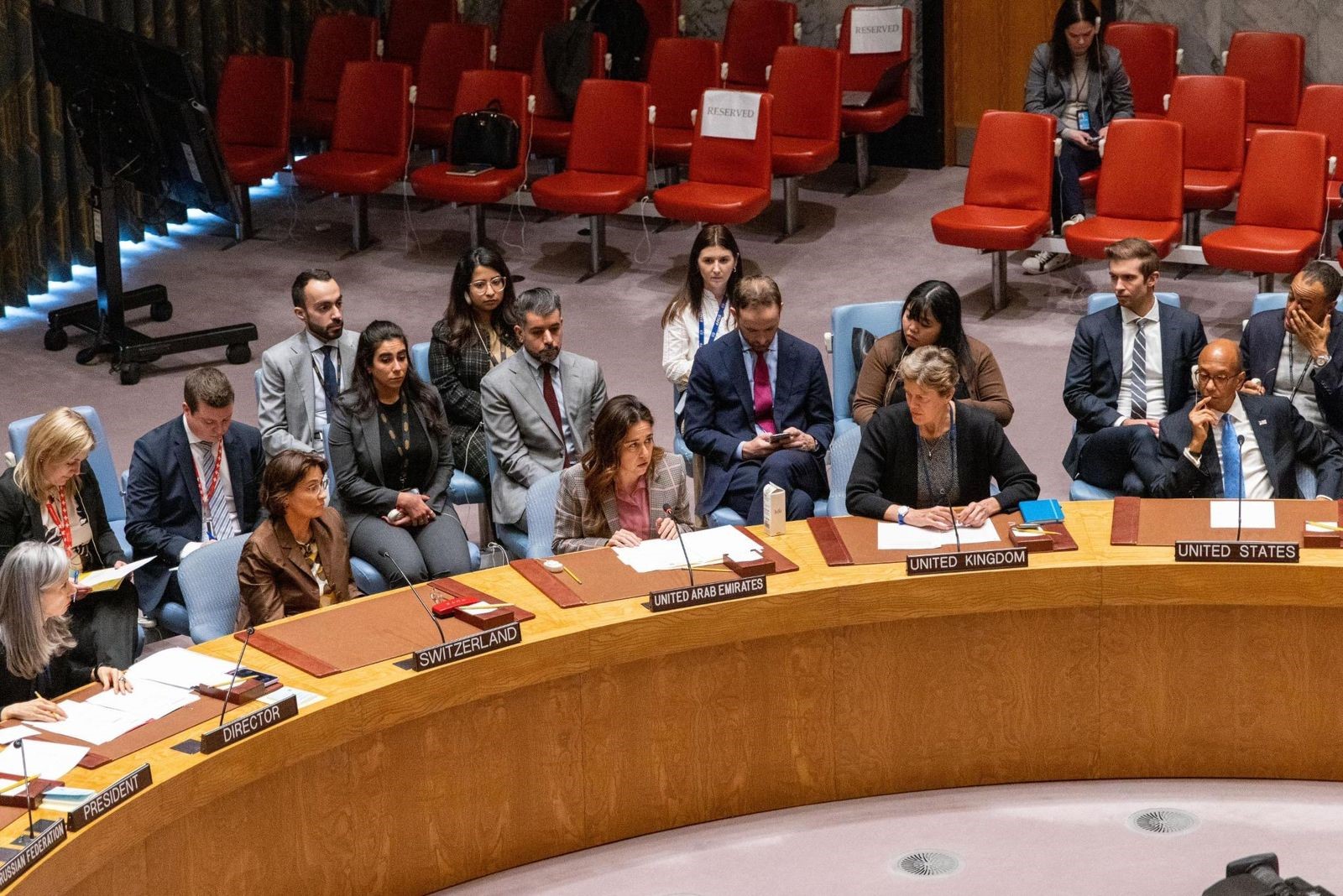
Japan and the United Arab Emirates have jointly submitted a draft resolution to the UN Security Council concerning the ongoing situation in Afghanistan. The resolution expresses concern about the erosion of women’s rights in Afghanistan by the Taliban, including their lack of access to education and employment opportunities and their freedom of movement. Additionally, it condemns the Taliban’s decision to ban Afghan women from working for the United Nations and calls for the full and safe participation of women and girls in Afghanistan. While the resolution stresses the importance of continued humanitarian assistance and the presence of UNAMA and other UN agencies in Afghanistan, some have criticized its lack of political clarity regarding the Taliban’s regime.
What are the implications of the resolution’s failure to provide a substantive critique of the Taliban’s oppressive tactics and their threat to Afghanistan’s stability and security, despite calling for the protection of the rights of women, girls, and minorities? Is there a risk that a superficial approach that ignores the Taliban’s history of oppression and violence against vulnerable groups could hinder meaningful change in Afghanistan? What kind of approach is necessary to address the political reality in the country and prioritize the needs of the most vulnerable?
Therefore, it is important to explore steps that could be taken to promote meaningful change and protect the rights of vulnerable groups, particularly women and girls, in Afghanistan. These steps should consider the concerns raised about the resolution’s lack of political clarity regarding the Taliban’s regime. By taking a comprehensive approach that acknowledges the realities on the ground, it may be possible to safeguard the rights of those who need protection and help promote a more stable and secure future for Afghanistan.
The resolution’s approach seems superficial, as it ignores the brutal reality of the Taliban’s history of oppression and violence against vulnerable Afghans. Without a politically grounded approach, meaningful change in Afghanistan may be hindered, and the rights of those who need protection may not be adequately safeguarded. Thus, it is essential to consider a comprehensive approach to the situation, taking into account the political reality in the country and the specific needs of those who are most vulnerable.
“The Security Council should prioritize promoting a political solution that is genuinely Afghan-led and reflects the aspirations of the Afghan people. The Afghan people should be the ones to determine their future, and their voices must be heard and respected.”
Furthermore, the imposition of Western powers through the resolution is a concern that cannot be overlooked. It raises questions about the legitimacy of the resolution and its potential impact on the people of Afghanistan. Instead, the Security Council should prioritize promoting a political solution that is genuinely Afghan-led and reflects the aspirations of the Afghan people. The Afghan people should be the ones to determine their future, and their voices must be heard and respected. It is vital to create a stable and peaceful Afghanistan, but this cannot be achieved through the imposition of foreign powers. Only by working with Afghan leaders and communities can a lasting solution be found that truly represents the needs and desires of the Afghan people. Therefore, it is essential to consider the importance of respecting Afghanistan’s sovereignty and promoting solutions that are genuinely Afghan-led.
“ …it is essential to consider the importance of respecting Afghanistan’s sovereignty and promoting solutions that are genuinely Afghan-led.”
The resolution’s insufficient attention to the plight of Afghan women and girls is alarming, given the dire circumstances in the country. The Taliban’s repressive regime and persistent human rights violations have left Afghan women and girls vulnerable to abuse and oppression. The Council’s apparent concern for Afghan women’s rights seems more like lip service than a genuine effort to protect and empower them.
“The Council’s apparent concern for Afghan women’s rights seems more like lip service than a genuine effort to protect and empower them.”
The Council must take responsibility for ensuring the protection and empowerment of Afghan women and girls. It is not enough to pay lip service to their rights while failing to take action that will have a real impact on their lives. Women’s rights must be a priority in any resolution concerning Afghanistan, and any attempt to undermine or ignore them must be forcefully rejected. We must stand in solidarity with Afghan women and girls and support their efforts to achieve equality, justice, and security in their country.
“It is not enough to simply pay lip service to gender equality.”
It is not enough to simply pay lip service to gender equality. The Security Council must take concrete actions to promote gender equality in Afghanistan. This includes mandating extended education for women and promoting their leadership roles in all sectors. By doing so, we can help to break down the systemic barriers that have kept Afghan women and girls from reaching their full potential.
Additionally, the Council must lead the charge in securing the necessary resources and support to empower Afghan women and girls. This includes funding for education, healthcare, and economic opportunities, as well as support for women’s rights organizations on the ground. The Security Council has a vital role to play in promoting gender equality in Afghanistan, and it is time for concrete actions to be taken. We must work together to ensure that Afghan women and girls have the same opportunities and rights as their male counterparts, and that their voices are heard and respected in all aspects of Afghan society.
The feasibility of the resolution’s goals in Afghanistan is in doubt due to the Taliban’s persistent disregard for human rights and refusal to engage in meaningful dialogue. The resolution’s objectives of promoting stability and security in Afghanistan, protecting women’s rights, and ensuring human rights are all at risk due to the Taliban’s actions. To make the resolution more effective, it should explicitly condemn the Taliban’s flagrant violations of human rights and outline specific measures to ensure implementation.
The Security Council must work to hold the Taliban accountable for their actions and pressure them to engage in meaningful dialogue. It is essential to have a realistic approach that considers the complex realities on the ground and the challenges that Afghan women and girls face in achieving their rights. While the resolution may be ambitious, it is necessary to ensure that concrete measures are taken to address the root causes of the problem and to hold those responsible for violations accountable. By doing so, we can help to create a safer, more secure, and more just Afghanistan.
It is disturbing to see that some nations are willing to prioritize their own political interests over the rights and well-being of Afghan women and girls. This is unacceptable and reflects a broader pattern of neglecting human rights in the pursuit of geopolitical goals. Any attempt to overlook or downplay the Taliban’s egregious behavior is a disservice to the women and girls impacted by their oppressive regime. It is time for the international community to take a strong stance against the Taliban’s behavior and work towards protecting the human rights of all individuals. This means speaking out against human rights violations and holding those responsible accountable for their actions. It also means supporting efforts to empower Afghan women and girls and ensure that they have equal access to education, healthcare, and economic opportunities. Human rights should never be subordinated to political interests. The international community must work together to create a world where human rights are respected, protected, and upheld for all individuals, regardless of their gender, ethnicity, or nationality.
In conclusion, the UN Security Council’s resolution on Afghanistan falls short in providing political clarity and concrete actions for gender equality. It is crucial to prioritize protecting the human rights of all individuals, particularly women and girls who are most vulnerable to the Taliban’s oppressive regime. The international community must work together to hold the Taliban accountable for their actions and support efforts to empower Afghan women and girls. Political interests should never be prioritized over human rights. It is time for the Security Council to take bold action to ensure that the rights and well-being of all individuals in Afghanistan are respected and protected. Only then can we create a safer, more secure, and more just world for all.
About the author: Lisa Sorush is an Afghan-American activist dedicated to advocating for the rights of Afghan women, girls, and human rights in general. Lisa holds a Master Degree in Political Science from the University of San Diego, a Bachelor of Arts Degree from the University of Cal State, Fullerton, and an Associate in Human Rights from the Indian Institute of Human Rights. Lisa has provided political analysis and commentary on media outlets,