• 8AM.MEDIA
  • ویب‌سایت فارسی
  • پښتو ویب‌پاڼه
  • اۉزبېکچه ویب‌سایت
  • Podcast
Thursday, October 15, 2026
Hasht-e Subh
  • Home
  • News
    • Afghanistan News
    • World News
  • Opinion
    • Editorial
    • Analysis
  • Reports
    • Daily Reports
    • Investigative Reports
  • Society
    • The story of people
  • Women’s Word
  • Columns
    • Three Years After Afghanistan’s Fall: The Taliban’s Resurgence
    • Towards Equality
    • The Resurgence of the Taliban: Two Years Since Afghanistan’s Fall
    • Hebatullah Report Special Edition
    • Resistance for Education Special Edition
    • Special Column on Taliban’s Education Curriculum
    • Nawroz
  • Interviews
  • Contact Us
    • About Us
    • 8AM MEDIA Annual Awards
    • Submit an Article to Hasht-e-Subh
  • 8am.mediaBack
Subscribe
No Result
View All Result
  • Home
  • News
    • Afghanistan News
    • World News
  • Opinion
    • Editorial
    • Analysis
  • Reports
    • Daily Reports
    • Investigative Reports
  • Society
    • The story of people
  • Women’s Word
  • Columns
    • Three Years After Afghanistan’s Fall: The Taliban’s Resurgence
    • Towards Equality
    • The Resurgence of the Taliban: Two Years Since Afghanistan’s Fall
    • Hebatullah Report Special Edition
    • Resistance for Education Special Edition
    • Special Column on Taliban’s Education Curriculum
    • Nawroz
  • Interviews
  • Contact Us
    • About Us
    • 8AM MEDIA Annual Awards
    • Submit an Article to Hasht-e-Subh
  • 8am.mediaBack
No Result
View All Result
Hasht-e Subh
No Result
View All Result

Why is Russia Striving to Remove the Taliban from the List of Terrorist Organizations?

By: Nariman Abshari

Moqim mehran Moqim mehran
3 April 2024 - Solar Hijri Date: 1403/01/16 [t_time:1712209485]
Why is Russia Striving to Remove the Taliban from the List of Terrorist Organizations?

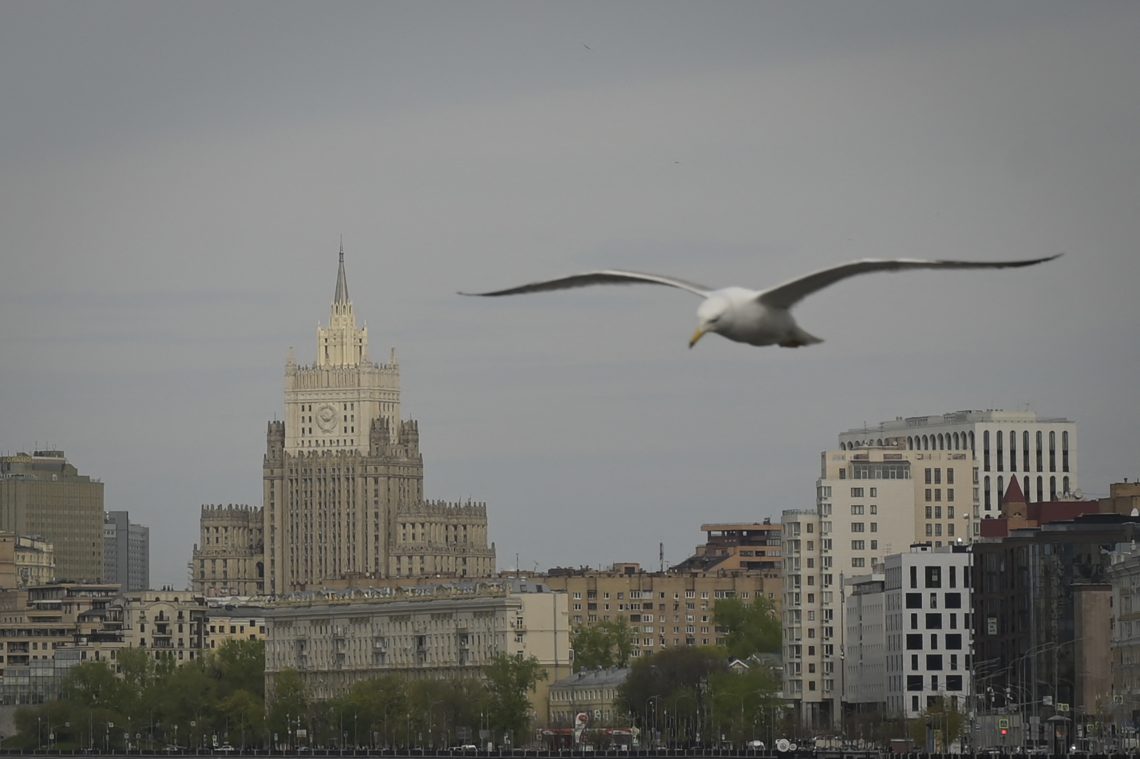
Natalia KOLESNIKOVA / AFP

The Russian Ministry of Foreign Affairs has announced that it is considering the removal of the Taliban from the list of terrorist organizations. This decision comes in the wake of a recent deadly terrorist attack attributed to ISIS Khorasan, a group operating either under the influence of the Taliban in Afghanistan or Pakistan. While Russia attributes radical Islamists to being involved in this attack, it considers ISIS to be a deceptive flag under which Russia’s global rivals conceal themselves. According to Moscow, the primary management of the attack lies in the hands of Western intelligence agencies and Ukraine, not ISIS.

However, even if we accept that Western intelligence agencies orchestrated this attack, Russia still does not dismiss the involvement of radical Islamists in the terrorist attack on the outskirts of Moscow. These Islamic hardliners share ideological commonalities with a group that Russia aims to remove from the list of terrorist organizations and utilize to advance the “war on terror,” similar to the war being waged by the United States and other countries. In this battle, the objective is not to combat terrorism in the literal sense. Such an expectation is entirely misplaced. Instead, this battle is exploited for the benefit of specific government policies, forming alliances with practically terrorist groups to combat other terrorist groups. Here, some terrorists are deemed “good,” while others are labeled “bad,” or some terrorist groups are evaluated as “bad,” and others as “worse.” The logic of political pragmatism is simple: to combat the “bad,” one must ally with the “good,” or sometimes, to counter the “worse,” one must stand alongside the “bad.” This political strategy, while often adopted out of necessity, sometimes morphs into the primary policy of governments and takes on a strategic nature.

Today, major powers, whose foreign policies are shaped based on geopolitical competition, not only do not consider the exploitation of terrorism against their strategic enemies unethical but also utilize it to the fullest extent. In a deeply stratified and directional society, discussing neutral and non-stratified phenomena is hardly straightforward. We have no concept of neutral and non-stratified ethics. The political ethics favored by America are not obligatory to be deemed more ethical by China and Russia, and vice versa; likewise, the politically favored ethics by Russia and China are not necessarily palatable to the taste of American politics. With this brief explanation, if Western intelligence agencies and Ukraine were behind the massacre in Moscow, it would be ludicrous and unbelievable. The declarative policy of governments is not always consistent with their actions, and it can even be contradictory.

Currently, tensions between the West and Russia have escalated to such an extent that both sides openly and directly accuse each other of supporting terrorism. The West accuses Russia of state-sponsored terrorism and crimes against humanity due to its invasion of Ukraine, while Russia has repeatedly accused the West, especially the United States, of supporting ISIS, a terrorist group that Moscow has become inevitably supportive of another terrorist group to combat: the Taliban.

Russians believe that the Taliban group is a more reliable ally than the West in the fight against ISIS. This perception stems from decades of geopolitical competition between Russia and Western countries and a longstanding game initiated by America, using Islamist hardline groups to undermine its global rivals, especially the former Soviet Union. The continuation of this rivalry, even after the collapse of the Soviet Union and the end of the Cold War, has led to such distrust between the two sides that now Russians consider the Taliban a more trustworthy partner than the West in the “war on terror” and, therefore, seek to engage more with this group.

As the activities of Islamist groups expand, terrorism becomes more serious, complex, and dangerous than ever before. Governments, as always, prioritize interests deemed “national” above all else. Even if securing these interests entails the growth and strengthening of terrorism, governments see no issue in supporting it. If such action proves sustainable, all the better, and if it is superficial and short-term, it is still acceptable. The fact that a terrorist attack by ISIS in the capital of Russia undermines the intelligence credibility and self-confidence of this country to some extent, even if it lacks sustainable and strategic effectiveness, still somewhat appeases Moscow’s adversaries. In such a situation, it is natural for Russia not to remain passive and to take more serious steps in the fight against ISIS. One of these measures is increasing interaction with the Taliban regime in Afghanistan.

If Russia removes the Taliban from the list of terrorist organizations, it will be a significant success for this group and an attempt to legitimize it. It seems that the Taliban’s obstinacy will once again prevail, which does not convey a positive message. If the Taliban, who have ruthlessly imposed their will on the people of Afghanistan over the past two decades and have shown no regard for the demands of the world’s countries to lift increasingly stringent restrictions on women, continue to gain favor with major powers without the slightest change in their inhumane policies, they will never succumb to global pressure to refrain from their restrictive actions in the present or future. The world is forced to continue to compromise with this group, not the other way around.

However, increased interaction with the Taliban ultimately materializes into a nightmare whose signs are already visible. But the consequences of this nightmare are not limited to Afghanistan, and the world will soon taste the bitterness of interacting with Taliban terrorism or, in the worst-case scenario, legitimizing this group. The most dangerous consequence of this interaction is the transformation of de facto and unofficial terrorism into official and “legitimate” terrorism; an action that will inevitably lead to more violence and war in the region and then the world.
ShareTweetSendSendShare

Related Posts

Aerial view of Omid-e Sabz Township in western Kabul, where residents face pressure from the Taliban and possible evacuation. (Photo credit: Zawia Media)
Afghanistan News

Taliban Loot Second House in Omid-e Sabz Township in One Week

15 October 2026 [t_time:1792068363]
Multi-story homes crowd a hillside neighborhood as residents of the Omid-e Sabz township face the threat of forced eviction. (Photo credit: social media)
Opinion

Omid-e Sabz Township: A Crisis of Justice, Trust, and Human Dignity

15 October 2026 [t_time:1792067997]
The interior walls of a historic monument in Ghazni are covered with scribbled names, messages, and phone numbers left by visitors. (Photo credit: Social Media)
Daily Reports

Scribbling on Ghazni’s Historic Walls: Indifference That Threatens Cultural Heritage

15 October 2026 [t_time:1792067586]

Latest

Loading latest news...

Popular stories

  • An aerial view shows collapsed buildings and widespread damage following an earthquake in Panama (Photo: Reuters)

    More Than 200 Aftershocks Recorded in Panama Since Friday’s Earthquake

    Share
    Share Tweet
  • Axios: Trump Expects Ukraine Not to Attack Russian Oil Refineries

    Share
    Share Tweet
  • UN Report Reveals Shifts in Family Attitudes and Rise in Domestic Violence in Afghanistan

    Share
    Share Tweet
  • The Politics We Inherited: Rethinking Afghanistan’s Political Culture

    Share
    Share Tweet
  • Trump Again Says War with Iran Will End “Very Soon”

    Share
    Share Tweet

Podcast

Insights
Insights

Join Lynne O’Donnell for 8AM’s podcast series, Insights.
Lynne talks with generals, diplomats, soldiers, journalists, politicians, activists, people who have front row seats for conflicts around the world, and citizens with a story to tell, happy or sad. For this first series, Afghanistan is the focus. Lynne and her guests talk about the collapse of the republic in August, 2021, and the impact since — for the people of Afghanistan, for the security of the region, for the safety of the world. It’s important, interesting and insightful.

Insights/22: Controlling the Narrative with Mina Sharif
byinsights8am

Controlling the Narrative

Lynne O’Donnell talks with Mina Sharif, author, activist, women’s rights campaigner, educator and mentor. They discuss who controls the narrative and who speaks for Afghanistan’s people when the Taliban appear to have seized control not only of the country but of the message, too.

Have a listen

Insights/22: Controlling the Narrative with Mina Sharif
Episode play icon
Insights/22: Controlling the Narrative with Mina Sharif
Episode Description
Episode play icon
Insights/21: Media Meltdown with Zahra Joya
Episode Description
Episode play icon
Insights/20: Terror Inc with Scott Richards
Episode Description
Episode play icon
Insights/19: Busting Stereotypes with Bushra Gohar
Episode Description
Episode play icon
Insights/18: Media Matters with Waliullah Rahmani
Episode Description
Episode play icon
Insights/17: What Goes Around Comes Around with Sima Samar
Episode Description
Search Results placeholder
Hasht-e Subh

8AM Media, also known as Hasht-e-Subh Daily, stands as Afghanistan's premier independent and non-profit newspaper, resonating as a beacon of journalistic integrity since its establishment in June 2007 by esteemed Afghan journalists and human rights advocates. With a steadfast commitment to citizen journalism and civic education, Hasht-e-Subh Daily has earned its place as the most esteemed publication in the nation.

Publisher: Sanjar Sohail
Email: [email protected]
Executive Director: Parwiz Kawa
Email: [email protected]

Read More

Taliban Loot Second House in Omid-e Sabz Township in One Week

Book Clubs: A Refuge for Girls Amid Educational Restrictions

Omid-e Sabz Township: A Crisis of Justice, Trust, and Human Dignity

Scribbling on Ghazni’s Historic Walls: Indifference That Threatens Cultural Heritage

Taliban Hand Over Former Military Officer’s Body to Family After Five Months

Editor’s Choice

Every Saturday morning, 8AM MEDIA English Services Department will guide you through the week’s biggest stories from Afghanistan and the international community.

Subscribe

© 2026 - ©Hasht-e Subh Daily

No Result
View All Result
8am.Media
پښتو ویب‌پاڼه
ویب‌سایت فارسی
اۉزبېکچه ویب‌سایت
  • Home
  • News
    • Afghanistan News
    • World News
  • Opinion
    • Editorial
    • Analysis
  • Reports
    • Daily Reports
    • Investigative Reports
  • Society
    • The story of people
  • Women’s Word
  • Columns
    • Three Years After Afghanistan’s Fall: The Taliban’s Resurgence
    • Towards Equality
    • The Resurgence of the Taliban: Two Years Since Afghanistan’s Fall
    • Hebatullah Report Special Edition
    • Resistance for Education Special Edition
    • Special Column on Taliban’s Education Curriculum
    • Nawroz
  • Interviews
  • Contact Us
    • About Us
    • 8AM MEDIA Annual Awards
    • Submit an Article to Hasht-e-Subh
  • 8am.media

© 2026 - ©Hasht-e Subh Daily