Most Afghan migrants in Iran have reported discriminatory treatment from Iranian citizens. They say that, besides facing “inhumane behavior from the police,” many ordinary Iranians also mistreat them. Recently, after news broke about an Iranian citizen’s death in a conflict with three migrants, several refugees in Tehran expressed concerns about widespread mistreatment by locals in the eastern part of the capital. Previously, Afghan migrant workers had also complained that their Iranian employers did not pay their wages and beat them.
Xenophobia, especially against Afghan migrants in Iran, has persisted for many years. Many Afghan refugees in Iran have faced humiliation from employers and ordinary citizens. They mention that “filthy Afghan” and “bastard Afghan” are among the most common insults Iranians use against them.
Shamsullah, a former military officer who fled to Iran due to Taliban retribution, says: “Iranians look at us with great contempt. They think the people of Afghanistan are not familiar with urban life and civilization. If an Iranian receives good treatment [from an Afghan], they say, ‘Are you really Afghan? This is the first time I’ve met someone like this.’ This attitude is very hurtful.” He emphasizes that “the most common insults from employers, police, and ordinary people to migrants are ‘filthy Afghan,’ ‘bastard Afghan,’ and so on,” which is truly distressing for anyone who has been forced to flee their homeland.
Another refugee, Dost Mohammad, recounts his bitter experience of insults and humiliation by the Iranian police. He says: “In our homeland, we are killed by the Taliban, and abroad, we are insulted and humiliated. We are stateless and homeless, so we cannot complain about any treatment we receive. Iranians, especially those who hire workers, do not regard us as human beings and behave very harshly.”
Moreover, many migrants say that whenever a criminal case occurs in some parts of the country, a wave of anti-migrant sentiment and insulting behavior from Iranian citizens against Afghan refugees also increases.
Some Iranian media outlets have reported that last week, an Iranian citizen was killed following a conflict with three migrants who had come to his brother’s apartment to collect maintenance and cleaning fees. Last week, the Tasnim News Agency claimed that following the death of an Iranian citizen, Tehran police arrested three “Afghan brothers” on suspicion of involvement in the fatal injury.
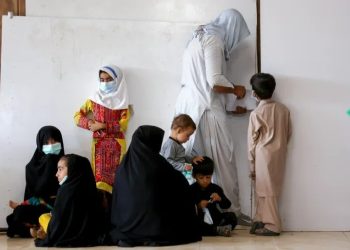
After this incident, several Afghan migrants reported from eastern Tehran that residents attacked them in parks, streets, and metro stations, in addition to insulting and beating them. Now, many families feel extremely unsafe and are afraid to leave their homes.
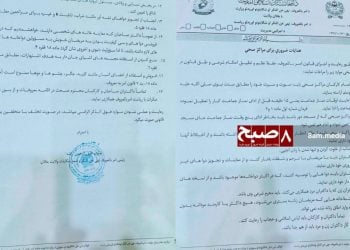
One refugee shared a notice with the Hasht-e Subh Daily, warning migrants to leave Tehran’s District 15 immediately or face forced eviction. He wrote: “We cannot leave our workplace; we have nothing to eat.”
This notice, which has also been circulated on social media, warns migrants to leave Tehran’s District 15 immediately. It is unclear who or what entity issued the notice, but it warns Afghan migrants in this area that if they do not leave voluntarily, they will be forcibly deported. The notice also addresses Iranian residents of the area, stating: “Property owners who have rented homes or cars to foreigners are also warned to reclaim their properties immediately.”
Meanwhile, this action has sparked reactions from some Iranians who are against the anti-migrant sentiment and have called for humane treatment of refugees. They have stated that Afghan migrants work in Iran and contribute to the country’s development and reconstruction.
Ali Rezaei wrote on his X (formerly Twitter ) page: “I rented out a small flat. The realtor called and asked, ‘Do you rent to Afghans?’ I said your question is irrelevant. The tenant’s nationality is none of the landlord’s business. He said some landlords or neighbors say don’t rent to Afghans. I said they were both wrong. When someone resides in the country, they have equal rights to rent. Let’s not be inhumane.”
This post faced a wave of negative reactions from Iranian users. They accused this Iranian citizen of being “blind.” One user responded to Ali Rezaei, stating that migrants have clung to Iran like leeches.
However, Ahmad (pseudonym), a journalist who fled to Iran after the Taliban takeover, told the Hasht-e Subh Daily that after the murder incident, Iranians have been treating migrants insultingly at metro stations, public places, and bakery lines. He adds: “Afghans living in this area, both young and old, are harassed and sometimes beaten by Iranians. In some bakeries, bakers refuse to sell bread to migrants.”
This journalist, quoting his sources in Karaj, Iran, says that in some neighborhoods, police raid migrants’ homes at night, harassing and forcibly deporting most of them. According to him, four days ago, a young refugee was also killed in the city of Karaj.
Mr. Ahmad adds: “In the area of Robat Karim where I live, the arrest of Afghan migrants has intensified significantly. For them, it doesn’t matter if someone has documents or not, whether they are children or not; they gather everyone and deport them directly without taking them to camps.” According to him, Iranians claim that migrants have taken jobs, leaving no work for Iranians.
Additionally, one refugee, who wishes to remain anonymous, says that anti-migrant sentiment in Iran has increased due to the influx of refugees and reduced job opportunities for Iranians compared to the past. He claims that the inappropriate behavior of some refugees exacerbates anti-migrant sentiment and fuels the demands of anti-migrant Iranians.
Meanwhile, the president of the Iran-Afghanistan Joint Chamber of Commerce, Industries, Mines, and Agriculture has said that Afghans have invested over three billion dollars in Iran.
You can read the Persian version of this daily report here:
پناهجویان افغانستان در ایران از موج گسترده مهاجرستیزی نگرانند | روزنامه ۸صبح