Hibatullah Akhundzada, the Taliban Supreme Leader, claims that implementing Islamic Sharia in Afghanistan is impossible without Taliban rule, and that no one can act on the Quran and the Sunnah without the existence of the group’s regime. The Taliban Supreme Leader also likens the people to a flock of sheep and says the emir is responsible for looking after this flock and must not allow anyone to approach it. He has also claimed that for the first time in Afghanistan, Friday prayers are being performed fully and correctly. Akhundzada considers dealing with the Shafi’i school of thought improper. He says the multiplicity of schools of thought in Afghanistan has ended, that he has now chosen the path, and that everyone follows the Hanafi school. He also considers himself responsible for preaching and advising the people, and says other Taliban members are his officials who can engage in preaching and proselytizing only upon receiving orders from him. In another part of his remarks, the Taliban Supreme Leader claims that modern sciences serve religious sciences and that people must first learn religious sciences. He also stresses that he enjoys the construction of religious schools and calls for madrasas to be built in the mountains and in remote villages. Referring to the lecturers of Kandahar University, Akhundzada says their appearance has come to resemble that of mullahs. He also says he has bought 700 turbans for this university and will take responsibility for providing turbans to students of any universities that want them. Akhundzada also says poets must put his decrees into verse and singers must sing them.
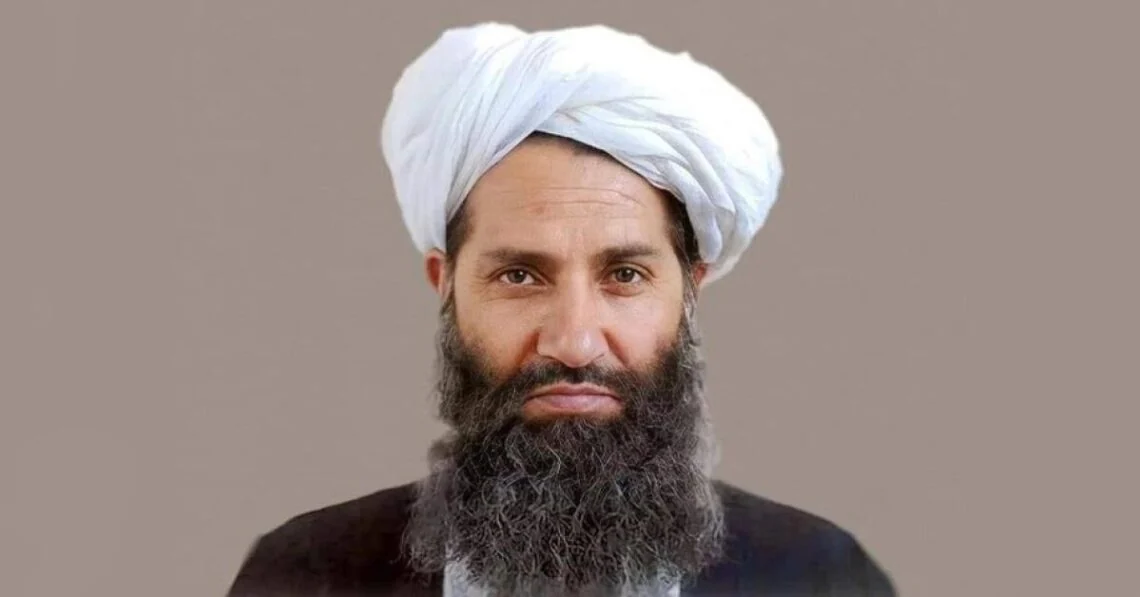
Hibatullah Akhundzada, the Taliban Supreme Leader, once again stressed obedience to himself and the preservation of the Taliban regime yesterday at a gathering of mullahs affiliated with the group at Kabul University. In a speech lasting one hour and eight minutes, he claimed that implementing Islamic Sharia is impossible without Taliban rule.
Addressing the Taliban and the mullahs in the speech, Akhundzada said: “It is clear to you that acting on Sharia is impossible without the Emirate. No one can act on the Quran and the Sunnah unless a Sharia-based Emirate exists and a Sharia-based emir has been appointed.”
The Taliban Supreme Leader also claimed that people are incapable of understanding the opinions of Islamic jurists, that this causes division and misguidance among Muslims, and that for this reason they must have an “emir.” He said: “One jurist says one thing and another jurist says something else. Which jurist do you follow? This one says so-and-so is right, and the other says that so-and-so is right.”
Stressing obedience to himself and rejecting popular rule and democracy, Akhundzada claimed that his duty is to set the path for the people and that he issues his decrees on the basis of jurisprudential opinions. He said: “The duty of the emir is to guide the people along one path. He chooses one from among the opinions of the jurists and drafts a decree from it. This is not the thinking of democracy and not the thinking of the people. The imam alone chooses one path.”
Akhundzada also likens the country’s citizens to a “flock” of sheep and considers himself responsible for looking after and protecting them. In the 40th minute of his speech, he said: “All Muslims are like a flock. No one has the right to approach this flock in the presence and under the leadership of the emir. It is the duty of the emir to look after this flock.”
In the speech, the Taliban Supreme Leader denied the existence of different schools of thought in Afghanistan. In the 31st minute of his remarks, he said: “The emir chooses one path that has been established from the opinions of the jurists. He chooses one path and one school of thought. In Afghanistan, all the people follow the Hanafi school, and dealing with the Shafi’i school is improper. The matter is settled. Now everyone follows one path.”
Akhundzada also said: “Retribution cases come to me for a ruling, and there are two kinds of rulings. I tell the judges to act according to the opinion and reasoning of Imam Abu Yusuf.” He added that all rulings of the Taliban courts have now become uniform, and that this is the result of his order and decision.
In another part of the speech, referring to the Taliban’s penal code, Akhundzada said: “Now the path has become one, the ruling has become one. This is the work of the emir. Everyone goes along one path. As long as there is no emir, acting on Sharia is also impossible.”
With these remarks, the Taliban Supreme Leader also assigns himself the status and authority of a sultan, regards “the emir as equal to a sultan,” and stresses his exclusive role in determining the religious and judicial path within the Taliban structure.
Akhundzada has also claimed that this is the first time in Afghanistan that Friday prayers are being performed fully and correctly. He said: “Throughout my life, my belief about Friday prayers had not been fully correct, but when the Emirate came to power, my belief has now been corrected.”
The Taliban Supreme Leader says he considers himself responsible for advising and preaching to the people, and claims that, on the basis of the hadiths, this duty rests with him. According to him, those who work under his command can engage in preaching and proselytizing only when they have received an assignment from him.
In the speech, Akhundzada said that a number of poets have asked to meet him, but that he has told them he will not meet them until they express the Taliban’s laws and regulations in the form of poetry.
The Taliban Supreme Leader said: “The poets say, ‘ Meet us. I told them I will meet you when you express my decrees in the form of poetry and convey our laws to the people through poetry, because people sometimes do not listen to our speeches, but they do listen to poetry and songs. A law has been set for poets too, and all poets have been brought under the law.”
Referring to the poets of early Islam, Akhundzada said that poets and singers must support the Taliban regime in prose and verse and reflect his decrees in their poems and songs. He also said: “With poetry and songs, make the unbeliever a Muslim and reform the Muslims too.”
The Taliban Supreme Leader also said: “Modern sciences are servants of religious sciences and are learned to serve Islam. People must learn modern sciences with the intention of serving Islam through them. Islamic sciences must be learned first, because what matters is religious knowledge, so first you must learn religious knowledge.”
Referring to the change in the appearance of Kandahar University lecturers, Akhundzada said that when he met them, he noticed that all of them wore turbans and white clothes. He added that at first he thought he was meeting a group of mullahs and was amazed at their familiarity with and ability in reciting the Quran.
The Taliban Supreme Leader said: “I had gone there without prior notice. They had fine beards. They were wearing white turbans and white clothes, and they came and sat down. One of them recited the Holy Quran very well. I asked whether the lecturers were coming or not. They told me that all of these were the lecturers. I said: these were mullahs, after all.”
Akhundzada also said he has bought 700 turbans for Kandahar University and has taken responsibility for providing turbans to students of this university. He stressed that he will provide a turban for every student at universities who wears one.
In the speech, Akhundzada said he enjoys the construction of religious schools and ordered that a religious school be built in every mountain and village so that the ground is prepared for teaching religious sciences to the people. In the 60th minute of his speech, he said: “It gives me great pleasure when a madrasa is set up in a remote mountain. For now, it is the time for setting up madrasas.”
The Taliban Supreme Leader also called on the mullahs affiliated with the group to support Taliban rule firmly and to strive by every possible means to sustain it. In part of his remarks, referring sarcastically to some Taliban members who speak of “martyrdom” in their speeches, he said: “The Taliban say that we want martyrdom. If you want martyrdom, prevent vice. Someone will kill you anyway, and then you will be the best martyr.”
Without mentioning the former jihadi leaders, Akhundzada said that after the withdrawal of Soviet forces, people fought each other over positions because there was no emir. According to him, if there had been an emir, the civil wars would not have happened.
Akhundzada also expressed concern in part of his remarks about the emergence of internal disputes among Taliban members, and asked the mullahs and members of the group to preserve their unity and stand firm in support of the Taliban regime.
You can read the Persian version of this report here:
از انکار مذاهب تا تشبیه مردم به رمه گوسفندان؛ هبتالله: فرمانهایم را به شعر درآورید