In a previous commentary, it was argued that on August 15, 2025, the Taliban could not ignore former U.S. President Donald Trump’s earlier warnings about staging a military parade at Bagram Air Base, and indeed, that turned out to be the case. That analysis suggested the Taliban were left with three possible choices:
- Hold a parade with light military equipment (and preferably not at Bagram);
- Stage the parade at Bagram as in previous years, but only after securing U.S. approval;
- Cancel the parade altogether and settle instead for a political gathering with relatively restrained speeches, while informing the White House in advance of their decision to cancel. The Taliban ultimately chose the third option, since it carried no economic cost and, more importantly, avoided provoking Trump’s anger.
This raises a crucial question: What can be inferred from the Taliban’s decision?
The reality is that whenever faced with serious pressure, the Taliban quickly retreat—even if the occasion is as symbolically important as the fourth anniversary of their return to power. The significance of such pressure becomes even clearer when one considers that the Taliban neither enjoys deep, broad-based domestic legitimacy nor possesses strong regional or global allies willing to defend their interests on the international stage. For that reason, they are quick to bend under external pressure—especially when it comes from the United States. Fully aware of Trump’s unique temperament and knowing that for him it is not “pure diplomacy” but “coercive diplomacy” that matters, the Taliban abandoned the parade, disregarding the mockery of citizens and critics alike.
Behind the scenes, the Taliban will now present their decision to Washington as a gesture of deference to Trump—holding their most important annual commemoration without a military parade to respect his position. This is bound to please Trump. In the days, weeks, and months ahead, the White House occupant will no doubt boast in his speeches that the Taliban took his warnings seriously and refrained from staging the parade. It is not far-fetched to imagine that the Taliban’s climb down in this instance could lead to an exchange of messages between the group and Washington, potentially opening a new phase in their relationship. One must not forget that for the Taliban, a parade carries several advantages: it intimidates their domestic opponents while signaling defiance toward neighboring states. Their willingness to forego these benefits signals that their primary objective now is to win Trump’s approval and sustain ongoing channels of communication with the United States.
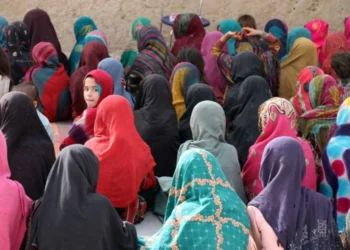
The Taliban act with rigid ideology in many areas, blending their tribal and ethnic preferences with selective Quranic verses and prophetic traditions, making life increasingly difficult for ordinary citizens. Yet, when Western interests are at stake, they proceed with far greater caution and restraint. The Taliban know full well that for Donald Trump, the spectacle of parading American military equipment is far less tolerable than their clampdown on Afghan women’s rights. Thus, their decision to forgo a military parade was aimed at pleasing the White House. At the same time, while Afghan women and girls are subjected to severe restrictions, Taliban fighters brazenly escort Western female tourists in cars and motorbikes across streets, mountains, and open fields. Worse still, some fighters openly solicit sexual favors—acts that, rather than being condemned, are quickly handed over to the media. The purpose is clear: to convince Western audiences that Taliban fighters are not as harsh toward women as widely portrayed.
These examples reveal a striking pattern: whenever Western governments’ interests are involved, the Taliban present themselves as pragmatists. But when it comes to demands tied primarily to Afghanistan’s future, such as establishing an inclusive government or safeguarding human rights, they retreat behind the cloak of “national sovereignty” and insist on non-interference in Afghanistan’s internal affairs. Fighting terrorism, particularly against al-Qaeda and ISIS, keeping distance from certain regional states, avoiding provocative parades, and staging high-profile encounters with Western female tourists are all matters directly linked to Western concerns. In these areas, the Taliban tread carefully. But when pressed on power-sharing or human rights, they resist fiercely, knowing full well that these issues do not directly affect Western strategic interests, and that no Western power will break ties with them on these grounds alone.
You can read the Persian version of this analysis here:
بگرام امسال گرما نداشت؛ معنای انصراف طالبان از برگزاری «رژه نظامی»