• 8AM.MEDIA
  • ویب‌سایت فارسی
  • پښتو ویب‌پاڼه
  • اۉزبېکچه ویب‌سایت
  • Podcast
Wednesday, October 7, 2026
Hasht-e Subh
  • Home
  • News
    • Afghanistan News
    • World News
  • Opinion
    • Editorial
    • Analysis
  • Reports
    • Daily Reports
    • Investigative Reports
  • Society
    • The story of people
  • Women’s Word
  • Columns
    • Three Years After Afghanistan’s Fall: The Taliban’s Resurgence
    • Towards Equality
    • The Resurgence of the Taliban: Two Years Since Afghanistan’s Fall
    • Hebatullah Report Special Edition
    • Resistance for Education Special Edition
    • Special Column on Taliban’s Education Curriculum
    • Nawroz
  • Interviews
  • Contact Us
    • About Us
    • 8AM MEDIA Annual Awards
    • Submit an Article to Hasht-e-Subh
  • 8am.mediaBack
Subscribe
No Result
View All Result
  • Home
  • News
    • Afghanistan News
    • World News
  • Opinion
    • Editorial
    • Analysis
  • Reports
    • Daily Reports
    • Investigative Reports
  • Society
    • The story of people
  • Women’s Word
  • Columns
    • Three Years After Afghanistan’s Fall: The Taliban’s Resurgence
    • Towards Equality
    • The Resurgence of the Taliban: Two Years Since Afghanistan’s Fall
    • Hebatullah Report Special Edition
    • Resistance for Education Special Edition
    • Special Column on Taliban’s Education Curriculum
    • Nawroz
  • Interviews
  • Contact Us
    • About Us
    • 8AM MEDIA Annual Awards
    • Submit an Article to Hasht-e-Subh
  • 8am.mediaBack
No Result
View All Result
Hasht-e Subh
No Result
View All Result

Ban on Girls’ Education: Developing Religious Schools is a Priority for the Taliban

Moqim mehran Moqim mehran
16 July 2023 - Solar Hijri Date: 1402/04/25 [t_time:1689520768]

In the last two years, the Taliban have established numerous religious and jihadi schools. The acting Deputy Prime Minister for Administrative Affairs of the Taliban recently declared that developing religious schools is their regime’s top priority. However, some citizens accuse the Taliban of recruiting soldiers and promoting extremism. They stress that the Taliban’s main focus is on propagating fundamentalism and institutionalizing Talibanism rather than governance and public services. They believe that the ban on girls’ schools and the emphasis on religious schools, particularly jihadi schools, will transform Afghanistan into a global hub for fundamentalism. Interestingly, while girls’ educational institutions remain closed, the Taliban display a keen interest in establishing schools. The Ministry of Education, now under their control, plans to create religious schools with the capacity to accommodate one thousand students in 25 provinces.

Since reclaiming power in August 2021, the Taliban have established numerous religious and jihadi schools. Their initiatives to advance religious education during this period encompassed appointing 100,000 religious teachers, consolidating the academic position of 70,000 religious scholars, improving educational facilities, granting exemptions for individuals lacking formal education, and enhancing the salaries of religious school instructors. Constructing religious schools has become an official undertaking of their government over the past year and eleven months. In a meeting with religious scholars and local leaders in the Darzab district of Jawzjan province, Abdul Salam Hanafi, the acting Deputy Prime Minister for Administrative Affairs of the Taliban, underscored the regime’s steadfast commitment to prioritizing the development of religious schools. He emphasized that the Taliban will spare no effort to strengthen and fortify these educational institutions.

The acting Prime Minister of the Taliban, Mawlawi Abdul Kabir, has issued a special directive to the group’s Ministry of Education, instructing them to allocate a specific budget for expanding and recruiting in jihadi schools. In a meeting with Mawlawi Masihullah Musadiq, the head of the Panjshir jihadi school, he emphasized the Ministry’s focus on increasing capacity and recruitment in these schools.

During a meeting with Mawlawi Abdul Kabir, Abdul Wahid Tariq, the head of the regime’s jihadi schools, announced the activation of jihadi schools in five provinces of the country. He emphasized that more jihadi schools will be operational soon. Tariq further stated that the supreme leader of the Taliban, Mullah Hibatullah Akhundzada, has a particular focus and emphasis on establishing and activating jihadi schools.

As the Taliban continue to construct religious and jihadi schools on an unprecedented scale, citizens of the country express deep concern about this trend. They argue that by establishing these schools, the Taliban indoctrinates thousands of minds and drives the country into decades of extremism and fundamentalism. Ahmadullah, a concerned citizen, asserts that the Taliban aims to expand its ideology among the people. He believes that through jihadi schooling and recruiting uneducated and unemployed youth, the group easily propagates its extremist beliefs. Ahmadullah declares that one of the Taliban’s fundamental objectives in Afghanistan is to Talibanize all social and community structures. He adds that Afghanistan is drowning in a crisis of fundamentalism, and the flames of hatred will soon reach the neighboring countries and the supporters of the Taliban in the region.

Shakila (pseudonym) is one of the university professors who has been unable to go to the university and teach for a long time. She expresses concerns about the Talibanization of universities. According to her, the current situation in Afghan universities and society inadvertently contributes to promoting the ideology of the ruling authority. She claims that the Taliban have targeted the dynamic intellectual center and the hub of thought production in the country, which is the universities. Shakila states that the process of radicalization and Talibanization of universities has begun, and the changes in the curriculum are gradually transforming the universities into religious and jihadi schools of the Taliban.

Meanwhile, Gul Mohammad Jamshidi, a resident of one of the northeastern provinces of the country, points out that the Taliban have effortlessly drawn thousands of individuals to join their ranks through the establishment of religious and jihadi schools, and they are already gearing up for future actions. According to him, if the Taliban can recruit people into their ranks conventionally, these individuals will remain devoted to the group as long as they receive wages and benefits. He emphasizes that the Taliban grasp this reality and utilize the funds sent to them weekly by the global community to construct these schools and entice willing soldiers with food and shelter, ensuring a long-lasting military force for decades to come.

The media activities of the Taliban’s Ministry of Education clearly demonstrate their commitment to developing religious schools. The ministry actively shares press releases and numerous tweets, emphasizing the leadership’s dedication to establishing and strengthening jihadi schools. Their Twitter page consistently informs about resource allocation, the establishment of new positions for religious schools, and the enhancement of these centers. In the past, the ministry had announced its intention to build significant jihadi schools in every province, offering a blend of religious and military education. Karamatullah Akhundzada, the Deputy for Islamic Studies at the Taliban’s Ministry of Education, reaffirmed that building and reconstructing jihadi schools rank among their regime’s highest priorities. He revealed that central Jihadi schools have already been set up in more than 25 provinces, each with a capacity to accommodate one thousand students. Additionally, there are ongoing plans to establish 3 to 10 primary rural religious schools in every district of the country.

Taliban officials prioritize the development of religious schools, while, under their orders, girls’ schools have remained closed for approximately two years, leading to psychological distress and forcing thousands of girls into underage or forced marriages. The Washington Post also reported a surge in psychological illnesses among girls due to the closure of their educational institutions. The mental health clinics in Kabul are now overwhelmed with patients suffering from mental problems.
ShareTweetSendSendShare

Related Posts

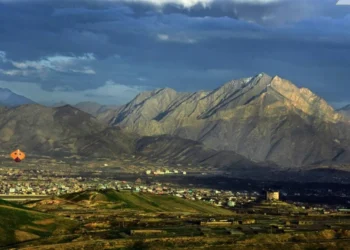
Aerial view of Omid-e Sabz Township in western Kabul, where residents face pressure from the Taliban and possible evacuation. (Photo credit: Zawia Media)
Afghanistan News

Taliban Arrest Community Representatives as Omid-e Sabz Township Faces Evacuation

6 October 2026 [t_time:1791308939]
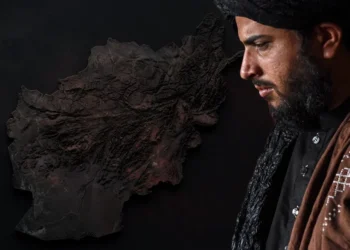
A Taliban fighter stands against a backdrop featuring a map of Afghanistan. (Photo credit: AFP)
Afghanistan News

Afghanistan Embassy in Geneva: Taliban’s Non-Recognition of Hague Court Does Not Nullify Afghanistan’s Obligations

6 October 2026 [t_time:1791306902]
A UNICEF female employee provides support to a child and her mother as part of nutritional assistance in Afghanistan. (Photo credit: UNICEF)
Afghanistan News

UNICEF Provides Nutrients to Children, Girls and Pregnant Mothers in Afghanistan

6 October 2026 [t_time:1791299909]

Latest

Loading latest news...

Popular stories

  • An Afghan woman gazes out of her home, reflecting the isolation and challenges faced by women in Afghanistan under Taliban rule. (Photo Credit: 8am.media)

    UN Report Reveals Shifts in Family Attitudes and Rise in Domestic Violence in Afghanistan

    Share
    Share Tweet
  • Taliban Shoot Young Man from Herat After Torturing Him with Hands Tied

    Share
    Share Tweet
  • Al-Qaeda Releases Hamza bin Laden Message on 9/11 Anniversary

    Share
    Share Tweet
  • Taliban Intelligence Deputy in Faizabad Killed with Two Guards

    Share
    Share Tweet
  • Iraq Reports Export of Two Million Barrels of Crude Oil Through Strait of Hormuz

    Share
    Share Tweet

Podcast

Insights
Insights

Join Lynne O’Donnell for 8AM’s podcast series, Insights.
Lynne talks with generals, diplomats, soldiers, journalists, politicians, activists, people who have front row seats for conflicts around the world, and citizens with a story to tell, happy or sad. For this first series, Afghanistan is the focus. Lynne and her guests talk about the collapse of the republic in August, 2021, and the impact since — for the people of Afghanistan, for the security of the region, for the safety of the world. It’s important, interesting and insightful.

Insights/22: Controlling the Narrative with Mina Sharif
byinsights8am

Controlling the Narrative

Lynne O’Donnell talks with Mina Sharif, author, activist, women’s rights campaigner, educator and mentor. They discuss who controls the narrative and who speaks for Afghanistan’s people when the Taliban appear to have seized control not only of the country but of the message, too.

Have a listen

Insights/22: Controlling the Narrative with Mina Sharif
Episode play icon
Insights/22: Controlling the Narrative with Mina Sharif
Episode Description
Episode play icon
Insights/21: Media Meltdown with Zahra Joya
Episode Description
Episode play icon
Insights/20: Terror Inc with Scott Richards
Episode Description
Episode play icon
Insights/19: Busting Stereotypes with Bushra Gohar
Episode Description
Episode play icon
Insights/18: Media Matters with Waliullah Rahmani
Episode Description
Episode play icon
Insights/17: What Goes Around Comes Around with Sima Samar
Episode Description
Search Results placeholder
Hasht-e Subh

8AM Media, also known as Hasht-e-Subh Daily, stands as Afghanistan's premier independent and non-profit newspaper, resonating as a beacon of journalistic integrity since its establishment in June 2007 by esteemed Afghan journalists and human rights advocates. With a steadfast commitment to citizen journalism and civic education, Hasht-e-Subh Daily has earned its place as the most esteemed publication in the nation.

Publisher: Sanjar Sohail
Email: [email protected]
Executive Director: Parwiz Kawa
Email: [email protected]

Read More

Guterres: Pakistan Played a Pivotal Role in US-Iran Talks

Ishaq Dar Discusses Bilateral Relations with UK Minister

Taliban Arrest Community Representatives as Omid-e Sabz Township Faces Evacuation

Afghanistan Embassy in Geneva: Taliban’s Non-Recognition of Hague Court Does Not Nullify Afghanistan’s Obligations

UNICEF Provides Nutrients to Children, Girls and Pregnant Mothers in Afghanistan

Editor’s Choice

Every Saturday morning, 8AM MEDIA English Services Department will guide you through the week’s biggest stories from Afghanistan and the international community.

Subscribe

© 2026 - ©Hasht-e Subh Daily

No Result
View All Result
8am.Media
پښتو ویب‌پاڼه
ویب‌سایت فارسی
اۉزبېکچه ویب‌سایت
  • Home
  • News
    • Afghanistan News
    • World News
  • Opinion
    • Editorial
    • Analysis
  • Reports
    • Daily Reports
    • Investigative Reports
  • Society
    • The story of people
  • Women’s Word
  • Columns
    • Three Years After Afghanistan’s Fall: The Taliban’s Resurgence
    • Towards Equality
    • The Resurgence of the Taliban: Two Years Since Afghanistan’s Fall
    • Hebatullah Report Special Edition
    • Resistance for Education Special Edition
    • Special Column on Taliban’s Education Curriculum
    • Nawroz
  • Interviews
  • Contact Us
    • About Us
    • 8AM MEDIA Annual Awards
    • Submit an Article to Hasht-e-Subh
  • 8am.media

© 2026 - ©Hasht-e Subh Daily