• 8AM.MEDIA
  • ویب‌سایت فارسی
  • پښتو ویب‌پاڼه
  • اۉزبېکچه ویب‌سایت
  • Podcast
Sunday, October 25, 2026
Hasht-e Subh
  • Home
  • News
    • Afghanistan News
    • World News
  • Opinion
    • Editorial
    • Analysis
  • Reports
    • Daily Reports
    • Investigative Reports
  • Society
    • The story of people
  • Women’s Word
  • Columns
    • Three Years After Afghanistan’s Fall: The Taliban’s Resurgence
    • Towards Equality
    • The Resurgence of the Taliban: Two Years Since Afghanistan’s Fall
    • Hebatullah Report Special Edition
    • Resistance for Education Special Edition
    • Special Column on Taliban’s Education Curriculum
    • Nawroz
  • Interviews
  • Contact Us
    • About Us
    • 8AM MEDIA Annual Awards
    • Submit an Article to Hasht-e-Subh
  • 8am.mediaBack
Subscribe
No Result
View All Result
  • Home
  • News
    • Afghanistan News
    • World News
  • Opinion
    • Editorial
    • Analysis
  • Reports
    • Daily Reports
    • Investigative Reports
  • Society
    • The story of people
  • Women’s Word
  • Columns
    • Three Years After Afghanistan’s Fall: The Taliban’s Resurgence
    • Towards Equality
    • The Resurgence of the Taliban: Two Years Since Afghanistan’s Fall
    • Hebatullah Report Special Edition
    • Resistance for Education Special Edition
    • Special Column on Taliban’s Education Curriculum
    • Nawroz
  • Interviews
  • Contact Us
    • About Us
    • 8AM MEDIA Annual Awards
    • Submit an Article to Hasht-e-Subh
  • 8am.mediaBack
No Result
View All Result
Hasht-e Subh
No Result
View All Result

China and the Taliban: A Game Leading to an Impasse

By: Ahmad Tariq Noorzadeh

Moqim mehran Moqim mehran
5 February 2024 - Solar Hijri Date: 1402/11/17 [t_time:1707199301]
China and the Taliban: A Game Leading to an Impasse

Shutterstock

The welcoming of an ambassador from a country is viewed as a significant step in the advancement of cooperation between two nations within the international system. This practice usually follows the formal recognition of countries. In a unique occurrence, China has accepted the ambassador of the Taliban without officially recognizing it. While diplomatic relations may be established without embassies in each other’s capitals or with lower-level diplomatic ties, this marks the first instance in modern diplomatic history where a country accepts another’s ambassador without formal recognition of the government.

Afghanistan and China, as two neighboring countries, have enjoyed good relations over the past decades; even with the collapse of governments and the emergence of new regimes in Afghanistan, there has never been any serious tension observed in the history of the two countries. China has consistently pursued a conservative policy towards its neighbors and the region, focusing primarily on economic interests. Additionally, Afghanistan has never become a part of China’s economic interests, which caused significant bridging Chinese investments in Afghanistan.

Over the two-decade period of the previous Republic government in Afghanistan (2001 – 2021), diplomatic efforts, including seven visits by President Hamid Karzai to China and the first state visit of President Mohammad Ashraf Ghani to Beijing, failed to persuade China to take significant measures for Afghan stability and security. China’s economically oriented policy found limited economic interests in Afghanistan, hindering sincere steps towards Afghan security and stability.

The sole concern that could put China under pressure is the security threats stemming from members of the East Turkistan Islamic Movement, who have bases in Afghanistan and are supported by the Taliban. In the past, Afghanistan believed that as security cooperation with China increased and threats from Uyghurs in Afghanistan diminished, China would become more involved in the Afghan peace process. However, the outcome was the opposite, as Afghanistan, even after arresting Uyghur members of the East Turkistan Islamic Movement and handing them over to the Chinese government, failed to leverage China’s involvement in Afghanistan affairs.

Today, the Taliban have a policy opposite to the Republic’s government. By supporting the Uyghur of ETIM, they have heightened China’s concerns, leaving the country with only two options. First, exerting pressure on the Taliban and escalating tensions with this group to compel them, through force, to distance themselves from the support of the East Turkistan Islamic Movement. The second option involves engaging with the Taliban, offering economic incentives, opening the door for Chinese intelligence members to enter Afghanistan as traders and investors, and monitoring and tracking all activities of the ETIM. For a country like China, with its conservative policies and considering the existing conditions in the region, where most of its regional allies are engaged in various forms of direct and proxy conflicts, it does not wish to resort to violence.

Hence, the simplest solution for China is the second option. Engaging with the Taliban, maintaining and strengthening direct communication with them—which includes accepting the Taliban ambassador—and ultimately allowing the free movement of Chinese intelligence to Afghanistan. This enables China to stay informed about any activities of the East Turkistan Islamic Movement members.

Alternatively, the Taliban, reliant and needs China’s bilateral and regional support and unable to sever its ties with the Uyghurs, both Taliban and ETIM share a common religion of Islam and a goal of establishing an Islamic government. This shared objective has cultivated robust connections between the Taliban and the ETIM, spanning at least the last two decades.

China has embarked on a dangerous game; engaging with a terrorist group like the Taliban cannot secure its security interests. The more China engages with the Taliban, the more the security interests at the regional level are jeopardized. The issue is not limited to just the East Turkistan Islamic Movement in Afghanistan; at least 21 terrorist groups are operating in the country. They already have access to billions of dollars worth of military equipment left behind by the United States after its withdrawal.

Reflecting on history, when the Taliban refused to surrender Osama bin Laden in 2001, risking the collapse of their regime, it remains uncertain how swiftly they will address the activities of Muslim Uyghurs who have sought refuge with the Taliban due to fears of the Communist government of China.
ShareTweetSendSendShare

Related Posts

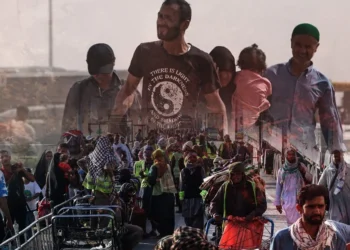
A composite image shows a crowd of people pushing carts along a road, overlaid with portraits of men and a child, reflecting migration from Afghanistan. (Photo credit: AFP)
Opinion

Fleeing Afghanistan’s Problems Will Not Solve Them

24 October 2026 [t_time:1792866208]
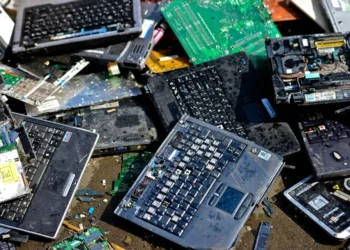
Discarded laptops and broken circuit boards lie piled together as experts warn about the growing volume of electronic waste in Afghanistan. (Photo credit: Social Media)
Daily Reports

Electronic Waste Is Rising in Afghanistan as the Lack of Standard Recycling Raises Alarm

24 October 2026 [t_time:1792852512]
National Resistance Front of Afghanistan official emblem displayed on a dark background. (Photo credit: NRF)
Afghanistan News

National Resistance Front Reports Killing of Two Taliban Fighters in Herat

24 October 2026 [t_time:1792848209]

Latest

Loading latest news...

Popular stories

  • Donald Trump – U.S. President with Benjamin Netanyahu – Israeli Prime Minister in a gathering of people (Photo: Getty Images) Donald Trump – U.S. President with Benjamin Netanyahu – Israeli Prime Minister in a gathering of people (Photo: Getty Images)

    US Senator Criticizes Netanyahu’s Remarks Justifying War Against Iran

    Share
    Share Tweet
  • Iran’s Revolutionary Guards Say They Are Preparing to Unveil “Father of All Bombs”

    Share
    Share Tweet
  • Trump Calls Iran’s Hope of War Lasting Beyond US Midterm Elections a “Dream”

    Share
    Share Tweet
  • UN Report Reveals Shifts in Family Attitudes and Rise in Domestic Violence in Afghanistan

    Share
    Share Tweet
  • Beyond Victimhood: How the Women of Afghanistan Became Actors of Civil Resistance Against Gender Apartheid

    Share
    Share Tweet

Podcast

Insights
Insights

Join Lynne O’Donnell for 8AM’s podcast series, Insights.
Lynne talks with generals, diplomats, soldiers, journalists, politicians, activists, people who have front row seats for conflicts around the world, and citizens with a story to tell, happy or sad. For this first series, Afghanistan is the focus. Lynne and her guests talk about the collapse of the republic in August, 2021, and the impact since — for the people of Afghanistan, for the security of the region, for the safety of the world. It’s important, interesting and insightful.

Insights/22: Controlling the Narrative with Mina Sharif
byinsights8am

Controlling the Narrative

Lynne O’Donnell talks with Mina Sharif, author, activist, women’s rights campaigner, educator and mentor. They discuss who controls the narrative and who speaks for Afghanistan’s people when the Taliban appear to have seized control not only of the country but of the message, too.

Have a listen

Insights/22: Controlling the Narrative with Mina Sharif
Episode play icon
Insights/22: Controlling the Narrative with Mina Sharif
Episode Description
Episode play icon
Insights/21: Media Meltdown with Zahra Joya
Episode Description
Episode play icon
Insights/20: Terror Inc with Scott Richards
Episode Description
Episode play icon
Insights/19: Busting Stereotypes with Bushra Gohar
Episode Description
Episode play icon
Insights/18: Media Matters with Waliullah Rahmani
Episode Description
Episode play icon
Insights/17: What Goes Around Comes Around with Sima Samar
Episode Description
Search Results placeholder
Hasht-e Subh

8AM Media, also known as Hasht-e-Subh Daily, stands as Afghanistan's premier independent and non-profit newspaper, resonating as a beacon of journalistic integrity since its establishment in June 2007 by esteemed Afghan journalists and human rights advocates. With a steadfast commitment to citizen journalism and civic education, Hasht-e-Subh Daily has earned its place as the most esteemed publication in the nation.

Publisher: Sanjar Sohail
Email: [email protected]
Executive Director: Parwiz Kawa
Email: [email protected]

Read More

Fleeing Afghanistan’s Problems Will Not Solve Them

Part I: What Made the Peace Last? Lessons from Northern Ireland’s Good Friday Agreement

Civil Society Activists and Citizens of Afghanistan Protest Forced Deportations in Germany

New Revelation: Switzerland Spent Over $16,000 Hosting Taliban Delegation

Andisha: Afghanistan’s UN Missions Defend People’s Rights

Editor’s Choice

Every Saturday morning, 8AM MEDIA English Services Department will guide you through the week’s biggest stories from Afghanistan and the international community.

Subscribe

© 2026 - ©Hasht-e Subh Daily

No Result
View All Result
8am.Media
پښتو ویب‌پاڼه
ویب‌سایت فارسی
اۉزبېکچه ویب‌سایت
  • Home
  • News
    • Afghanistan News
    • World News
  • Opinion
    • Editorial
    • Analysis
  • Reports
    • Daily Reports
    • Investigative Reports
  • Society
    • The story of people
  • Women’s Word
  • Columns
    • Three Years After Afghanistan’s Fall: The Taliban’s Resurgence
    • Towards Equality
    • The Resurgence of the Taliban: Two Years Since Afghanistan’s Fall
    • Hebatullah Report Special Edition
    • Resistance for Education Special Edition
    • Special Column on Taliban’s Education Curriculum
    • Nawroz
  • Interviews
  • Contact Us
    • About Us
    • 8AM MEDIA Annual Awards
    • Submit an Article to Hasht-e-Subh
  • 8am.media

© 2026 - ©Hasht-e Subh Daily