• 8AM.MEDIA
  • ویب‌سایت فارسی
  • پښتو ویب‌پاڼه
  • اۉزبېکچه ویب‌سایت
  • Podcast
Wednesday, September 16, 2026
Hasht-e Subh
  • Home
  • News
    • Afghanistan News
    • World News
  • Opinion
    • Editorial
    • Analysis
  • Reports
    • Daily Reports
    • Investigative Reports
  • Society
    • The story of people
  • Women’s Word
  • Columns
    • Three Years After Afghanistan’s Fall: The Taliban’s Resurgence
    • Towards Equality
    • The Resurgence of the Taliban: Two Years Since Afghanistan’s Fall
    • Hebatullah Report Special Edition
    • Resistance for Education Special Edition
    • Special Column on Taliban’s Education Curriculum
    • Nawroz
  • Interviews
  • Contact Us
    • About Us
    • 8AM MEDIA Annual Awards
    • Submit an Article to Hasht-e-Subh
  • 8am.mediaBack
Subscribe
No Result
View All Result
  • Home
  • News
    • Afghanistan News
    • World News
  • Opinion
    • Editorial
    • Analysis
  • Reports
    • Daily Reports
    • Investigative Reports
  • Society
    • The story of people
  • Women’s Word
  • Columns
    • Three Years After Afghanistan’s Fall: The Taliban’s Resurgence
    • Towards Equality
    • The Resurgence of the Taliban: Two Years Since Afghanistan’s Fall
    • Hebatullah Report Special Edition
    • Resistance for Education Special Edition
    • Special Column on Taliban’s Education Curriculum
    • Nawroz
  • Interviews
  • Contact Us
    • About Us
    • 8AM MEDIA Annual Awards
    • Submit an Article to Hasht-e-Subh
  • 8am.mediaBack
No Result
View All Result
Hasht-e Subh
No Result
View All Result

Comparing Afghanistan and Pakistan: Two Neighbors, Two Theocratic Systems – Elections and Non-Elections

Moqim mehran Moqim mehran
1 March 2024 - Solar Hijri Date: 1402/12/12 [t_time:1709364784]

An intriguing aspect of our time is the coexistence of three Islamic systems nearby: the Islamic Republic of Iran, the Islamic Republic of Pakistan, and the Islamic Emirate of the Taliban, each with distinct similarities and differences. Among them, Iran and present-day Afghanistan exhibit greater political parallels as both are governed by theocratic regimes where Mullahs, as a social class, exert influence over various sectors. Notably, the term “clerical rule” in political science, often associated with the Middle Ages, is seemingly obsolete and persists into the twenty-first century. This emergence of a class claiming representation from the unseen world is a bitter satire, resulting in the suffering of millions of deprived and oppressed people in these countries, despite advancements in sciences, expertise, and professions.

Adding to this historical-geographical coincidence is the theocratic nature of both the Iranian and Afghan systems, with one deeply rooted in Shiite religious bias and the other in Sunni religious bias. Consequently, each considers a portion of its citizens as secondary. In Iran, a Sunni individual faces insurmountable barriers to reaching leadership, presidency, ministerial positions, or governorships, and vice versa for Shiites. Unless political exigencies dictate otherwise, these regimes, fueled by religious biases, harbor profound hatred and hostility toward each other. For a devout Shiite regime, reconciling with a devout Sunni regime is the last option, just as reconciling with a devout Shiite regime would be the last option for a devout Sunni regime.

However, despite this deep-seated animosity based on religious faith, a seemingly friendly relationship has emerged between these two nations. This is particularly evident as the Iranian regime is perceived as a superior model for the Taliban in Afghanistan. The Taliban, by granting unlimited authority to their Amir al-Mu’minin (Commander of the Faithful), closely mirrors Iran’s Guardianship of the Jurist system. Moreover, the Taliban’s reliance on ideological soldiers instead of the conventional Afghan army parallels Iran’s dependence on the Islamic Revolutionary Guard Corps as the backbone of the Islamic regime. The appointment of key government positions to individuals close and loyal to the leadership is another shared trait between the two systems. Consequently, the external relations of Iran and Afghanistan with extremist groups in other countries, viewed as strategic arms in regional manipulations and pressure tools for extortion, seem to be intertwined.

Nevertheless, significant differences exist between these two theocratic systems, stemming not from their religious ideologies but from their infrastructures. One notable distinction lies in their approach to elections; while the Iranian government, despite its fluctuations, upholds them, the Taliban regime staunchly opposes them. Iran’s governance infrastructure traces back to modernizing reforms initiated during the constitutional era, aiming to establish a modern, accountable, and law-abiding government. This period witnessed imprisonments, the formation of political parties, and substantial efforts toward institutional reform. Notably, reforms during the Pahlavi era, guided by Iranian intellectuals, institutionalized the separation of powers, expanded modern education, and established crucial institutions in art, culture, and thought. Despite the upheaval of the Islamic Revolution, these reforms endured, elevating the concept of popular sovereignty. Even the Guardianship of the Jurist system, which inherently denies people’s authority, was compelled to acknowledge their significance. This duality emerged, with a clerical leader positioned as divine on one side and people asserting themselves as true owners of the country and its system on the other, refusing absolute denial of their rights.

In contrast, the Taliban ascended to power in a context lacking such infrastructural foundations, where the intellectual groundwork for transformative reform was insufficient. Traditional institutions prevail over modern ones in Afghanistan, impeding the implementation of power separation and hindering the emergence of a political sense of citizenship. The Taliban fear elections and resist the idea of people entering the political sphere, apprehensive of subjects claiming rightful citizenship and determining their destiny. While democracy necessitates more than just elections and requires mechanisms to counter rulers’ tyranny and empower people, elections remain a transparent and measurable mechanism. Addressing their deficiencies and effectively leveraging opportunities for transparency can lay the cornerstone of democracy.

The introduction of elections signifies breaking the cycle of violence, transitioning from bloodshed to peaceful power exchange. It underscores that power acquisition doesn’t mandate resorting to arms or inciting warfare to overthrow rulers. In many stable democracies, liberation from this futile cycle has been instrumental in achieving stability. Even amid widespread citizen dissatisfaction, the Iranian regime garners some legitimacy through elections, offering a conduit for societal dissatisfaction and minor changes. If the Taliban were to embrace elections, it would mark the first step toward reconciliation with the people, signaling their readiness for dialogue, albeit acknowledging the lengthy journey ahead toward achieving the desired system.
ShareTweetSendSendShare

Related Posts

Masked militants stand before a smoke-filled backdrop marking the 25th anniversary of the September 11 attacks. (Photo credit: Reuters + AI)
Analysis

25 Years After 9/11: Did Terrorism Lose, or Just Change Its Face?

15 September 2026 [t_time:1789498481]
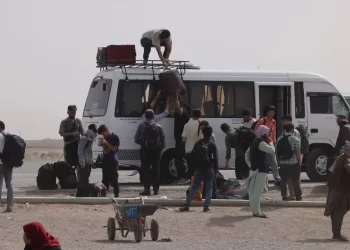
Afghan migrants loading belongings onto a bus during forced expulsion from Iran, July 2025. (Photo Credit: Marjan Wafa (IOM))
Afghanistan News

OCHA: Returning Families Face Growing Needs as Winter Approaches

15 September 2026 [t_time:1789496602]
Planted Mines and Child Casualties: Citizens Hold Taliban Responsible for Mine Placement
Afghanistan News

Two Children Killed in Unexploded Ordnance Blast in Khost

15 September 2026 [t_time:1789496454]

Latest

Loading latest news...

Popular stories

  • Hamza bin Laden - the son of Osama bin Laden (Photo: Social Media)

    Al-Qaeda Releases Hamza bin Laden Message on 9/11 Anniversary

    Share
    Share Tweet
  • Sajjad Haider Khan: Those with Valid Visas Will Continue Their Studies in Pakistan

    Share
    Share Tweet
  • UN Report Reveals Shifts in Family Attitudes and Rise in Domestic Violence in Afghanistan

    Share
    Share Tweet
  • Taliban Shoot Young Man from Herat After Torturing Him with Hands Tied

    Share
    Share Tweet
  • Taliban Deny, Pakistan Insists: Bodies of 10 TTP Members Transferred to Afghanistan

    Share
    Share Tweet

Podcast

Insights
Insights

Join Lynne O’Donnell for 8AM’s podcast series, Insights.
Lynne talks with generals, diplomats, soldiers, journalists, politicians, activists, people who have front row seats for conflicts around the world, and citizens with a story to tell, happy or sad. For this first series, Afghanistan is the focus. Lynne and her guests talk about the collapse of the republic in August, 2021, and the impact since — for the people of Afghanistan, for the security of the region, for the safety of the world. It’s important, interesting and insightful.

Insights/22: Controlling the Narrative with Mina Sharif
byinsights8am

Controlling the Narrative

Lynne O’Donnell talks with Mina Sharif, author, activist, women’s rights campaigner, educator and mentor. They discuss who controls the narrative and who speaks for Afghanistan’s people when the Taliban appear to have seized control not only of the country but of the message, too.

Have a listen

Insights/22: Controlling the Narrative with Mina Sharif
Episode play icon
Insights/22: Controlling the Narrative with Mina Sharif
Episode Description
Episode play icon
Insights/21: Media Meltdown with Zahra Joya
Episode Description
Episode play icon
Insights/20: Terror Inc with Scott Richards
Episode Description
Episode play icon
Insights/19: Busting Stereotypes with Bushra Gohar
Episode Description
Episode play icon
Insights/18: Media Matters with Waliullah Rahmani
Episode Description
Episode play icon
Insights/17: What Goes Around Comes Around with Sima Samar
Episode Description
Search Results placeholder
Hasht-e Subh

8AM Media, also known as Hasht-e-Subh Daily, stands as Afghanistan's premier independent and non-profit newspaper, resonating as a beacon of journalistic integrity since its establishment in June 2007 by esteemed Afghan journalists and human rights advocates. With a steadfast commitment to citizen journalism and civic education, Hasht-e-Subh Daily has earned its place as the most esteemed publication in the nation.

Publisher: Sanjar Sohail
Email: [email protected]
Executive Director: Parwiz Kawa
Email: [email protected]

Read More

Maimay’s 20-Bed Hospital Still Non-Operational After Eight Years

25 Years After 9/11: Did Terrorism Lose, or Just Change Its Face?

Virtual Meetings, Virtual Warnings: How Long Will the Taliban Opposition’s Cycle Continue?

From Frontline Resistance to a National Compact

Guterres Highlights Democracy’s Role in Upholding Human Rights and the Rule of Law

Editor’s Choice

Every Saturday morning, 8AM MEDIA English Services Department will guide you through the week’s biggest stories from Afghanistan and the international community.

Subscribe

© 2026 - ©Hasht-e Subh Daily

No Result
View All Result
8am.Media
پښتو ویب‌پاڼه
ویب‌سایت فارسی
اۉزبېکچه ویب‌سایت
  • Home
  • News
    • Afghanistan News
    • World News
  • Opinion
    • Editorial
    • Analysis
  • Reports
    • Daily Reports
    • Investigative Reports
  • Society
    • The story of people
  • Women’s Word
  • Columns
    • Three Years After Afghanistan’s Fall: The Taliban’s Resurgence
    • Towards Equality
    • The Resurgence of the Taliban: Two Years Since Afghanistan’s Fall
    • Hebatullah Report Special Edition
    • Resistance for Education Special Edition
    • Special Column on Taliban’s Education Curriculum
    • Nawroz
  • Interviews
  • Contact Us
    • About Us
    • 8AM MEDIA Annual Awards
    • Submit an Article to Hasht-e-Subh
  • 8am.media

© 2026 - ©Hasht-e Subh Daily