After the negotiations between the United States and the Taliban in Doha, Rina Amiri, the U.S. Special Envoy for Afghan Women, Girls, and Human Rights, revealed that she engaged in talks with the Taliban in response to “strong demands from Afghan citizens and human rights defenders.” Her statements received diverse reactions from human rights activists, women’s protest movements, and citizens of Afghanistan. Civil society activists and human rights groups have criticized Amiri’s remarks as ambiguous, misleading, shameful, and conflicting with the demands of the Afghan people.
Protesting women and girls have condemned the talks between U.S. special representatives and the Taliban’s foreign minister, considering them as negotiations playing with the destiny of the Afghan people, especially women. They perceive Amiri’s statements as biased, unfair, and disconnected from reality, urging her to apologize for taking an irresponsible and anti-women stance. The protesters emphasized that the Doha talks were held without the presence of Afghan people, particularly women and political forces. They believe that instead of resolving the country’s crisis, these talks will lead to further regional tensions and perpetuate the Taliban’s oppressive and misogynistic rule.
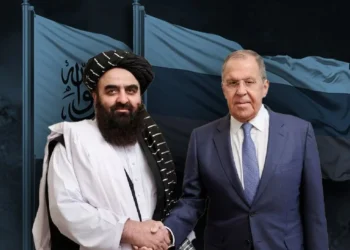
In response to the talks, the United States Department of State has stated that they discussed economic conditions, human rights, humanitarian needs, the Taliban’s security commitments, and the fight against drugs with the Taliban.
After Rina Amiri, the U.S. Special Envoy for Afghan Women, Girls and Human Rights stated that she engaged in direct talks with the Taliban based on the “widespread insistence of Afghans and human rights defenders,” a broad spectrum of citizens and civil activists reacted to her statements, describing them as “shameful.” Following the conclusion of the two-day talks in Doha between U.S. special representatives and Amir Khan Muttaqi, the acting foreign minister of the Taliban, Ms. Amiri released a statement emphasizing that her presence in these talks was in response to the human rights activists call for the necessity of engaging with the Taliban.
Civil Activists and Human Rights Advocate’s Reaction to Rina Amiri’s Statements
Rina Amiri’s tweets have drawn strong reactions from civil activists, human rights advocates, writers, and journalists, who describe her statements as sweeping, shameful, misleading, and entirely contradictory to the values of Afghan women. A broad spectrum of citizens has criticized the Doha talks between the United States and the Taliban, cautioning that these discussions may escalate tensions, exacerbate instability, and further reinforce the Taliban’s misogynistic policies and gender apartheid. They persistently demand that the U.S. Special Envoy for Afghan Women, Girls, and Human Rights disclose the identities of those advocating engagement with the Taliban.
In response to Rina Amiri’s remarks, journalist Hashmat Radfar tweeted, “The supposed insistence of Afghans and human rights defenders is even more deceptive than ‘Mr. Time Waste’s’ statements.” He questioned Ms. Amiri, saying, “If you have nothing to hide, why deny your audience the opportunity to express their opinions? Insulting the sensibilities of humans, including the ‘martyr-loving Afghan and non-Afghan nation,’ contradicts the spirit of human rights.”
Satirist and human rights defender Musa Zafar also tweeted, rejecting Rina Amiri’s assertions and stating, “As a human rights defender who has collaborated with human rights organizations since 2004 and maintains connections with many human rights defenders, I disapprove of your claim. Do not misrepresent our views. Mullah Muttaqi is not a human rights defender.”
Protester Razia Barakzai shared a video, affirming that human rights defenders and women never urged engagement with the Taliban. She directly addresses Rina Amiri, recalling how hundreds of letters with diverse stories, pains, and appeals were sent to international organizations, including the U.S. Special Envoy for Afghan Women, Girls, and Human Rights. Ms. Barakzai expresses her disappointment as Rina Amiri never responded to these letters, not even with a brief sentence. She questions the sudden change of stance by human rights defenders who once insisted on dialogue with the Taliban.
Former government negotiator with the Taliban in Doha, Fawzia Koofi, raises concerns about The United States Department of State’s attention to the fact that Afghan women have been practically confined at home for nearly two years.
Filmmaker and former head of Afghan Film, Sahra Karimi, writes, “August brings forth collapses in contemporary Afghan history, but it also exposes the betrayal of those who migrated to the U.S. years ago, became American citizens, and have now become instruments for American politics and commerce while disregarding the homeland and genuine human values. Another August, another betrayal.”
Zahra Haqparast, who experienced being in Taliban prisons, questions Rina Amiri, “Why do you ignore us? Those who want to negotiate with the Taliban are not our representatives. They are women who prioritize money and disregard women’s issues in the country. The Taliban is a misogynistic and criminal group.” Haqparast urges Rina Amiri not to talk to the Taliban but to listen to her about the horrors she experienced in their prison.
Ehsan Salam, a prominent satirist in the country, humorously clarifies, “I confess that I have not insisted on Rina Amiri. She wants to fabricate human rights insistence for us and you.”
Mujib al-Rahman Rahimi, the spokesperson of the former High Council for National Reconciliation, questions Rina Amiri about the changes in the Taliban’s policies regarding women that led her to engage in direct talks with this group. He further adds, “Can one be a women’s rights defender and at the same time advocate for direct engagement with the Taliban?”
The Reaction of Women’s Protest Movements
Women’s protest movements have criticized the statements of the U.S. Special Envoy for Afghan Women, Girls, and Human Rights, calling them unrealistic and contradicting the demands of the people, especially women. The Strong Women’s Movement (Junbish-e Zanan-e Moqtadir) expressed that the recent Doha talks between the U.S. representatives and the Taliban were conducted without the presence of Afghan people, particularly women. They argued that instead of resolving the crisis, it will lead to increased instability and oppression of women. Amiri’s statements for women were described as “illogical, unprincipled, disconnected from reality, and discouraging.” The Strong Women’s Movement emphasized that the Taliban has continued their systematic oppression, gender apartheid, and elimination of women over the past two years. They asserted that any interaction or dialogue with this group would normalize terrorism and demanded Rina Amiri apologize to Afghan women and not listen to the voices of a few Taliban lobbyists.
The Women’s Movement for Peace and Freedom (Junbish-e Zanan Bara-e Solh wa Azadi) also deemed Rina Amiri’s statements as unrealistic and far from women’s demands. They stated that the Taliban has systematically eliminated women and committed gender apartheid over the past two years, and reconciliation with this group should not take place.
The “Purple Saturdays” movement (Jubish-e Shanbeha-e Arghawani) has criticized the statements of the U.S. Special Envoy for Afghan Women, Girls, and Human Rights, considering them contrary to the national interests of the country. The movement emphasized that the Taliban’s two-year rule has shown their alienation from global concepts, and their ideology lacks the ability to coexist with the people of Afghanistan and the international community. The “Purple Saturdays” movement emphasized that supporting the establishment of a decentralized and democratic system is the way to end financing the Taliban.
Additionally, a number of Afghan citizens residing in Pakistan have issued a statement stating that the Taliban has continued to oppress, detain, and eliminate women over the past two years. The statement asks Amiri which segment of women has given her the mandate to negotiate with the Taliban on their behalf. The Afghan protesters in Pakistan further assert that the Taliban’s lobbyists do not represent women and human rights activists, and they reject any talks held without the representation of Afghan women.
In addition, women and girls participating in the protests have shared their reactions to the U.S.-Taliban talks through video recordings, expressing that the Doha talks are playing with the fate of millions in Afghanistan. In these videos, the protesters assert that the Taliban’s female lobbyists do not represent any segment of Afghan women and people.
These reactions come as The United States Department of State issued a statement, confirming that Thomas West and Rina Amiri, the special representatives for Afghanistan, have engaged in talks with the Taliban in Doha, Qatar. In the statement, the U.S. government called on the Taliban to change policies that worsen the human rights situation, particularly for women’s rights. Serious concerns were expressed about arrests, media censorship, and religious restrictions, with an urging for the respect of human rights and the protection of all Afghan citizens’ rights. The State Department also mentioned that its special envoys have had discussions with representatives of the Da Afghanistan Bank (DAB) and the finance ministry under the Taliban’s control regarding banking challenges in Afghanistan.
The statement emphasized, “The United States authorities emphasized, and emphasized the immediate and unconditional release of detained American citizens and highlighted that these detentions are a significant impediment to positive engagement.”
The United States Department of State’s statement revealed deep concern about the humanitarian crisis, and they emphasized the need to continue supporting humanitarian organizations and UN agencies working in accordance with the United Nations Charter.
Meanwhile, the Taliban’s Foreign Ministry has stated that, for building trust, the names of Taliban leaders should be removed from the blacklist, and Afghanistan’s reserves should be unfrozen.