Zabihullah Mujahid, the Taliban’s chief spokesman, recently made remarks in an interview with the Pashto service of Iran’s external radio that have sparked debate over the prospect of a confrontation between the United States and the Islamic Republic of Iran. “We are not in favor of war,” Mujahid said. “You remember that when Iran was attacked, the result was that Iran emerged victorious. I think this time will be the same. Iran is in the right; defense is Iran’s right. Whatever the call may be, Afghans are ready to sympathize with Iran in times of war and hardship and to cooperate within their means.” His comments have fueled speculation that, should a war break out between Iran and the United States, the Taliban might step in on Tehran’s side. Against that backdrop, his statements merit closer examination along several lines:
1) Mujahid did not say that the Taliban regime would confront the United States in support of Iran. Instead, he referred to “Afghans,” who, in his words, would cooperate with Iran “within their means.” In doing so, deliberately or not, he distinguished the Taliban as a governing authority and the Afghan people, an analytically valid distinction. His remarks appear more as an expression of perceived public sentiment than a formal commitment by the Taliban. That said, given that the Taliban did not come to power through a popular vote, they lack the democratic mandate to invoke collective national emotions in geopolitical maneuvering. Mujahid is well aware that many Afghans, regardless of the nature of the governments in Kabul or Tehran, feel a sense of historical, geographic, linguistic, and religious affinity with Iran. In times of crisis, that affinity often translates into greater sympathy for Iran than for the United States. Moreover, Iran has hosted millions of Afghan refugees during successive crises in Afghanistan. It is reasonable to assume that, in a moment of crisis for Iran, many Afghans would feel a moral obligation to reciprocate. By framing the issue this way, Mujahid may be sending a subtle message to Washington: even if the Taliban were to pursue neutrality or limited alignment with the United States, Afghan public opinion, shaped by religious beliefs and neighborly ties, would likely lean toward Iran. Emphasizing this distinction serves as a cautious political tactic: it shields the regime from direct U.S. pressure while signaling solidarity with Tehran.
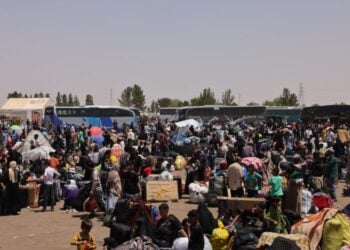
2) Even if one assumes the Taliban intend to cooperate with Iran, the key phrase is “within our means.” That formulation falls far short of suggesting that the Taliban would confront the United States militarily on Iran’s behalf. The most plausible form of cooperation would be humanitarian and logistical rather than military. In the event of conflict, the Taliban could play a role in managing the fallout by keeping Afghanistan’s borders open to Iranians seeking refuge. The most practical and immediate expression of support would be to guarantee safe passage across Afghanistan’s eastern frontier and to address the humanitarian needs of those fleeing war. Such steps could be justified as an act of neighborly solidarity rather than geopolitical alignment.
3) The timing of Mujahid’s comments is also significant. They came shortly after an interview by Alireza Bikdeli, Iran’s ambassador to Afghanistan. Less than a week ago, Bikdeli told TOLO News that the Islamic Republic sees no major obstacle to recognizing the Taliban regime and that such recognition could occur “at the appropriate time.” While Bikdeli’s remarks suggested a potential shift in Tehran’s approach, they were not met with an explicit or enthusiastic response from the Taliban leadership. In this context, Mujahid’s comments could be interpreted as an indirect and carefully calibrated reply to Iran’s diplomatic overture, an indication that positive engagement from Tehran will not go unanswered.
4) Ultimately, regardless of Mujahid’s rhetoric, the Taliban’s strategic calculus in nearly all scenarios tilts toward the United States rather than Iran. For now, the United States remains the world’s foremost power and still the most influential external actor in Afghanistan. The White House has the capacity to impose or lift sanctions on the Taliban and to mobilize regional and international consensus either for or against the group. Washington can decide whether to move toward formal recognition of the Taliban or to leave the regime in prolonged diplomatic limbo. By contrast, Iran faces significant international isolation. Few countries take Tehran’s positions as decisive in global diplomacy, and its ability to shape the Taliban’s long-term fate is limited compared with that of the United States. From this perspective, the Taliban’s choice is clear. They are unlikely to sacrifice the prospect of improved ties with Washington, whose greatest potential dividends would be formal recognition and sanctions relief, for the sake of alignment with Iran, a partnership that carries substantial costs.