• 8AM.MEDIA
  • ویب‌سایت فارسی
  • پښتو ویب‌پاڼه
  • اۉزبېکچه ویب‌سایت
  • Podcast
Monday, October 26, 2026
Hasht-e Subh
  • Home
  • News
    • Afghanistan News
    • World News
  • Opinion
    • Editorial
    • Analysis
  • Reports
    • Daily Reports
    • Investigative Reports
  • Society
    • The story of people
  • Women’s Word
  • Columns
    • Three Years After Afghanistan’s Fall: The Taliban’s Resurgence
    • Towards Equality
    • The Resurgence of the Taliban: Two Years Since Afghanistan’s Fall
    • Hebatullah Report Special Edition
    • Resistance for Education Special Edition
    • Special Column on Taliban’s Education Curriculum
    • Nawroz
  • Interviews
  • Contact Us
    • About Us
    • 8AM MEDIA Annual Awards
    • Submit an Article to Hasht-e-Subh
  • 8am.mediaBack
Subscribe
No Result
View All Result
  • Home
  • News
    • Afghanistan News
    • World News
  • Opinion
    • Editorial
    • Analysis
  • Reports
    • Daily Reports
    • Investigative Reports
  • Society
    • The story of people
  • Women’s Word
  • Columns
    • Three Years After Afghanistan’s Fall: The Taliban’s Resurgence
    • Towards Equality
    • The Resurgence of the Taliban: Two Years Since Afghanistan’s Fall
    • Hebatullah Report Special Edition
    • Resistance for Education Special Edition
    • Special Column on Taliban’s Education Curriculum
    • Nawroz
  • Interviews
  • Contact Us
    • About Us
    • 8AM MEDIA Annual Awards
    • Submit an Article to Hasht-e-Subh
  • 8am.mediaBack
No Result
View All Result
Hasht-e Subh
No Result
View All Result

“Eradicating” Terrorism: The Deceptive Political Rhetoric

Hasht-E Subh Hasht-E Subh
20 July 2023 - Solar Hijri Date: 1402/04/29 [t_time:1689823486]

In a recent speech, Taliban spokesperson Zabihullah Mujahid declared that it was Afghanistan, not the Pakistani government, that had signed the Doha Agreement with the United States. In response to this statement, Pakistan’s Defense Minister Khawaja Muhammad Asif proclaimed that Pakistan is firmly committed to eradicating terrorism from its soil using all available resources, regardless of Afghanistan’s position. This announcement came following an attack by a group of gunmen on a Pakistani army center in the Zhob region of Balochistan province, which resulted in the death of more than ten Pakistani soldiers. After the attack, Pakistan’s defense minister criticized the Afghan Taliban for providing shelter to members of Tehreek-e-Taliban Pakistan (TTP) and urged the Taliban to cease TTP’s activities in accordance with the Doha Agreement. This elicited a reaction from Mujahid, who stated that the Taliban would not engage with Pakistan based on the Doha Agreement. Asif reiterated to Mujahid that Pakistan would eliminate terrorism using all means, regardless of the Taliban’s position.

Asif’s statements are made amidst allegations that the government of Pakistan is among the top institutions that support and cultivate terrorism, lacking a genuine and resolute commitment to combat terrorism and exploiting this phenomenon for their benefit. The Pakistan Army has played a significant role in the expansion and fortification of the terrorist industry, profiting the most from its existence. For several decades, the Pakistani military has been responsible for establishing and controlling terrorist groups to achieve their strategic objectives. The Taliban is among these groups that ultimately triumphed in dominating Afghanistan with the aid of the Pakistan Army.

Initially, Pakistani officials celebrated the Taliban’s victory in Afghanistan, but they have since realized that it has not been to their advantage; in fact, it has exacerbated Islamabad’s problems. The Taliban’s triumph in Afghanistan has significantly bolstered the TTP’s psychological, political, financial, and logistical position. According to the TTP, jihad has thrived in Afghanistan and now it is Pakistan’s turn. Not only the TTP but all radical Islamic groups in Pakistan are content with the Taliban’s seizure of power in Afghanistan and view it as a step towards the realization of the global jihad project. It is unsurprising that following the Taliban’s reinstatement in Afghanistan, TTP attacks against the Pakistani army have escalated.

The upsurge in terrorist attacks in Pakistan cannot be attributed solely to the fact that the Afghan Taliban have granted TTP members complete freedom of action, providing them with all necessary facilities to attack the Pakistani army. The issue is not so straightforward. In fact, the Afghan Taliban have made significant efforts to control the TTP, including transferring members of this group across the Durand Line to north and west Afghanistan, which has been welcomed by the Pakistani government. However, the Pakistani Taliban, similar to the Afghan Taliban and other terrorist organizations, cannot be entirely contained. These groups are well-versed in circumventing restrictions, and due to their mafia-like structure, they can operate under various guises simultaneously and even serve new masters if pressure intensifies.

In most cases, fighting against terrorist groups results in the expansion of these organizations and networks instead of their destruction, making the war against terrorism more intricate. This complexity leads to war attrition and ultimately creates an environment for terrorist groups to prevail. The Taliban’s control over Afghanistan is a prime example of this phenomenon. Terrorism in Afghanistan and Pakistan is deeply entrenched, and it cannot be eliminated through one or more fleeting military operations. While these operations may be advantageous in the short term, in the long run, they are not only unprofitable but also increase terrorism.

The roots of terrorism in both countries lie in the religious convictions of the populace. Due to the institutionalization and promotion of these beliefs over many centuries, they cannot be readily eradicated and supplanted with new ones. Fighting against religious beliefs necessitates an unwavering, long-term, and time-intensive effort that is beyond the purview of any government. Additionally, terrorism stems from factors such as unemployment, poverty, and chronic political crises, which are difficult to manage, particularly in less developed countries like Afghanistan and Pakistan.

As such, the statements made by Pakistan’s Defense Minister regarding the “eradication” of terrorism in the country can only be viewed as political rhetoric, primarily intended for domestic consumption. In order to sway public opinion, government officials in Pakistan often make statements or utter words that are purely for propaganda purposes. Even if Asif’s objective is simply to eliminate the TTP, it remains a formidable task. While the Pakistan army may be able to destroy the TTP, it cannot “eradicate” terrorism as it claims. Islamic extremism in Pakistan is deeply ingrained in society and has robust social foundations. Currently, neither the government of Pakistan has the sincere intention to eliminate it, nor is it capable of doing so.

The Unsuccessful Strategy of Combating Terrorism

The present-day approach to combatting terrorism, both on a global and local scale, has not only proven to be futile, but it has also led to the proliferation and intensification of this phenomenon. One of the primary reasons for the inefficacy of this strategy is the failure to acknowledge the stable and deeply ingrained social foundations that foster and sustain terrorism. The eradication of Islamic extremism cannot be achieved solely through the use of force. In fact, military intervention often has the opposite effect, making terrorist groups more determined, as demonstrated by the experiences of Afghanistan and Pakistan.

The utilization of terrorism as a geopolitical tool by governments, in which the Pakistani army is particularly adept, has also contributed to the failure of the counterterrorism strategy. However, the instrumentalization of terrorism has significant repercussions, which are increasingly felt by Pakistani soldiers. Terrorism, which was previously fostered by the Pakistani army to restrain its adversaries, has now shifted its focus and is targeting Pakistan itself.

ShareTweetSendSendShare

Related Posts

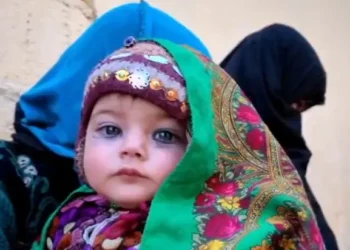
An Afghan child dressed in traditional clothing sits in her mother’s arms, highlighting the lives of children and families in Afghanistan (Photo: @UNICEFAfg)
Afghanistan News

UNICEF: Japan Supports Childhood Vaccination in Afghanistan

26 October 2026 [t_time:1792998919]
Donald Trump – U.S. President with Benjamin Netanyahu – Israeli Prime Minister in a gathering of people (Photo: Getty Images) Donald Trump – U.S. President with Benjamin Netanyahu – Israeli Prime Minister in a gathering of people (Photo: Getty Images)
World News

Trump Urges Israelis to Vote for Netanyahu

26 October 2026 [t_time:1792998109]
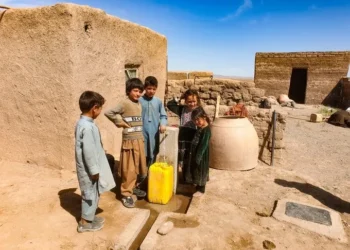
Children collect drinking water from a water point in a rural area of Afghanistan (Photo: @UNHabitatAf)
Afghanistan News

UN: 100 Families in Herat Gain Access to Safe Drinking Water

26 October 2026 [t_time:1792997985]

Latest

Loading latest news...

Popular stories

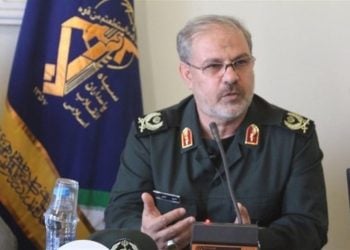
  • Hossein Mohabbi - Spokesperson for Iran's Islamic Revolutionary Guard Corps (IRGC) (Photo: Tasnim)

    Iran’s Revolutionary Guards Say They Are Preparing to Unveil “Father of All Bombs”

    Share
    Share Tweet
  • Trump Calls Iran’s Hope of War Lasting Beyond US Midterm Elections a “Dream”

    Share
    Share Tweet
  • UN Report Reveals Shifts in Family Attitudes and Rise in Domestic Violence in Afghanistan

    Share
    Share Tweet
  • Beyond Victimhood: How the Women of Afghanistan Became Actors of Civil Resistance Against Gender Apartheid

    Share
    Share Tweet
  • Afghanistan Freedom Front: One Taliban Intelligence Member Killed and Three Others Wounded in Takhar

    Share
    Share Tweet

Podcast

Insights
Insights

Join Lynne O’Donnell for 8AM’s podcast series, Insights.
Lynne talks with generals, diplomats, soldiers, journalists, politicians, activists, people who have front row seats for conflicts around the world, and citizens with a story to tell, happy or sad. For this first series, Afghanistan is the focus. Lynne and her guests talk about the collapse of the republic in August, 2021, and the impact since — for the people of Afghanistan, for the security of the region, for the safety of the world. It’s important, interesting and insightful.

Insights/22: Controlling the Narrative with Mina Sharif
byinsights8am

Controlling the Narrative

Lynne O’Donnell talks with Mina Sharif, author, activist, women’s rights campaigner, educator and mentor. They discuss who controls the narrative and who speaks for Afghanistan’s people when the Taliban appear to have seized control not only of the country but of the message, too.

Have a listen

Insights/22: Controlling the Narrative with Mina Sharif
Episode play icon
Insights/22: Controlling the Narrative with Mina Sharif
Episode Description
Episode play icon
Insights/21: Media Meltdown with Zahra Joya
Episode Description
Episode play icon
Insights/20: Terror Inc with Scott Richards
Episode Description
Episode play icon
Insights/19: Busting Stereotypes with Bushra Gohar
Episode Description
Episode play icon
Insights/18: Media Matters with Waliullah Rahmani
Episode Description
Episode play icon
Insights/17: What Goes Around Comes Around with Sima Samar
Episode Description
Search Results placeholder
Hasht-e Subh

8AM Media, also known as Hasht-e-Subh Daily, stands as Afghanistan's premier independent and non-profit newspaper, resonating as a beacon of journalistic integrity since its establishment in June 2007 by esteemed Afghan journalists and human rights advocates. With a steadfast commitment to citizen journalism and civic education, Hasht-e-Subh Daily has earned its place as the most esteemed publication in the nation.

Publisher: Sanjar Sohail
Email: [email protected]
Executive Director: Parwiz Kawa
Email: [email protected]

Read More

UNICEF: Japan Supports Childhood Vaccination in Afghanistan

Trump Urges Israelis to Vote for Netanyahu

UN: 100 Families in Herat Gain Access to Safe Drinking Water

UN Announces Second Phase of Economic Recovery Program in Five Afghan Provinces

Pope Calls for End to Violence in Yemen

Editor’s Choice

Every Saturday morning, 8AM MEDIA English Services Department will guide you through the week’s biggest stories from Afghanistan and the international community.

Subscribe

© 2026 - ©Hasht-e Subh Daily

No Result
View All Result
8am.Media
پښتو ویب‌پاڼه
ویب‌سایت فارسی
اۉزبېکچه ویب‌سایت
  • Home
  • News
    • Afghanistan News
    • World News
  • Opinion
    • Editorial
    • Analysis
  • Reports
    • Daily Reports
    • Investigative Reports
  • Society
    • The story of people
  • Women’s Word
  • Columns
    • Three Years After Afghanistan’s Fall: The Taliban’s Resurgence
    • Towards Equality
    • The Resurgence of the Taliban: Two Years Since Afghanistan’s Fall
    • Hebatullah Report Special Edition
    • Resistance for Education Special Edition
    • Special Column on Taliban’s Education Curriculum
    • Nawroz
  • Interviews
  • Contact Us
    • About Us
    • 8AM MEDIA Annual Awards
    • Submit an Article to Hasht-e-Subh
  • 8am.media

© 2026 - ©Hasht-e Subh Daily