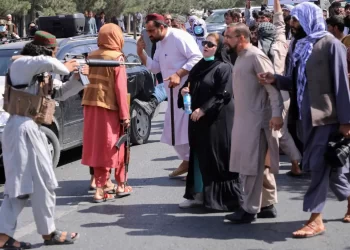
The village of Qarluq in the Darayim district of Badakhshan province witnessed public protests against the Taliban on Friday, 4, May. Just a day after, residents of the Argo district of the province also took to the streets chanting slogans against the Taliban. These protests garnered widespread attention and sparked various discussions. Factions opposed to the Taliban voiced support for the protesters’ demands. Some figures and groups, not considered anti-Taliban, have at least encouraged the Taliban to listen to the protesters’ grievances if not overtly support them. Notably, even individuals within the Taliban ranks have criticized the crackdown on protesters and advocated for a peaceful resolution to the challenges. For instance, Abdul Hamid Khorasani, a prominent Tajik member of the Taliban, indirectly supported the demands of the Badakhshan protesters in an audio message and criticized their suppression. Although the Taliban attempted to attribute the people’s protests to external influences, they still faced significant public support and political pressure. This indicates the significance of the anti-Taliban sentiment regardless of the catalyst.
Following the initiation of protests and their media coverage, senior Taliban officials traveled from Kabul to Badakhshan and engaged in discussions with representatives of the protesters. Initially, the Taliban favored appeasement, which seemingly proved ineffective; offering a few promises aimed to extinguish the flames of dissent, which failed. Subsequently, they resorted to threats, which largely went unnoticed. According to reports, some representatives of the protesters, forcibly relocated from the two districts to Fayzabad, the capital of Badakhshan, were detained and imprisoned, yet overt repression was avoided. However, the prevalent assumption was based on the expectation of appeasement or threats leading to the end of protests, which did not materialize.
Now, it appears that protests have not only persisted but have intensified. Yesterday, the village of Berlas in Argo district witnessed a resurgence of public demonstrations, albeit with a notable difference; this time, the Taliban unleashed ruthless repression on the protesters. According to reports, three protesters were killed by gunfire, and nearly ten others were wounded. Moreover, over sixty protesters were airlifted from Argo to Fayzabad to be incarcerated and tortured. The residents of Argo did not relent in the face of Taliban suppression and defiantly took to the streets, rallying against the group. Even the inhabitants of this district issued a call for a general uprising against the Taliban. One media outlet reported that women in Argo took up tools like axes and hammers, emerging from their homes to confront the Taliban. While the Taliban had previously dispatched fresh forces to suppress protesters in Argo, this time, two military helicopters guarded the ground forces tasked with repression.
Three important points need to be highlighted regarding this issue:
1- The Taliban are alien to the culture of protest and perceive it as an enemy. Consequently, they suppress any dissent. Opposition voices are considered an inseparable part of the anti-Taliban ideological system. Even if protests are driven by genuine concern and aimed at reform, the Taliban crush them. A clear example is the statements of Gulbuddin Hekmatyar, the leader of the Islamic Party, who, out of goodwill, calls on the Taliban to observe minimal tolerance to gain legitimacy. What happens after achieving legitimacy is of no concern to him. Even this seemingly benevolent voice, beneficial to the Taliban, is suppressed.
The Taliban claim to have an Islamic regime that attends to the people’s needs, leaving no room for dissent. In this context, anyone who protests, even if they are justified, is labeled as insurgents deserving death in the eyes of the Taliban. Moreover, the Taliban believe that only by expanding their policy of repression and intimidation can they either end or prevent protests. In their view, when the tools of repression are present and utilized, citizens refrain from daring to participate in protests due to fear of arrest, torture, and imprisonment. Contrary to the Taliban’s belief, however, repression is the catalyst for the emergence of demonstrations. Look closely at the protests in Badakhshan; despite the residents’ prior understanding of Taliban repression, they still took to the streets. Here, Taliban repression fuels citizens’ protests. In this regard, the inhabitants of these two districts broke the taboo. Even before this, female protesters did the same.
2- The Taliban raising the issue of poppy cultivation serves as a pretext for suppressing protesters. Even if the Taliban’s claim is true, suppressing people and disregarding their voices is incorrect. This was pointed out not only by Taliban opponents, as Abdul Hamid Khorasani, a vocal member of the group, highlighted in his audio message. By emphasizing their fight against poppy cultivation, the Taliban seek to portray themselves as responsible and law-abiding rulers, easily suppressing dissent under this pretext. More importantly, believing the Taliban’s claim prevents us from understanding the primary factors and contexts that lead to public protests.
An important demand of the protesters, the withdrawal of Pashtun Taliban fighters from these two districts, has been ignored. This demand heavily burdens the Taliban. The protesters explicitly state that they are tired of Taliban tyranny. They argue that if the Taliban regime is not going anywhere soon, at least Pashtun fighters of this group should leave their areas. Instead, forces should be recruited who respect the local language, customs, and traditions. The protesters state that the forces supposedly deployed by the Taliban to maintain order and security in the region not only fail in their responsibilities but also disturb the people’s homes, livelihoods, and dignity. This demand is outlined in a three-point resolution by the protesters. Implementing this demand benefits the Taliban because it is essentially a Taliban demand. The residents of these two districts did not say they didn’t want the Taliban; rather, they demanded the presence of Taliban forces in their areas to understand the local language, which is advantageous to the Kabul regime. Nonetheless, the Taliban have disregarded this demand of the Badakhshanis. The Taliban fear the presence of non-Pashtun fighters in Badakhshan, perhaps because it strengthens the ranks of Qari Fasihiuddin, their Tajik commander. This issue better illuminates the ethnic nature of the Taliban movement; in the sense that the group is so ethnically-centric that it cannot tolerate its non-Pashtun members.
Another demand of the protesters is the proposal for alternative crops instead of poppy cultivation, which has been rejected by the Taliban. It is not only the residents of these two districts but most countries, international organizations, experts, and analysts who believe in the eradication of poppy cultivation by offering alternative crops. However, the Taliban, unaware of the philosophy of alternative crops and acting as bandits and thieves attacking people’s fields and homes, naturally provoke a reaction. The fact that villagers show interest in alternative crops and are willing to abandon opium cultivation if facilitated is a step forward, but the Taliban refuse because they prefer to use the pretext of poppy cultivation to oppress people and instill fear among citizens.
The protesters demand punishment for the perpetrators of the killings of the two residents in those two districts, but the Taliban have offered them money, which has been rejected. The protests are essentially triggered by those two murder incidents, not their cause. If Nizamuddin and Abdul Basit had not been killed, there would have been no protests. Even the Taliban themselves have admitted to this brutality. For example, Abdul Hamid Khorasani stated that if someone also has a poppy field, they should not be killed arbitrarily; a statement that is said to have led to his exclusion from the Taliban ranks. These examples demonstrate that the Taliban harbors enmity towards any form of dissent, whether Taliban-aligned, non-aligned, or anti-Taliban. Therefore, they suppress protests and torture or even kill their organizers.
3- The absence of a committed, capable opposition with a comprehensive plan is felt more than ever. Rural protests, which are mostly spontaneous, require organization and direction that can only be provided by skilled and vigilant political forces. However, opposition forces are scattered, and if the scope of protests widens, they cannot channel people’s anger toward weakening the Taliban. Therefore, a protest that lacks a political message and outcome and is not properly guided either fizzles out on its own or is suppressed by oppressive forces.
You can read the Persian version of this analysis here: