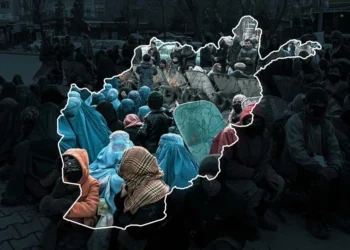

On the fourth anniversary of the Doha Agreement signing, the United States stated that the Taliban did not uphold their commitments in this agreement. Simultaneously, the Taliban have accused the White House of violating the agreement. Signed on February 29, 2020, in Doha, Qatar, this agreement obligated the United States to withdraw from Afghanistan. Recently, the White House has claimed that signing this agreement strengthened the Taliban and weakened its allies in the previous Afghan government. However, experts suggest that the previous government became politically insignificant with the agreement’s signing and militarily vulnerable due to its dependence on the U.S. military presence, leaving it defenseless.
The former National Security Adviser of Afghanistan believes that both the Taliban and the U.S. have achieved their goals with the signing of the Doha Agreement, leaving the people of Afghanistan as victims. On the other hand, some politicians over the past four years have attributed the key factors for the collapse of the previous government to the monopolization of power, concentration of power, and corruption within the decision-making apparatus under former President Mohammad Ashraf Ghani.
Simultaneously, women and certain human rights organizations have deemed the most severe consequence of the Doha Agreement to be the worsening humanitarian crisis and the complete exclusion of women from public life.
It has been four years since the signing of the Doha Agreement between the United States and the Taliban. During this time, the involved parties in the Afghanistan issue have repeatedly cited this agreement as the cause of Afghanistan’s fall to the Taliban and the dire human rights situation and humanitarian crisis in Afghanistan. Over the past four years, both the United States and the Taliban have continuously accused each other of violating the provisions of this agreement.
Karine Jean-Pierre, the White House spokesperson, stated on the fourth anniversary of the Doha Agreement that the Taliban have not fulfilled their commitment to “meaningful dialogue with other Afghan citizens leading to stability and the establishment of an all-inclusive system.” The White House spokesperson confirmed in a press briefing that the Doha Agreement empowered the Taliban and weakened America’s partners in the previous Afghan government. She admitted that America had not foreseen a clear outlook and plan after deciding to completely withdraw its forces from Afghanistan.
The Taliban have cited human and financial losses and attritional warfare as the reasons for the United States signing of the Doha Agreement. According to them, America came to negotiate under pressure from this group on the battlefield.
Zabihullah Mujahid, the Taliban spokesperson, accused the United States of 1,700 violations of the Doha Agreement in a statement to the group’s controlled Afghanistan National Television. He claimed that the previous government attempted to “sabotage” the Doha peace talks. According to him, the previous government did not want the United States to withdraw from Afghanistan.
While accusing the United States of violating the Doha Agreement, the group harbored Ayman al-Zawahiri, the former leader of Al-Qaeda, in Kabul until he was killed in a U.S. drone strike.
Previously, the United Nations Security Council has reported that the Taliban maintains close relations with Al-Qaeda. According to the Security Council report, Al-Qaeda has established eight new training centers in Afghanistan. The report states that the East Turkestan Movement, the Pakistani Taliban, and other terrorist groups in Afghanistan have regular training and military bases under Taliban control and benefit from the support of this group.
Meanwhile, Rahmatullah Nabil, the former National Security Adviser of Afghanistan, told the Hasht-e Subh Daily that both the Taliban and the United States have achieved their goals with the signing of the Doha Agreement. Nabil adds: “In my opinion, the Doha Agreement has not been violated by either side; because the Doha Agreement between the United States and the Taliban was not for peace in Afghanistan, but for the safe withdrawal of U.S. forces in exchange for handing over power to the Taliban, which both sides have achieved. The only side that became the victim of this deal and had its rights violated is the people of Afghanistan.”
However, Ferdaws Kawish, a journalist, told the Hasht-e Subh Daily that the Doha Agreement relieved the United States from an unsuccessful and endless war that it no longer wanted to continue and spend on. According to him, in 2018, the United States decided to withdraw from the war in Afghanistan, and the Doha Agreement achieved this goal. Mr. Kawish adds, “Besides withdrawal, another primary benefit for the United States in Afghanistan was combating terrorism, exemplified by ISIS and Al-Qaeda. According to the Doha Agreement, the Taliban are committed to fighting ISIS and preventing Al-Qaeda from exploiting their territory against the United States. Therefore, the Doha Agreement fulfilled the interests of the United States in that period.”
According to this journalist, the main goal of the negotiations that led to the signing of the Doha Agreement was to end the war and hostility between the United States and the Taliban. From both sides’ perspectives at the time, the presence of the United States in Afghanistan and the Taliban’s unwillingness to prevent the use of their territory against the United States were the main factors of the war between the two sides, and the signing of the Doha Agreement resolved these factors.
Mr. Kawish emphasized that the Doha Agreement required the United States to withdraw its forces and allies from Afghanistan. It also obligated the Taliban to prevent the use of their territory against America’s friends. This effectively ended the war between the two sides and resulted in the sacrifice of the Islamic Republic of Afghanistan.
The journalist emphasizes, “The Republic system became politically insignificant with the signing of the Doha Agreement and militarily defenseless, as its survival depended on America’s military presence in Afghanistan. The allegations of violating the Doha Agreement by its signatories against each other do not relate to serious and fundamental issues, which is why their interaction remains intact.”
Reactions to the Impacts of the Doha Agreement
The signing of the Doha Agreement over the past four years has been met with a wave of extensive criticism from politicians, officials of the previous government, and some human rights organizations. According to them, the signing of this agreement, which led to the fall of the previous government, has created a humanitarian crisis in Afghanistan. In their view, with the Taliban in control, Afghanistan has plunged into various crises, and the human rights situation in the country is now catastrophic.
On the fourth anniversary of the Doha Agreement, Heather Barr, head of the Human Rights and Women’s Rights section at Human Rights Watch, declared that the Taliban had seized power and caused the most severe women’s rights crisis globally, based on the agreement’s signing. She also noted, “The negotiations leading to the Doha Agreement were deeply flawed in terms of human rights. Afghan women were entirely excluded from the process and discussions.”
Heidar Barr considered the absence of women’s key role in the Doha peace talks a violation of UN Security Council Resolution 1325 and added: “This blatant violation was against UN Security Council Resolution 1325, adopted 24 years ago, explicitly stating that women have the right to participate in all peace negotiations and important discussions about the future of their country.”
On the fourth anniversary of the Doha Agreement, the National Resistance Council for the Salvation of Afghanistan emphasized that the agreement’s consequences have fueled the ongoing crisis and the dire human rights situation in Afghanistan. The council issued a statement urging the cancellation of the Doha Agreement. Regarding the Doha Agreement, the council added, “It was nothing more than just legitimize an extremist and anti-national interest group, as evidenced by the collaboration between Zalmay Khalilzad and elements within the previous government.”
The council’s statement reads: “The National Resistance Council for the Salvation of Afghanistan emphasizes the nullification of the Doha Agreement’s provisions, stressing that the current situation requires a comprehensive national process for change.”
After 18 months of negotiations between the United States and the Taliban, the Doha Agreement was signed by both parties on February 29, 2020. According to this agreement, the United States was to withdraw its forces from Afghanistan within 14 months and pave the way for meaningful peace talks with representatives of the former government.
This agreement was signed by Zalmay Khalilzad, the former US representative for the Afghan peace process, and Abdul Ghani Baradar, the former Taliban political deputy and current Deputy Prime Minister for Economic Affairs of the group.
Opponents of the Taliban and officials from the previous government consider the signing of this agreement as the beginning of the collapse of the previous government at the hands of the Taliban. However, some critics of the previous government attribute the country’s fall to the Taliban to the monopoly of power, autocracy, and the exclusion of popular figures from the power structure by Mohammad Ashraf Ghani, the former president.
The Doha Agreement comprises four main sections: the Taliban guarantee not to use Afghan soil against the security of the United States and its allies, setting a timeline for the complete withdrawal of US and NATO forces within 14 months, conducting intra-Afghan negotiations, and discussing a comprehensive ceasefire during the talks, all of which are considered key topics of this agreement.