
The Taliban engaged in clashes with Pakistani border guards on the evening of Saturday, October 12, 2025, in the provinces of Kandahar, Helmand, Zabul, Khost, Paktika, Paktia, Kunar, and Nangarhar, following Pakistan’s airstrikes on Kabul and Paktika. Hours after the attack, the Taliban’s Ministry of Defense announced that the group’s operation against Pakistan had ended but warned that any future violation of Afghanistan’s airspace would face a decisive response. Meanwhile, the Taliban’s Foreign Minister, who was in New Delhi at the time, accused a “specific circle” within the Pakistani military of “conspiring” against the group.
On the morning of Monday, October 13, 2025, Pakistan’s military carried out airstrikes targeting several Taliban positions in Kandahar and Helmand provinces. Simultaneously, Pakistan’s president and prime minister declared that the country’s army had delivered a “firm response” to Taliban attacks. However, some analysts view the conflict as an attempt to prevent China’s growing influence and to draw the United States back into the region. They emphasize that Pakistan, by exploiting the situation in Balochistan, seeks to fully hand over an airbase to the U.S.
The Taliban’s Ministry of Defense announced on the evening of Sunday, October 12, 2025, that in retaliation for Pakistan’s airstrikes on Kabul and Paktika, its fighters had attacked Pakistani border posts along the Durand Line. Pro-Taliban social media accounts widely shared images and videos showing the group’s fighters moving toward Pakistani positions and engaging in gunfire. In these posts, the Taliban claimed to have killed and captured several Pakistani soldiers.
Zabihullah Mujahid, the Taliban’s spokesperson, said at a press conference in Kabul on Sunday, October 12, 2025, that the group’s attacks had killed 58 Pakistani soldiers and wounded 35 others. However, the Associated Press, citing Pakistani security officials, reported that only one Pakistani soldier was killed in the clashes.
Mujahid also claimed that Taliban fighters had seized around 25 Pakistani security posts along with their equipment and that the fighting had been halted following mediation by Qatar.
Meanwhile, Amir Khan Muttaqi, the Taliban’s Foreign Minister, who was on a six-day trip to India, stated in a press conference on Sunday that a “specific circle” within the Pakistani military was plotting against the Taliban. He urged Pakistan not to let bilateral relations fall victim to the policies of this faction. Muttaqi further asserted that members of Tehrik-e Taliban Pakistan (TTP) were not present in Afghanistan and dismissed Islamabad’s allegations in this regard as baseless.
Pakistan’s Response to the Taliban Attacks
Pakistan’s army claimed on Sunday, October 12, 2025, that in retaliatory operations against the Taliban, more than 200 Taliban fighters and TTP members were killed. The army also confirmed that 23 Pakistani soldiers had been killed and 29 others wounded in the clashes.
Following the Taliban’s attacks on Pakistani security posts, Pakistan’s Geo News reported that the army had bombed a Taliban military center in Spin Boldak district of Kandahar province, claiming that anti-Pakistan militants were present there. The Taliban’s spokesperson confirmed Pakistan’s airstrikes on parts of Kandahar and Helmand on Sunday morning.
Pakistan’s President Asif Ali Zardari, reacting to the Taliban attack, issued a statement saying that his country “will make no compromises” in defending its national interests and territorial integrity. He stressed that Islamabad’s stance on protecting its borders and national sovereignty is “firm and unwavering,” adding that Pakistan “will not remain indifferent to any provocative actions by its neighbors.” Zardari further noted that Pakistan’s government and military were working in full coordination to “ensure stability in border areas” and that any threat to the country’s borders “will be met with an appropriate response.”
Prime Minister Shehbaz Sharif, in his statement regarding the Taliban’s assaults on Pakistani border posts, said the army had given a “swift and effective response.” According to the Prime Minister’s Office, the attacks were launched from Afghan territory in several regions, including Angoor Adda, Bajaur, Kurram, Dir, Chitral, and Baramcha. The statement added that following these attacks, the Pakistani army had conducted retaliatory operations and “targeted multiple positions of the attackers.”
Sharif emphasized that Pakistan would defend its territorial integrity and that “no provocation or aggression will go unanswered.” He described the army’s performance as “professional and courageous,” adding that the Pakistani people stand firmly with their armed forces.
Pakistan’s Interior Minister Mohsin Naqvi also warned in response to the recent border clashes that Islamabad would deliver a “severe response to any Taliban aggression.” He called the Taliban’s shelling of Pakistani civilian areas a “clear violation of international law” and stressed that Pakistani forces had shown through their “immediate and effective response” that they would not tolerate any provocations.
Tahir Mehmood Ashrafi, head of Pakistan’s Council of Ulema, commented on the conflict, saying that the Taliban “should ask India what fate Pakistan has in store for them.” He stated that he had repeatedly warned the Taliban that attacks on Pakistan were being launched from Afghan soil, but the group ignored his advice.
Referring to Amir Khan Muttaqi’s trip to India, Ashrafi added: “It is unfortunate that the Taliban’s Foreign Minister sits in India, the very India defeated by Pakistan, and threatens us. We are neither Britain nor America; we are Pakistan, the very Pakistan that supported you.”
Pakistan Closes All Land Borders
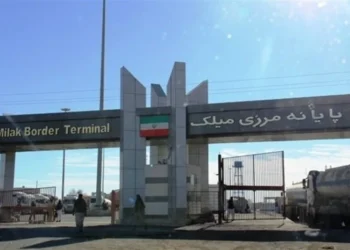
On Monday, October 13, 2025, Pakistan closed all its land borders with Afghanistan to all movement. At the time of this report’s publication, the crossings at Torkham, Kharlachi, Angoor Adda, Spin Boldak, and other border points had been shut down in response to the Taliban’s attacks on Pakistani security posts.
Reactions from Taliban-Friendly Regional Countries
Following the border clashes between Taliban fighters and Pakistani guards, Qatar’s Ministry of Foreign Affairs expressed concern over the escalating tensions and warned of the potential consequences for regional security and stability. Qatar urged both sides to prioritize dialogue, diplomacy, and restraint to resolve their differences.
Similarly, Saudi Arabia’s Ministry of Foreign Affairs voiced concern over the renewed fighting between Taliban forces and the Pakistani army in border areas, calling for restraint and avoidance of further escalation. Riyadh emphasized that disputes should be resolved through dialogue and reaffirmed its support for all regional and international efforts aimed at promoting peace, stability, and the prevention of conflict.
At the same time, Iran’s Ministry of Foreign Affairs called for the immediate start of talks between Pakistan and the Taliban to ease tensions and resolve disputes through diplomacy. Spokesperson Ismail Baghaei stated that the Islamic Republic of Iran is ready to assist in facilitating de-escalation between Pakistan and the Taliban.
A Proxy Conflict or a Strategic Maneuver Against China’s Influence, and the Return of the USA in the Region?
Afrasiab Khattak, a Pakistani political analyst and regional affairs expert, told the Hasht-e Subh Daily that the orchestration of this war aims to block China’s growing influence and prevent Afghanistan’s integration into the Belt and Road Initiative. According to him, the architects of the Taliban project are treating the group in a way that makes people believe the Taliban “came from Mars.”
Khattak stressed that Islamabad is deeply concerned about recent developments in Balochistan and is attempting to once again bring the United States back into the region.
You can read the Persian version of this report here:
از حملات هوایی تا درگیری زمینی؛ جنگ طالبان و پاکستان بر سر چیست؟