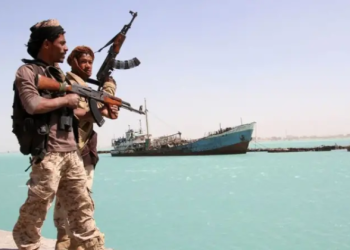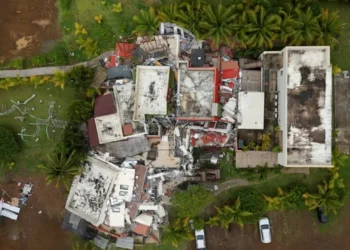

In the early hours of Friday, January 12, the United States and Britain conducted aerial strikes on Houthi military bases in multiple Yemeni cities. These attacks are reported to have inflicted significant damage on the group’s weapon depots. Additionally, logistical and intelligence support for these operations has been provided by Holland, Australia, Canada, and Bahrain. The motive behind targeting the Houthis is believed to be their interference with shipping routes in the Red Sea. The assault on Yemen, controlled by the Houthi faction, has attracted significant attention, possibly due to concerns about triggering another military crisis amid the ongoing conflict in Gaza. Russia has labeled the attack on the Houthis as a breach of international laws, urging an immediate session of the United Nations Security Council, a request that is yet to be fulfilled. China has called on both parties to show restraint and has expressed a willingness to mediate and ease tensions.
Despite being a NATO member, Turkey has taken a more assertive position, claiming that Washington and London aim to turn the Red Sea into a “sea of blood.” Saudi Arabia, involved in a seven-year-long conflict against the Houthis, has voiced apprehension about the situation. Surprisingly, the response from the Islamic Republic of Iran was less vehement than anticipated, deviating from diplomatic norms: “The unilateral action constitutes a blatant violation of Yemen’s territorial integrity, sovereignty, and international laws and regulations. “The escalating tensions in the region raise concerns about the potential for a broader conflict, leading various nations to engage in diplomatic interventions and express worries about the potential repercussions of recent military actions.
1: Who are the Houthis?
The Houthi group emerged in the early 1990s as a political, military, and religious movement in the city of Saada, Yemen. While initially involved in educational and religious activities in Yemeni society before the 1990s, the Houthis primarily consider themselves representatives of Yemen’s Zaidi Shia community. The group is fundamentally motivated by securing the rights of Zaidi Shia against the spread of Saudi Wahhabism. Founded by a figure named Sayyid Hussein Badreddin al-Houthi, the group takes its name from his surname and also refers to themselves as “Ansar Allah,” commonly known by this name in Iran.
The conflict between the Houthis and the Yemeni government, led by Ali Abdullah Saleh, began in 2004 when they perceived Saleh as leaning towards the West. The Yemeni military swiftly suppressed the Houthis, leading to the death of their founder, Badreddin al-Houthi. The anti-American rhetoric in Houthi literature intensified post-2004 and has persisted to date. In 2011, during the Arab Spring, the Houthis turned their attention to Yemen, leveraging dissatisfaction until Ali Abdullah Saleh stepped down in January 2012, succeeded by his deputy, Mansour Hadi.
The Houthis, foreseeing instability, did not adhere to an alliance with Mansour Hadi and rebelled against him. They advanced to capture Sanaa, the capital of Yemen, exacerbating tensions. In January 2015, they also seized the Presidential Palace. Mansour Hadi sought refuge in Saudi Arabia instead of resisting the Houthis within Yemen. After the Houthi insurgency against Mansour Hadi’s government, former President Ali Abdullah Saleh returned to Yemen, forming an alliance with the Houthis against the internationally recognized government. However, this alliance was short-lived, and after Saleh declared his willingness to cooperate with the Saudi-led military coalition, he was killed by Houthi forces in December 2017.
Saudi Arabia, along with the United Arab Emirates and Bahrain, formed a military coalition in support of Mansour Hadi’s government. They entered the conflict in March 2015, leading to a seven-year-long war, resulting in hundreds of thousands of casualties and injuries and leaving Yemen vulnerable to famine and hunger. The Arab military coalition not only failed to suppress the Houthis but also witnessed an expansion of the group’s territorial control and military capabilities, including the development and use of drones and ballistic missiles. For instance, in September 2019, the Houthis targeted Saudi Aramco’s oil facilities in a drone attack, causing significant damage. Similarly, in January 2022, they targeted Abu Dhabi’s airbase and an oil refinery, resulting in considerable losses.
With the normalization of relations between Riyadh and Tehran, the Yemeni war has simmered down, although a permanent ceasefire agreement between the parties has not been signed. Currently, sporadic talks mediated by Oman continue between the Houthis and the Arab military coalition. For now, the capital of Yemen is under the control of Ansar Allah, recognized as the Yemeni government by Iran. However, internationally, Mansour Hadi’s government is acknowledged, despite his resignation in April 2022, handing over power to an eight-member council led by Rashad Mohammed al-Alimi. Talks between this council and the Houthis are ongoing, yet peace has not been established.
2: Why do the Houthis obstruct transportation in the Red Sea?
The Houthis identify their group as part of a movement known as the Resistance in the Middle East, an alleged leadership Iran denies but acknowledges supporting. Tehran maintains that it does not interfere in the decisions of the members of this movement. Houthi attacks on the Red Sea intensified after Israel launched ground and aerial attacks on Hamas in Gaza as a retaliation measure, resulting in the death of over 23,000 civilians to date. Ansar Allah, claiming solidarity with Hamas, initiated disruptions along the shipping routes in the Red Sea to avoid being accused of inaction. For instance, Hezbollah in Lebanon continued its controlled missile attacks towards Israeli territory in support of Hamas. Similarly, Iranian officials, during their visits to regional countries and hosting officials from Islamic nations, attempted to show solidarity with Hamas. The Houthis, lacking alternative means, turned to disrupting shipping in the Red Sea as a tool of influence. The group declared that it would not cease its attacks until a permanent ceasefire was established in Gaza and sufficient humanitarian aid entered the region. Although Ansar Allah claims to target ships affiliated with Israel or bound for the country, allegations suggest that vessels from other nations have also become targets of their attacks.
The Red Sea is a crucial maritime passage for the world, with low transportation costs. It is reported that 15% of global trade, including 10% of oil, is conducted through this route. Approximately 9 million barrels of oil per day entered Europe through the Red Sea in the first half of 2023. Europe, Asia, and Africa are interconnected through this maritime passage, where loaded ships from the Indian Ocean enter the Red Sea through the Bab-el-Mandeb Strait and, after passing through the Suez Canal, reach the Mediterranean Sea and Europe. Controlling the trade route in the Bab-el-Mandeb Strait and the Red Sea allows the Houthis, who control the strategic port of Hodeidah in Yemen, to create disruptions. Since the Houthi attacks began, many major shipping companies have altered their routes from the Red Sea towards the African branch, a path with nearly double the travel time and significantly lower service levels in its ports.
The strategic importance of maintaining the maritime passage in the Red Sea is vital for the world, especially major powers. Without it, Britain, which has kept itself distant from Middle East conflicts for years, would not re-enter the arena. For instance, David Cameron, the UK’s Foreign Secretary, wrote in an article in The Sunday Telegraph: “Britain had no choice but to attack the Houthis because if they block the Red Sea, prices will rise.”
It is crucial to note that the Houthis lack the capability to fully block the maritime passage in the Red Sea. They engage in provocative operations to make shipping routes insecure, purportedly increasing the cost of securing these routes for the United States.
3: Will the attack on the Houthis lead to a regional war?
To answer this question, it is essential to examine the positions of the United States and Iran:
The stance of the U.S.
The United States is not seeking to escalate a regional war. It is not even necessarily aiming to suppress or weaken the Houthis. In this regard, it does not want a regional war that would make Russia happy. Many analysts claim that Moscow is pleased with the Gaza war and its continuation, as the necessity of supporting Israel has put the Biden administration in a difficult position. If Washington becomes preoccupied with other issues, Russia can more easily pursue its goals in the conflict with Ukraine.
The pre-dawn airstrikes on Houthi military bases by the U.S. and the UK can be considered “restraining.” This serves two purposes: 1) It aims to keep the maritime passage in the Red Sea, the most critical global trade route, open, and dissuade the Houthis from creating disturbances in this route. 2) It may seek to minimize the Gaza conflict’s impact by diminishing Houthi attacks, allowing Israel to achieve its goals more quickly, independent of global reactions.
U.S. officials have stated that the response was proportionate to what the Houthis had done in the Red Sea. Although officials from both countries have condemned the Houthis multiple times, the group has not taken these warnings seriously. The U.S. formed an international coalition with 20 member countries to curb Ansar Allah and did not stop there. It issued a UN Security Council resolution condemning the Houthi attack on the Red Sea, nearly granting authorization for an attack against the group. If Washington’s goal were to weaken or destroy the Houthis, it would not have needed all these public ceremonies and could have acted silently. Some analysts even suggest that U.S. military personnel may have intentionally delayed the attack on the Houthis, which could be one reason for the limited casualties.
Assuming the United States aims to destroy the Houthis, it is not an easy task. If it were, the Arab military coalition led by Riyadh would have achieved this in the seven-year Yemen war, which it failed to do. Dislodging the Houthis from power would require the U.S. to send ground forces to the region, which is currently not feasible or desired. Moreover, the Biden administration seems relatively comfortable with the Houthis. While the Trump administration, deeply connected with Riyadh and Abu Dhabi, designated the Houthis as a terrorist group, the Biden administration removed them from this list.
In summary, the U.S. government, in its current posture, does not seem inclined to pursue a regional war, and its actions against the Houthis appear to be measured and calculated.
The Stance of Iran
Iran’s government is currently entangled in domestic challenges and will not take steps to directly confront the United States in support of the Houthis. If Iran were inclined to engage in confrontation with the U.S. and Israel, the Gaza war would have provided a strong pretext, but Tehran prefers to be accused of inaction. Therefore, the Houthis, who are not facing the imminent threat of destructive retaliation and may even see occasional attacks by the U.S. and the UK, are unlikely to see Tehran willingly accepting the risk of entering into a direct war.
The dilemma of creating resistance by the Houthis in the Red Sea can also be addressed through diplomatic channels. For instance, Joe Biden could claim to have sent a private message to Tehran intending to stop Houthi attacks in the Red Sea. Biden stated during a speech in Pennsylvania at a gathering that Iran is not seeking to start a direct war with the U.S.
In recent months, there have been claims that the Jaish al-Adl group is conducting intimidating activities on Iranian soil. It is also alleged that ISIS-Khorasan’s activities in Afghanistan have intensified under the Taliban’s control, and many attribute terrorist attacks in the city of Kerman, Iran, to this group. These recent challenges have led Iran to be less inclined to consider engaging in the Gaza war. Iran’s official response has been peaceful and within the framework of diplomatic rules. In the Iranian media, the attack on Houthi positions has not received as much attention as one might expect.
In summary, Iran is currently facing internal challenges and is not eager to directly confront the U.S. in support of the Houthis. The recent developments and challenges may have led Iran to be more cautious about getting involved in conflicts outside its borders, including the Gaza war. Iran’s official response and media coverage indicate a preference for diplomatic and peaceful means rather than military escalation.