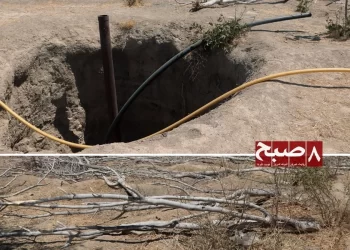

In recent weeks, coinciding with the escalation of military tensions and exchanges of missile strikes in the region, the occurrence of rainfall in parts of Iran and Afghanistan has become one of the most widely discussed topics in media outlets and on social media platforms. Several politicians, military figures, and online users have claimed that the increase in precipitation is the result of the destruction of certain American radar systems in the region and the end of what they call a “climate sanction.” These claims have spread rapidly, once again bringing theories such as “weather control,” “climate warfare,” and the role of the High-frequency Active Auroral Research Program (HAARP) in directing rainfall back to the center of public attention.
Despite the apparent appeal of such narratives, a scientific examination of the matter paints an entirely different picture. Meteorology, climatology, and atmospheric physics have advanced considerably over the past decades, and today the origins of many atmospheric phenomena can be studied and predicted with a high degree of accuracy. Based on this body of knowledge, rainfall is the result of the complex interaction of natural forces at local, regional, and global scales, and there is no credible scientific evidence to suggest that any country can halt or redirect precipitation on a large scale over other nations.
Drawing on scientific findings, authoritative global reports, climate studies, and the principles of atmospheric physics, this article seeks to distinguish between scientific realities and political interpretations, and to answer the question of whether the recent rainfall is the result of a natural process or the product of concealed technologies and climate warfare.
Rainfall: The Product of a Complex Natural System
Rainfall is among the most complex natural phenomena within Earth’s climate system. Cloud formation, water vapor condensation, the movement of air masses, atmospheric pressure differentials, ocean surface temperatures, wind currents, and the topographical characteristics of a region all play a role in producing precipitation.
Iran and Afghanistan lie within the world’s arid and semi-arid belt, a region that naturally experiences considerable variability in rainfall. In some years, severe drought occurs, while in others, precipitation exceeds the historical average. These fluctuations are part of the natural behavior of the climate system.
Phenomena such as El Niño and La Niña, which originate from temperature variations in the Pacific Ocean, can affect rainfall patterns thousands of kilometers away across Asia, Africa, and the Middle East. Scientific research shows that these natural cycles have repeatedly altered precipitation levels in Iran and Afghanistan throughout history, at times when no advanced weather-control technology existed and no claims of climate warfare were ever raised.
Furthermore, seasonal forecasts published by reputable meteorological centers around the world had, months in advance, indicated the likelihood of intermittent rainfall in parts of the Middle East. These forecasts are based on satellite data, ground stations, ocean buoys, and computer models, and have no connection to political or military developments.
Climate Change and the Transformation of Rainfall Patterns
One of the most significant factors affecting current weather conditions is climate change driven by global warming. The rising concentration of greenhouse gases in the Earth’s atmosphere has increased the planet’s average temperature, and this temperature rise has wide-ranging consequences for the water cycle.
The Intergovernmental Panel on Climate Change (IPCC) has repeatedly warned in its reports that many regions of the world will face shifts in rainfall patterns. Some areas will become wetter and others drier. The Middle East is among the regions that face long-term risks of reduced effective precipitation, increased evaporation, and intensifying drought.
However, a decline in average rainfall does not mean the complete elimination of precipitation. It has been observed in many arid regions of the world that prolonged periods of drought are punctuated by sudden and sometimes intense rainfall events. In fact, global warming can intensify extreme weather events, meaning the gap between drought and flooding becomes wider.
Therefore, the occurrence of a few days or weeks of rainfall in Iran and Afghanistan is not only consistent with climate change theory but may in fact represent part of the very disorder and growing volatility that scientists have been warning about for years.
The Role of Forests, Vegetation Cover, and Land Management
Another important factor that is often overlooked in public discourse is the state of vegetation cover and land management. Forests, rangelands, and healthy plant cover play a significant role in retaining soil moisture, regulating the water cycle, and reducing the severity of drought.
In recent decades, deforestation, expanding desertification, overgrazing, the irresponsible extraction of natural resources, and unbalanced urban development across parts of Iran and Afghanistan have diminished the land’s natural capacity to retain water.
When vegetation disappears, the soil’s capacity to absorb water decreases while evaporation increases. As a result, even when rainfall does occur, a large portion of the water is lost as surface runoff and cannot replenish groundwater reserves. The region’s water crisis is therefore far more attributable to natural resource management practices and adaptation to climate change than to any foreign conspiracy.
HAARP: Scientific Reality vs. Common Myths
One name that consistently features in conspiracy theories about weather control is HAARP. This research facility in Alaska was established to study the ionosphere, one of the upper layers of the Earth’s atmosphere.
The ionosphere is located hundreds of kilometers above the altitude at which clouds and precipitation systems form. The energy produced by this facility is negligible compared to the energy released by an ordinary storm or rainfall system.
To better understand the scale, it is sufficient to note that the energy generated by an average storm system is millions of times greater than the energy this facility can produce. For this reason, from the standpoint of atmospheric physics, such a system is incapable of directing rainfall on a continental or regional scale.
Over the years, numerous universities, meteorological organizations, and research centers have repeatedly examined these claims, and no credible scientific evidence has ever been produced to substantiate HAARP’s ability to cause or prevent rainfall.
Cloud Seeding: A Real Technology, but with Limited Capacity
Some individuals fail to distinguish between cloud seeding and full-scale weather control, when in fact the two are entirely different matters.
Cloud seeding is a recognized method for increasing the likelihood of precipitation from existing clouds. In this process, substances such as silver iodide or salt are dispersed into suitable clouds to facilitate the formation of raindrops.
Yet even the most optimistic scientific assessments show that the effect of this method is limited. It cannot produce rain from a clear sky, nor can it alter the climate pattern of an entire country. Iran has been running cloud seeding programs for years, but no one has ever claimed that such programs can fully resolve widespread droughts.
Therefore, while limited technologies exist to increase the probability of rainfall, the gap between these technologies and the claim of total weather control is as vast as the distance between a small boat and an entire ocean.
If Weather Control Technology Exists, Why Doesn’t the United States Use It?
One of the most logical questions about the weather control theory is this: if a country possesses the ability to prevent or generate rainfall on a large scale, why would it not first resolve its own domestic problems?
The United States has repeatedly faced severe droughts, heatwaves, widespread wildfires, destructive storms, and water shortages over recent decades. States such as California, Arizona, Nevada, Texas, Kansas, and New Mexico have suffered billions of dollars in drought-related losses.
If weather control technology truly existed, it would be far more logical to deploy it first to prevent these enormous economic and humanitarian losses. The inability of all countries in the world to prevent their own internal droughts is itself a clear sign of the limitations of human knowledge in the face of the complexity of the climate system.
Can the Destruction of Military Radars Cause Rainfall?
Another claim that has been put forward is that the destruction of certain military radars has led to the return of rainfall. This assertion has no scientific basis whatsoever.
Military radars are designed to detect aerial targets, missiles, or aircraft. These systems emit and receive waves of specified power and play no role whatsoever in the process of cloud formation, water vapor condensation, or the movement of air masses.
To induce any change in atmospheric systems, energy comparable to that of natural atmospheric systems would be required, which is several million times greater than the output of military radars. Linking widespread rainfall to the destruction of a few radar systems is therefore without scientific foundation from the standpoint of atmospheric physics.
Why Do Conspiracy Theories Become Popular?
The key question is: why do such theories spread so rapidly despite the absence of scientific evidence?
People generally seek simple explanations for complex events. Drought, climate change, and the water crisis are intricate subjects that require specialized knowledge to fully understand. By contrast, attributing problems to a foreign enemy or hidden technology offers a simpler and more sensational narrative.
Furthermore, in times of political and military crisis, certain actors may exploit such narratives to reinforce internal cohesion, shape public opinion, or divert attention from structural problems. This phenomenon is not unique to any one country and can be observed in many parts of the world.
The Absence of Confirmation from the Scientific Community
One of the most important criteria for evaluating the credibility of any claim is the position of the scientific community. To date, no reputable climatology center, no international scientific body, and no research published in peer-reviewed academic journals has confirmed the existence of a “climate sanction” targeting Iran or Afghanistan.
In contrast, thousands of scientific studies on the effects of climate change, natural atmospheric cycles, water resource management, and the drivers of drought have been published, collectively painting a clear picture of the real causes underlying the water crisis.
Science is built on data, observation, experimentation, and replicability, not on political speculation or emotional interpretations.
Reasons for Rejecting the Claims of Iranian Military Officials and Politicians
Based on the following reasons, I do not confirm the statements made by Iranian military officials and politicians:
- The absence of credible scientific evidence and the lack of confirmation by climatology experts.
- The contradiction with the domestic realities of the United States and the enormous drought-related losses suffered across its states.
- The inability of known technologies, such as HAARP, to influence large-scale atmospheric patterns.
- Meteorological forecasts issued months earlier had already predicted rainfall.
- The focus on climate change and internal land management is the primary cause.
Conclusion
The recent rainfall in Iran and Afghanistan must be analyzed within the framework of natural atmospheric patterns, climatic fluctuations, seasonal forecasts, and the consequences of global climate change. No credible scientific evidence has yet demonstrated that the destruction of military radars, HAARP, or any other concealed technology can control rainfall on a large scale.
The reality is that the region is confronted with serious environmental challenges, including global warming, the depletion of groundwater resources, deforestation, desertification, rising evaporation rates, and the unsustainable management of natural resources. Focusing on conspiracy theories not only does nothing to resolve these problems but also diverts the attention of the public and policymakers away from genuine solutions.
The way out of the water crisis lies in investing in knowledge, sustainably managing water resources, reforming consumption patterns, protecting forests and rangelands, strengthening meteorological forecasting systems, fostering regional cooperation, and adapting to climate change.
Nature follows its own laws, not political borders or military conflicts. Rain is the product of the Earth’s complex atmospheric cycle, a cycle that human knowledge is still working to understand more deeply. For this reason, the answers to many climate-related questions must be sought in science, not in conspiracy theories.
Sources
- Fourth Assessment Report of the Intergovernmental Panel on Climate Change (IPCC), 2007.
- Reports on billion-dollar weather and climate event losses, National Oceanic and Atmospheric Administration (NOAA) of the United States.
- Official HAARP Frequently Asked Questions, University of Alaska.
- Seasonal climate update reports, World Meteorological Organization (WMO).
- Seasonal forecast reports of the Meteorological Organization of Iran.
- United States drought reports and the National Drought Information Center.
- Research and reports on cloud seeding and climate studies in Iran.
- Sixth Assessment Report of the IPCC on the consequences of global warming.
- Studies by the Food and Agriculture Organization of the United Nations (FAO) on desertification and sustainable land management.
- Peer-reviewed research published in climatology journals on El Niño-Southern Oscillation (ENSO) and its impact on Middle East rainfall.
You can read the Persian version of this analysis here:
بارندهگی در ایران و افغانستان؛ پدیده طبیعی یا توطیه فناورانه؟