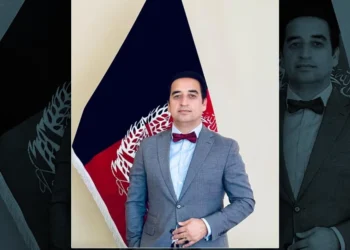

In a surprising turn of events, the Taliban recently allowed members of Hizb ut-Tahrir to hold gatherings in Kabul and Kunduz. Photos from these gatherings depict hundreds of Hizb ut-Tahrir members congregating, alongside their party flag, with the Taliban flag also on display. This is peculiar because the Taliban had previously declared that they would not allow any party or group, including Jamiat-e islah and Hizb ut-Tahrir, to operate under their rule. In several instances, Taliban security forces had detained Hizb ut-Tahrir members in various parts of Afghanistan. Besides fearing secular groups and considering their activities a threat to Sharia law and religion, the Taliban are also skeptical of Islamist groups. They believe that with the establishment of Taliban rule, there is no need for the activities of other Islamic groups in the country, as the Taliban adhere to all religious laws and rigorously implement Sharia. At the same time, party politics creates divisions and turmoil, undermining Taliban rule and stability.
Afghanistan is a war-torn, poor, and weak country. Weak and poor countries often become battlegrounds for intelligence games, especially if they possess strategic geographical importance. Forty years of war have made Afghanistan more than ever a playground for the intrigues of neighbors and regional and extra-regional powers. One of the ways foreign powers infiltrate this country is by exploiting left, right, and center ideologies and beliefs. We do not deny that internal factors have fueled these trends and ideologies in our country more than any other geography, but intelligence games have significantly reinforced these trends. During the Cold War, when the former Soviet Union used Marxism-Leninism for infiltration into countries, the West sought to counter it by using ideologies opposed to Marxism, including Islamism, to prevent the spread of Soviet influence. In this regard, Western powers, particularly the United States, supported Islamist movements and poured billions of dollars into funding and equipping them. However, after the collapse of the Soviet Union, as the West found no reason to support Islamists anymore, in some cases, they turned against them. With the occurrence of the September 11 attacks, the relationship between Islamists and the West plunged into darkness.
The purpose of presenting these words is to emphasize that merely referring to the books and writings published by certain movements is not sufficient for critiquing and evaluating their trends and actions. It is necessary to consider the behind-the-scenes events and the complex political and intelligence environments. In this regard, one of the problems that critics of Hizb ut-Tahrir have faced is their tendency to solely analyze it through its texts and literature, without dedicating a moment to understanding the environment in which this party grows and expands. One of the questions that must be addressed, and has been less explored so far, is why Hizb ut-Tahrir flourished in the early years of the republic system in Afghanistan, attracting illiterate yet enthusiastic youth, despite the party being more than 70 years old. The peak of this party’s activities in Afghanistan coincides with the years when the Taliban were marginalized, and Western countries were present in Afghanistan, striving to institutionalize Western democracy and familiarize people with human rights values and modern concepts. During these years, millions of male and female students attended schools and universities, the country’s economy improved, media freedom expanded unprecedentedly, civil society flourished, critical thinking grew, and youth became acquainted with various intellectual ideas and schools of thought.
Yet, the question remains unanswered as to which forces were behind the scenes to lure young people of this country to Hizb ut-Tahrir and provide this party with an opportunity to launch venomous propaganda against democracy and human rights values. They aimed to vilify moderate Islamic movements, promote radicalization, and distract people with outdated fantasies while speaking of the necessity of reviving the Islamic caliphate and summarizing all the problems of Islamic countries in the absence of a caliphate. By engaging youth with false illusions, they kept them away from real work and endeavors that would benefit society and its interests. In those years, some individuals emphasized that groups like Hizb ut-Tahrir are creations and instruments of intelligence agencies, and they must disrupt the current trend and undermine the half-hearted democracy, steering the younger generation towards the desired goals of the main architects of these projects. Despite this, the majority of people believed that there was nothing hidden behind the curtain and that Hizb ut-Tahrir was a group committed to Islam. Although we may not agree with the solutions it proposes, there is no doubt about its sincerity, honesty, and good intentions.
The events that coincided with the collapse of the previous regime indicated that groups such as Jamiat-e-Islami and Hizb ut-Tahrir are tools in the hands of intelligence agencies, and during those years, their mission was gradually to pave the way for the return of the Taliban to power. Hizb ut-Tahrir, which always advocated for peace and opposed war, using peaceful means to achieve its goals, in practice, supported one of the bloodiest contemporary groups and devoted all its efforts to establishing Taliban rule, placing its ideology at the service of this group full-time. It is interesting to note that the Taliban do not support the call for an Islamic caliphate, while the ideology of the caliphate forms the core of the efforts of Hizb ut-Tahrir. The question arises: what factor led Hizb ut-Tahrir to collaborate with a group that opposes its core idea and does not support it? Have the insurgents in Afghanistan been tools of regional intelligence agencies under the guise of Hizb ut-Tahrir, preparing public opinion for the return of the Taliban?
One noteworthy aspect of Hizb ut-Tahrir’s activities in Afghanistan is that the group focused its activities on northern Afghanistan and areas where it was believed that Taliban opponents had a stronger presence. The unconditional support of this group for the Taliban was evident, indicating that the group’s focus on anti-Taliban areas was deliberate and planned, aimed at laying the groundwork for the return of the Taliban. Hizb ut-Tahrir showed such dedication and sacrifice in establishing Taliban rule that it was astonishing. While Hizb ut-Tahrir claims to be a movement against violence and does not resort to war to achieve its goals, sometimes it has resorted to violence when it deems the conditions favorable. Hizb ut-Tahrir practically entered into the war against the Bashar al-Assad regime in Syria, contradicting its previous statements.
In the past, there have been suspicions and questions about the roots and origins of Hizb ut-Tahrir, with some commentators linking this party to intelligence agencies. Years ago, Mohammad Ramadan al-Bouti, a prominent Syrian scholar, accused the party in an article of receiving money from the British embassy and published documents in this regard. One of the intriguing aspects of Hizb ut-Tahrir’s activities is its consistent opposition and hostility towards moderate Islamic groups, often vilifying them and inciting young minds against them. This group vehemently opposes Recep Tayyip Erdoğan’s Justice and Development Party in Turkey, yet extends a friendly hand towards more fundamentalist groups like the Taliban. Another fact about this party is that it currently operates freely in Israel, and its activities in that country face no legal obstacles.
Even if we assume that Hizb ut-Tahrir is not affiliated with intelligence agencies and operates independently, its dubious actions alone are enough to condemn it, as it squanders the energy of youth and engages them in futile fantasies, distancing them from the realities of life. Furthermore, the black mark on the record of this party in Afghanistan is evident in its role as a propaganda arm for the Taliban, somehow complicit in violating the fundamental rights of citizens.