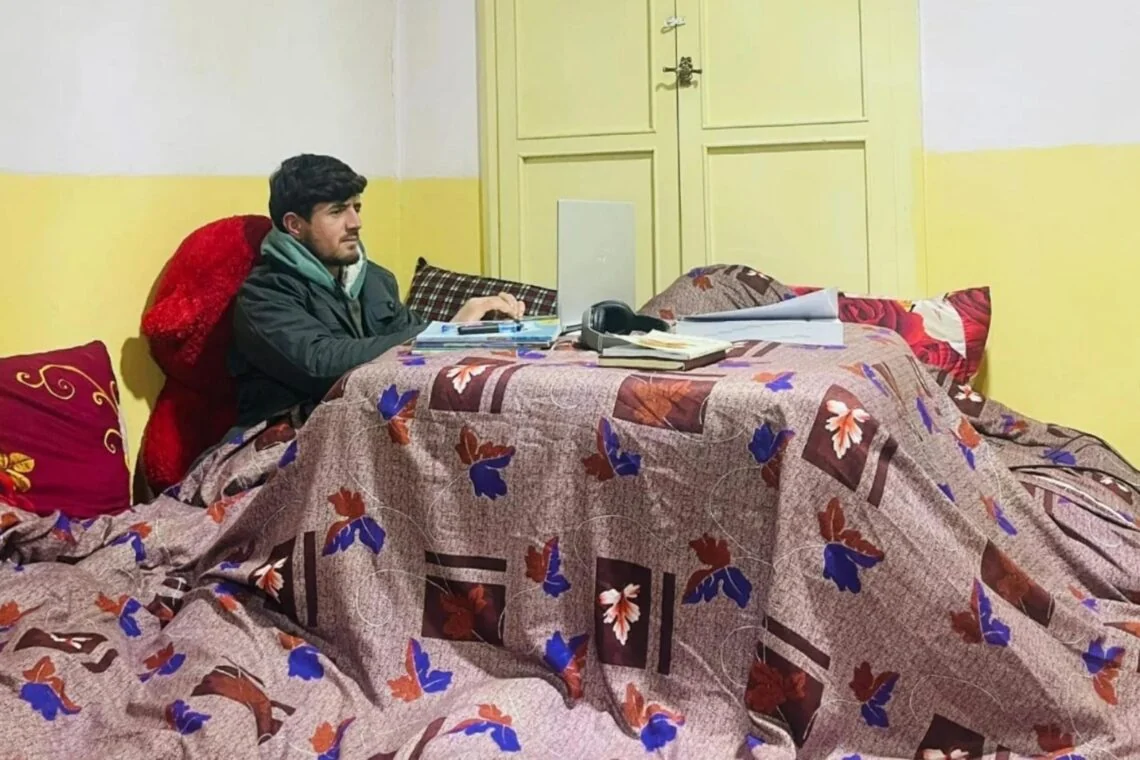
Some sandali (a low heating table covered with a thick quilt and warmed by charcoal underneath) makers report an increase in sales as the winter season approaches, saying that the market for this trade has picked up in recent days. According to them, the influx of families from surrounding areas into the city and their need for heating equipment are the main factors behind the growing demand. The makers add that the prices of sandalis vary depending on the size, the type of wood, and how they are built.
Zaher, a sandali maker in Kabul, reports that the production and sale of sandalis has picked up as winter approaches. He says business has been better than in the past in recent days, and that he makes about 10 sandalis a day.
This sandali maker adds: “With winter approaching, the sandali market has picked up well. I make about 10 sandalis a day, and I sell three to four of them.”
Ghulam Ghaws, another sandali maker in Kabul, considers the influx of a number of families from surrounding areas into the city one of the main reasons for the market’s recovery.
He says: “With the arrival of autumn, thank God, the buying and selling of sandalis has improved. Although a large number of people have migrated, particularly to Iran, many families have come to the city from surrounding areas, which has further boosted the sandali market.”
Omid (pseudonym), another sandali maker in Kabul, says that the price of sandalis varies depending on their size and how they are made. According to him, prices range from 600 to 2,500 Afghanis.
He adds: “Sandalis are made in small, medium, and large sizes, and their prices differ as well. We sell sandalis that cost 400 Afghanis to make for 600 Afghanis, and sandalis that cost up to 1,200 Afghanis to make for 1,500 Afghanis. On some days, our sales reach about 50 sandalis. I have three apprentices. In winter we make sandalis, and in summer we make windows.”
Jawid, another sandali maker in Kabul, reports that the buying and selling of sandalis has picked up as winter approaches, and says the market for this trade is in good shape these days.
He adds: “The buying and selling of sandalis is very good, because this trade mostly thrives in the winter season. Daily sales vary, sometimes higher and sometimes lower, but overall the sandali market is doing well.”
Ahmad (pseudonym), a sandali buyer, names affordability as one of the main reasons for choosing it to heat the home in winter. According to him, given the rising prices of wood, gas, and coal, using a sandali is more cost-effective than other heating sources.
He says: “We use a sandali because it is economical. By refreshing the charcoal just once a day and night, the warmth lasts for a long time, and all members of the family, especially the children, can benefit from its heat. Although the prices of sandalis and charcoal have also gone up at present, using a sandali is still cheaper than buying wood, coal, and gas.”
Ghulam Reza, another sandali buyer, says that using a sandali in winter is popular among families because of its warmth.
He adds: “A sandali is a suitable means of keeping warm in winter. When charcoal or other fuel is placed beneath it, the space inside the sandali becomes warm, and family members, young and old, gather around it and spend their time together.”
This comes as, three days ago, several Kabul residents expressed concern over rising fuel prices and their inability to afford fuel as winter approaches. They said that the rise in fuel prices at the onset of winter has always been one of the serious problems for families, but the poor economic situation and the decline in people’s purchasing power have heightened these concerns. According to these residents, even if fuel prices fall, many low-income families still cannot afford to buy it.
You can read the Persian version of this report here;
افزایش تقاضا برای صندلی در کابل؛ خانوادهها بهدنبال راهی ارزان برای گرمکردن خانه در زمستان