
Baloch residents of Nimroz province are raising complaints about what they describe as discriminatory and double-standard treatment by the Taliban. They say that years of drought had pushed most people in Nimroz to rely on informal fuel imports for their livelihoods, while others worked in passenger transport or guided laborers crossing smuggling routes into Iran in search of work. These sources of income, they say, have now been stripped from them and handed over to Taliban members drawn from a single ethnic group. The Baloch accuse the Taliban of ethnocentrism and of converting fuel imports and human smuggling into a mafia-style operation, declaring such activities forbidden for ordinary people while treating them as permissible for themselves and their close associates.
Baloch residents of Nimroz further accuse the Taliban of ethnic favoritism, discriminatory practices, and the unfair distribution of government posts under the group’s control. They say most local Taliban officials in Nimroz are themselves involved in human trafficking and fuel smuggling, and that by pushing the Baloch aside, the group is placing its own loyalists in positions that enable these activities. The traditional livelihood of local people, once sustained through cross-border trade, has been seized and redirected to Taliban associates and affiliates.
Mohammad (pseudonym) says: “I am a native resident of Nimroz province. As everyone knows, Nimroz is a dry, water-scarce province where successive droughts have forced most people to migrate to Iran or to prepare to leave. Those who remain face systematic oppression and discrimination, because their only means of livelihood, cross-border trade, has been taken from them and handed exclusively to people close to the Taliban and the fuel mafia, all of whom are Pashtun.”
The same resident adds: “In several cases we have witnessed ourselves, the distribution of porter cards, known locally as ‘chatrbazi’ cards, at the Pul-e Abrisham region and the border markets has gone to associates of the Taliban commissioner, Mawlawi Nasrullah, and Mawlawi Khubaib. All of them are Pashtun and from the Bakwa district.”
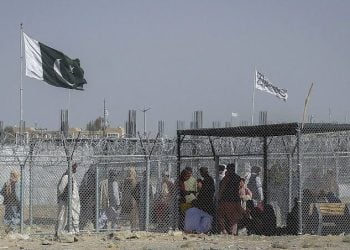
Another resident of Nimroz says, “They have closed the passenger transport route to the people of Nimroz, yet they themselves operate dozens of passenger vehicles and ferry travelers to the Pakistani border.” He adds: “They have sealed the border to ordinary people and blocked cross-border trade in goods such as fuel, but they themselves import fuel in a mafia-style operation over the bridge through Haji Bidullah Boldaki, a Pakistani national, and Haji Ghulam Noorzai.”
The Baloch residents of Nimroz say that the route through Kang district, ever since it was designated as the official border with Iran, has long served as a channel of trade between communities on both sides, and that the Baloch have earned their living through it. According to them, fuel was purchased at the Kang district border, transported to the city of Zaranj, and sold there. The Taliban, they say, have now halted this process. They add that the route and the fuel trade have been handed over to an ethnic mafia from Spin Boldak and Pakistan, with fuel transfers now carried out almost exclusively through the Pul-e-Abrisham.
According to these residents, a class of laborers known as “Badoki” operates at the Pul-e-Abrisham. They load fuel into transit vehicles on the Iranian side of the border, and once the vehicles cross into Afghan territory, the fuel is unloaded at the Pul-e-Abrisham and then sold in the market. The residents say the Pul-e-Abrisham commissioner now issues cards only to people from Bakwa in Farah province, leaving the Baloch of Nimroz excluded. Previously, they note, hundreds of Baloch families depended on this route for their livelihood.
These concerns over the Taliban’s double-standard treatment in Nimroz come as residents of several other provinces, including Badakhshan, raise similar grievances. They say the Taliban label certain activities forbidden for others and bar people from pursuing them, while at the same time seeking those very opportunities for themselves and eliminating competitors to bring everything under their own control.
You can read the Persian version of this report here:
«حرام برای مردم، حلال برای طالبان»؛ بلوچهای نیمروز از تبعیض و انحصار سیستماتیک نگرانند