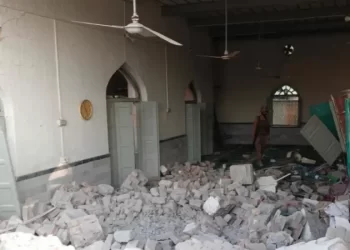

In a suicide attack targeting former employees of the Attorney General’s Office (now called the “Directorate of Monitoring and Pursuit of Decrees and Orders” under the Taliban Supreme Leader), 11 people were killed and more than 15 others were injured. Sources have reported that the condition of the injured is critical. This attack has sparked widespread reactions. Many citizens and politicians consider suicide attacks to be a legacy of the Taliban’s war, criticizing the group for failing to ensure the safety of government employees and citizens. Despite the Taliban’s frequent claims of ensuring security, they have not been able to protect their employees. Additionally, some citizens accuse the Taliban of targeting and eliminating former government officials. They argue that the Taliban’s persistent denials of ISIS’s presence, despite such suspicious attacks, suggest these incidents are a form of purge. Meanwhile, the ISKP has claimed responsibility for the attack, asserting that over 45 people were killed and injured in the incident.
Kabul, a city that has witnessed countless violent incidents over the past 20 years, experienced another deadly suicide attack at around 4:15 p.m. on Monday, September 2. In this attack, several employees of the former Attorney General’s Office were killed. This institution has since been renamed under the Taliban as the “Directorate of Monitoring and Pursuit of Decrees and Orders” of the Taliban Supreme Leader. The suicide bomber detonated his explosive vest during the office’s closing hours. The exact number of casualties remains unclear due to strict media censorship by the Taliban, but sources informed Hasht-e Subh Daily that 11 people were killed and over 15 were injured.
A few hours after the attack, the Taliban announced the death toll as six killed and 12 injured. The group also mentioned that one woman was among the dead. However, sources maintain that 11 people were killed and more than 15 were injured.
Sources also revealed that only six of the victims were from Badakhshan province, identifying them as prosecutors and employees of the Attorney General’s Office who had continued working for the Taliban after their takeover. The deaths of five individuals from Badakhshan—Hojatullah Mirzayi, Ahmad Amin Naseryar, Elham-al-Din Yamin, Waheedullah, and Khairuddin Mazhari—sparked significant reactions from the residents of Badakhshan and social media users.
In response to the attack, former Attorney General Farid Hamidi described the incident in a tweet as the “painful irony of history,” stating that innocent people are being killed while the killers present themselves as innocent victims. He pointed out that the Taliban had targeted hundreds of innocent civilians, including employees of the Attorney General’s Office, over the past 20 years, yet now they condemn suicide attacks, which he called the “bitter irony of history.”
Former diplomat Asila Wardak, responding to the incident on her X social media, recalled the bloody attack on the Ministry of Foreign Affairs where more than 20 of her colleagues were killed. She questioned why only professional and technical employees from the previous regime were being targeted in such incidents, suggesting there is more behind the scenes.
Journalist Jamshid Yama Amiri stated that suicide attacks are part of the Taliban’s legacy, noting that the group still glorifies suicide as a proud wartime tactic and continues to promote suicide units through media.
Robert Dickson, the British Embassy Chargé d’Affaires for Afghanistan, condemned the suicide attack on employees of the “Directorate of Monitoring and Pursuit of Decrees and Orders” (formerly the Attorney General’s Office) in Kabul. On Tuesday, September 3, he tweeted that after years of unrest, the people of Afghanistan need peace, expressing sympathy for the families of the victims.
ISKP has claimed responsibility for the deadly suicide attack on the Taliban’s “Directorate of Monitoring and Pursuit of Decrees and Orders” employees in Kabul. The ISIS-affiliated Amaq News Agency published an image of the suicide attacker on Tuesday, September 3, stating that the bomber waited for employees to leave the main gate before detonating his vest. In March this year, ISIS also targeted Kandahar, the power base of the Taliban’s Supreme Leader.
For over three years, the Taliban have faced accusations of systematically killing former government employees. In suicide attacks on the Ministry of Foreign Affairs last year, all victims were former government employees. At the time, sources claimed that the Taliban were using various pretexts to exact revenge and eliminate skilled, professional, and non-aligned employees through suicide attacks.
The Taliban have frequently been accused of collaborating with terrorist groups in Afghanistan. A United Nations Security Council sanctions monitoring team previously reported that al-Qaeda had established eight new training camps in Afghanistan.
Foreign Policy, citing a confidential diplomatic report, also reported that the Taliban are providing al-Qaeda with everything from women to weapons, housing, and passports. The report suggested that the Taliban are aiding al-Qaeda in gaining access to a vast “heroin empire” network.
According to the report, the extensive drug smuggling network that had funded the Taliban’s war against the former government for two decades is now available to al-Qaeda. Since the Taliban’s takeover in August 2021, drug trafficking routes for methamphetamines, weapons, cash, and gold have shifted. Militants from Yemen, Libya, Somalia, and Palestine also move through al-Qaeda’s training camps, which have been revived since the Taliban’s return to power, with security provided by the Taliban’s General Directorate of Intelligence.
The report further states that al-Qaeda has plundered $195 million from the gold mines of Badakhshan and Takhar provinces over the past two years. Al-Qaeda reportedly earns several million dollars weekly from these gold mines.
Previously, the Hasht-e Subh Daily had conducted an investigative report, uncovering the Taliban’s extensive support for foreign jihadists in Afghanistan. The findings revealed that groups such as the East Turkestan Islamic Movement, Ansarullah of Tajikistan, Tehrik-i-Taliban Pakistan, and dozens of others are backed by the Taliban, with many of their members obtaining Afghan identification documents and marrying local women.
You can read the Persian version of this daily report here:
واکنشها به حمله انتحاری در کابل؛ از تصفیهسازی درونی تا حملههای داعش | روزنامه ۸صبح