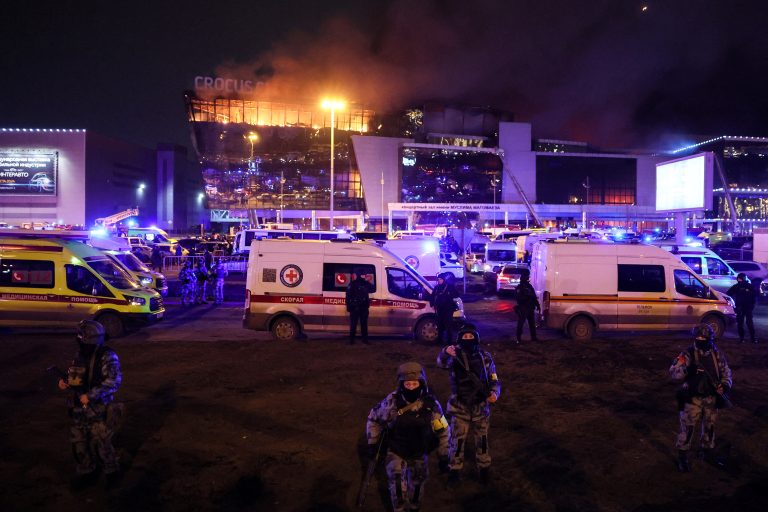
The Crocus City Hall attack, perpetrated by ISIS on the outskirts of Moscow, Russia’s capital, resulted in over 130 deaths and 145 injuries, prompting widespread international condemnation. The United Nations and the majority of countries worldwide have denounced the attack. The United States disclosed having intelligence indicating the possibility of such an attack on large gatherings in Moscow and had duly alerted Russia. However, Afghan political parties and anti-Taliban factions, while condemning the assault, stress that support for the Taliban exacerbates terrorism in the region. They argue that the Taliban’s backing of various terrorist groups has transformed Afghanistan into a global terrorism hub. Conversely, Foreign Policy published a report citing diplomatic sources revealing that Al-Qaeda generates $25 million monthly from gold mines in two Afghan provinces alone. The report indicates that Al-Qaeda’s earnings from gold mining over the past two years exceed $194 million. Furthermore, the Taliban have provided women and passports to Al-Qaeda members and facilitated heroin trafficking routes for them.
Following the fall of Afghanistan to the Taliban, opponents of this group and some countries have expressed concerns about the presence of terrorist groups under Taliban rule. Numerous reports from the United Nations Security Council also indicate that, including Al-Qaeda, more than 20 terrorist groups in Afghanistan are operating with impunity and are planning for regional and global objectives.
One of the groups whose activities have increased during the Taliban’s rule in Afghanistan and the region is the ISIS Khorasan (IS-K). This group has claimed responsibility for dozens of terrorist attacks in Afghanistan over the past two years and several attacks in Iran, resulting in hundreds of casualties.
Last Thursday, the ISIS Khorasan (IS-K) claimed responsibility for the attack on a Kabul Bank branch in Kandahar Province, resulting in the deaths of 43 and injuries of 56 others. This attack has faced widespread domestic and international reactions, including from the United Nations Security Council, and the Taliban have also condemned it.
The Islamic State (ISIS) has claimed responsibility for an attack on a concert hall on the outskirts of Moscow, Russia’s capital, following the deadly incident in Kandahar. However, it remains unclear which branch of ISIS perpetrated this attack. The Russian investigative committee has reported a death toll of 133 and 147 wounded in this ISIS attack at the time of this report’s preparation. Russia has detained 11 suspects and 4 attackers involved in this attack, who were allegedly planning to travel to the Ukraine border.
While Russia has not yet commented on the ISIS claim, U.S. counter-terrorism officials have stated that the ISIS Khorasan (IS-K) based in Afghanistan is behind the Moscow attack. A U.S. official told The Washington Post that ISIS has been focused on Russia for the past two years and has been planning to attack Moscow for some time.
The ISIS attack on Crocus City Hall on the outskirts of Moscow has sparked widespread international reactions and prompted responses from critics of the Taliban. These critics have characterized the attack as reminiscent of tactics employed by both the Taliban and ISIS in Afghanistan. Various figures and anti-Taliban forces, in separate statements, have drawn comparisons between the ISIS attack in Moscow and the Taliban attacks in Afghanistan.
Amrullah Saleh, former Vice President of Afghanistan, has stated that what he has seen of the ISIS attack in Moscow on social media has a “shockingly similar resemblance to what the Taliban used to do.” He emphasized that the Moscow attack was a “copy-paste of Taliban savagery and ISIS Khorasan’s plan” in Afghanistan.
The “National Resistance Front of Afghanistan (NRF)” has called the Moscow event a “terrorist attack” in a statement. This front stated: “Terrorism is being systematically and purposefully transferred to Central Asia and the Russian Federation.”
Simultaneously, The “Afghanistan Freedom Front (AFF)” designates the ISIS attack in Moscow as “terrorist” and asserts that the dominance of groups like the Taliban in Afghanistan is the primary cause of numerous terrorist attacks in neighboring countries.
Said Tayeb Jawad, former Ambassador of Afghanistan to Russia, also wrote: “The perpetrators of this barbarism are terrorists who have nests in Afghanistan.”
Rahmatullah Nabil, former Chief of the National Directorate of Security (NDS) of Afghanistan, wrote in a tweet that the world must conclude that “there is no such thing as a good terrorist and should not be fooled anymore.” He emphasized that the terrorism alarm has sounded in the region and efforts must be made collectively to combat this phenomenon.
On the other hand, some figures from the former government, including Hamid Karzai, the former President of Afghanistan, have condemned this attack. Karim Khurram, a close associate of Hamid Karzai, wrote: “We are deeply concerned about the spread of unrest in the region. I had previously said that if a solution is not found, things will come to this.” His reference is to Taliban support for “regional terrorist groups.”
Previously, the Hasht-e Subh Daily had found in an investigative report that the Taliban extensively supported foreign jihadists in Afghanistan. The findings of Hasht-e Subh Daily indicate that the Eastern Turkistan Islamic Movement (ETIM), Jamaat Ansarullah known as the Tajikistani Taliban, the Tehrik-i-Taliban Pakistan (TTP), and dozens of other groups in Afghanistan receive support from the Taliban regime, and many of them have taken Afghan citizenship and married native women of Afghanistan.
Alongside domestic reactions, some regional countries have taken strict security measures following this attack. Qasym-Jomart Tokayev, the President of Kazakhstan, has issued orders to strengthen security measures in the country and stated that cooperation with other countries to combat terrorism should increase.
The Taliban regime has also condemned the ISIS attack in Moscow. The group’s Foreign Ministry has labeled ISIS’s deadly attack on the Crocus City Hall in Russia as “terrorist.” The Taliban’s characterization of the ISIS attack in Russia has stirred a reaction from a former Iranian official. Mohammad Reza Bahrami, Iran’s former ambassador to Kabul, in response to the Taliban’s action, stated that while the Taliban labeled the Moscow attack as terrorist, they refrained from using this term regarding their explosions in Kerman. He wrote that the Taliban “emphasized that this term is Western-made and a tool for pressuring Islamic countries.” In the ISIS attack in Kerman, Iran, nearly 100 people were killed and over 300 injured.
Simultaneously, Foreign Policy has reported, citing a confidential diplomatic report, that the Taliban provide everything from women to weapons, housing, and passports for al-Qaeda commanders and operatives. The report states that the Taliban assist al-Qaeda in accessing an extensive network of “heroin empires.”
According to the report, the extensive network of drug smuggling, which had financed the Taliban’s war budget against the previous government for two decades, is now in the hands of al-Qaeda. The findings of the report indicate that after the Taliban’s takeover in August 2021, the smuggling routes for methamphetamine, weapons, cash, and gold have been altered. Militants from Yemen, Libya, Somalia, and Palestine also travel through al-Qaeda’s training camps, which have been revived again since the Taliban’s takeover, and their security is ensured by the Taliban’s General Directorate of Intelligence (GDI).
The report states that Al-Qaeda has plundered $195 million from the gold mines of the provinces of Badakhshan and Takhar in the past two years. According to the findings of the report, Al-Qaeda earns several million dollars weekly from the gold mines of these two provinces.
Foreign Policy has disclosed parts of this confidential diplomatic report, indicating that Al-Qaeda receives a 25 percent share of the income from these mines and has gained $194.4 million from 2022 to the present. According to this report, Al-Qaeda’s monthly share from the gold mine revenues in the two provinces amounts to $25 million.
According to Foreign Policy’s report, tens of thousands of laborers have been employed by Al-Qaeda for mining operations, and “Taliban-friendly warlords” protect them. The report examines 11 gold mines where Al-Qaeda has been involved, with the proceeds being divided between two Taliban factions and Al-Qaeda.
The Sirajuddin Haqqani faction in Kabul and the Mullah Hibatullah Akhundzada faction, the Taliban supreme leader in Kandahar, are among the Taliban’s intermediary factions that share the proceeds from the extraction of gold mines in Badakhshan and Takhar provinces with Al-Qaeda, each seeking to secure its relationship with this network.
The confidential report by a British company has identified 14 Al-Qaeda affiliates who directly profit from the proceeds of mining. These individuals include seven within Afghanistan and seven others in various countries worldwide. According to the report, the seven individuals in Afghanistan are members of the East Turkestan Islamic Movement (ETIM), Jamaat Ansarullah also known as the Tajikistani Taliban, and the Tehrik-i-Taliban Pakistan (TTP). The other seven members are from Al-Qaeda branches in Saudi Arabia, the Arabian Peninsula, Yemen, Iraq, Syria, the Indian Subcontinent, and East Africa.
Foreign Policy stated that this report, circulating among Western diplomats and United Nations officials, details the extent to which the group formerly led by Osama bin Laden has infiltrated the Taliban. Based on this report, Foreign Policy wrote, “Al-Qaeda is plundering Afghanistan’s natural wealth and stealing international humanitarian aid.” Prepared by a London-based private company, this report’s findings have been independently verified by Foreign Policy. The report is based on recent investigations conducted within Afghanistan and includes a list of senior Al-Qaeda operatives and the roles they play within the Taliban administration.
The report states that Al-Qaeda has returned to its old tactics in Afghanistan. It further adds that the network operates military training camps in Afghanistan, reminiscent of those before the planning of the September 11 attacks.
These concerns arise as the United Nations Security Council previously stated in a report that the Al-Qaeda network has established eight training camps in the provinces of Ghazni, Laghman, Parwan, and Uruzgan, along with a weapons storage base in Panjshir province.