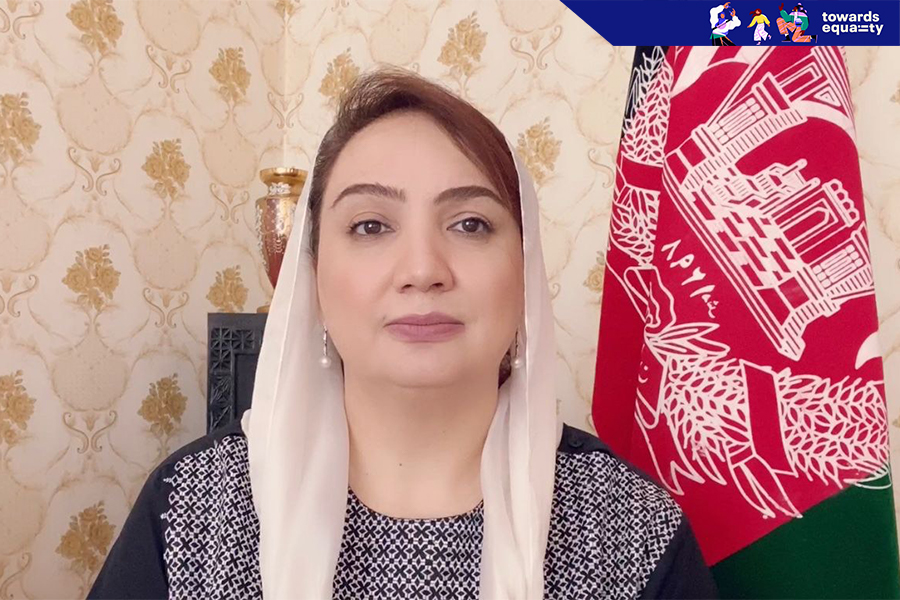
Interview by Haanya Malik, Hasht-e Subh
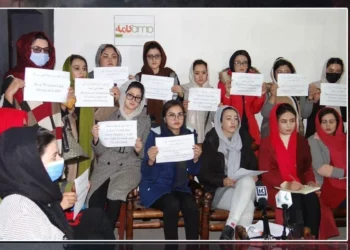
As we mark International Women’s Day on March 8, Afghan women remain deprived of their basic citizenship and human rights. The Taliban have banned girls from middle school, high school and universities, as well as barred women from most fields of employment. Women must also wear head-to-toe clothing in public and aren’t allowed in parks and gyms. Despite these restrictions, women are resisting, fighting for equality and standing against the regressive and repressive Taliban mindset. To discuss the challenges Afghan women are facing and future prospects, Hasht-e Subh reached out to Shukria Barakzai.
Shukria Barakzai is an Afghan human rights activist. She was a journalist before moving to political activism. She became a member of the Afghan parliament, then was appointed as ambassador to Norway. She is now one of the Afghan Active Women who highlights the women’s issues in Afghanistan in international platforms, and defends the rights of Afghan women.
Hasht-e Subh: Since the Taliban’s takeover of Afghanistan, women in the country have been stripped of nearly all their essential rights. Under these circumstances, is it even possible to talk about gender equality?
The Taliban’s rise to power unquestionably resulted in the complete loss of rights for Afghan women, yet this loss does not preclude discussions on the importance of freedom and equality. I believe that historically, women had the same legal rights and responsibilities as men, but the reality was different when it came to how those rights were implemented. Despite the inequalities they face, women have always been determined to advocate for equality. It is important to bear in mind that women aspire to attain justice and equality, even though realizing these goals may be a lengthy process. However, the Taliban’s rise and takeover of power have raised concerns not only regarding women’s rights but also citizenship rights under the [so-called] de facto government. Not only are Afghan women systematically excluded from all spheres of life (an act that can be considered a crime and a violation of human rights), but men and other Afghan citizens are also denied their fundamental rights.
The Taliban also link the exclusion of women from the public sphere and education to religion and even culture. In countries where women have better conditions, it has taken a lot of effort to change laws and culture to advance gender equality. How do you see the situation for women in Afghanistan ?
Without a doubt, a society’s religion, culture, customs, and traditions have a significant influence on the public perception of women’s rights. It is important to note that a century ago, Europe and America were the least favorable places for women. Of course, with the progress of science, education, economy and beliefs that should be recognized as values in a society, they are slowly passing the stage of gender discrimination. But it still remains a fundamental issue in societies. What the Taliban claim in Afghanistan has no background in Afghan culture. Even if you go to the remote villages inside Afghanistan, you will see that old women are obliged to teach the Quran to young girls and young children. That is, they started teaching and learning science from the same age in villages and towns. This has been a custom, and in many villages of Afghanistan, you will understand that reading the great books of Masnavi-ye-Ma’navi (an extensive poem written in Persian by Jalal al-Din Muhammad Balkhi, also known as Rumi) along with other Persian books and stories, including the Shahnama (long epic poem written by the Persian poet Ferdowsi between c. 977 and 1010 CE), is part of the custom and culture of the Afghan people. Thus, we cannot agree with the Taliban’s assertions that their beliefs about women stem from religious or cultural roots, as this goes against the core principle of education and learning in the religion. I think the reading of the Taliban is their own unique narrative that does not fit with religion or culture.
Talking about education, what should be done so that Afghan women have the opportunity to learn and participate in society again? Can Afghanistan become a better place just by removing the educational barriers for women?
I believe that education is not an opportunity that is given to women [by others]. This is a right that must be accommodated. Those who consider themselves rulers in Afghanistan, whoever they are, are responsible for [providing] the context, space and place. Therefore, the Taliban are not only responsible for the safety of all female students by creating a healthy and safe environment, but they also have an obligation to open the gates of universities and schools to girls. I don’t think that getting an education is a privilege given to the people by the rulers. You see many Islamic countries that seek and pay for expensive scholarships for their students abroad to promote and encourage them to acquire knowledge. Therefore, let’s not forget that the discussion of women’s and girls’ education and their work should not be political, nor should it be discussed as a social problem. Afghanistan is the [former] Afghanistan. If you go to villages and distant places, you will see that women plow the land, reap the harvest, improve the house, plant flowers and raise chickens alongside men. There are things that they actually do, but the fact that the Taliban do not know about these things and their policies are anti-women policies and exclusive to them is a separate issue, but my special request is that women’s education should be separated from political concerns and privileges.
You were a member of parliament of the Islamic Republic of Afghanistan. How much can the restoration of a parliamentary system in Afghanistan help improve the situation for women?
A critical and underlying issue in Afghanistan is the absence of significant political parties. As a crucial element of a parliamentary system, the existence of major political parties grants them political power. Otherwise, if the parliaments are still only composed of people (away from political parties), as we have seen in the last three rounds of the Afghanistan parliament, the parliamentary system cannot be established. Because in no other country do more than two political parties compete for one election until the basis for building a system that is unique and dependent on the people’s vote is considered. Second, in addition to this, there should be a clear activity of political parties and groups, so that we can reach the same principle that is necessary for the parliamentary system. Any system that comes in Afghanistan must be based on the vote of the Afghan people. Whether Afghanistan has a good presidency or a good parliament, whether we have a chancellor or not, these are debates that should be worked on, but handing over power to one person is not worthy of Afghanistan’s governance system. We have a bitter experience in this regard.