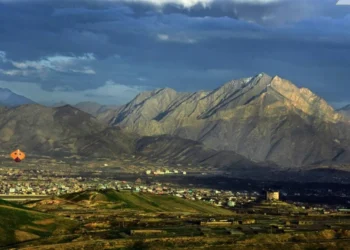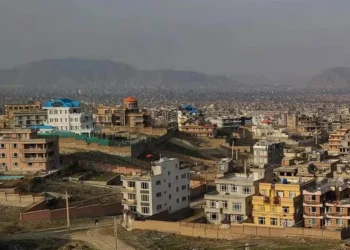

Some residents of Naw Abad township in the center of Ghazni and residents of Omid-e Sabz township in the sixth district of Kabul city, which is predominantly populated by Shiites, are complaining about biased and one-sided treatment from Taliban officials at the Ministry of Justice and the Commission for the Prevention of Land Usurpation and Restitution. They emphasize that in the rulings issued by this Taliban commission, documents and records are not evaluated impartially, and pressure is deliberately applied against a specific group and segment of the population. Residents of these townships say that efforts to create an atmosphere of fear, intimidation, and extortion against the people are ongoing.
These residents confirmed to the Hasht-e Subh Daily that although the Taliban’s Commission for the Prevention of Land Usurpation and Restitution has, in past years, declared at least 15 townships across various provinces of the country to be state property, in recent days only the residents of two townships have faced psychological and emotional pressure through various means, and have repeatedly been warned to vacate their properties.
Residents of these townships stress that if their documents and records were evaluated impartially, it would show that all the land in these two townships has legitimate deeds and religious title documents, and that the current residents either built shelters for themselves after paying for the land or invested millions of afghanis of their own personal money to purchase the properties.
Residents of Naw Abad township in Ghazni say that alongside their township, two other townships in Ghazni have also been declared state property, but the eviction order has only been issued for Naw Abad township.
Residents of Naw Abad township in the center of Ghazni emphasize that since the early days of the Taliban’s return to power in the country, these townships and residential homes have been one of the issues and problems facing the people, a matter about which the Ministry of Justice and the Taliban’s Commission for the Prevention of Land Usurpation and Restitution have kept people caught between fear and hope.
Khudadad, one of the residents of this township, says: “People bought the land from its owners with their own personal money and built houses. This land was not state property; it was private property with deeds and tax payment documents. People have lived in Naw Abad for more than 30 years, and the fact that it is now being declared state property is, in my view, a matter of discrimination, bias, ethnic domination, and a lever of pressure resulting in extortion of money.”
According to him, after a deadline was set for vacating the homes and properties, representatives, elders, and religious scholars traveled to Kandahar and met with the governor of Kandahar. Mullah Sherin Akhund, who is considered to be close to the Taliban Supreme Leader, pledged to the people that he would raise their request with the Taliban Supreme Leader.
Meanwhile, residents of Omid-e Sabz township in western Kabul have accused the Ministry of Justice, the Commission for the Prevention of Land Usurpation and Restitution of State Lands, and the Taliban’s special court handling cases of usurped land of abusing their official authority and engaging in ethnically biased conduct, stressing that these institutions have openly issued one-sided rulings in announcing their decisions regarding the land of this township.
According to them, documents and evidence show that the aforementioned Taliban departments have issued two contradictory rulings regarding the cadastral plot cases of two townships located in two different parts of Kabul city. They say that more than 1,200 jeribs of land in Sayed Jamaluddin township, which belongs to a Pashtun businessman, have been ruled private property, while the land of Omid-e Sabz township, whose only issue was cited as being a cadastral plot and which is managed by a Hazara businessman, has been declared state property. According to them, this approach reflects the Taliban’s policy of “double standards.”
Haji Mohammad Ali, a resident of Omid-e Sabz township, says: “The interpretation of Sharia and the law should not be based on personal opinion. It is unacceptable for two pieces of land involved in the same legal dispute to be treated in two different ways, with one being ruled private property and the other state property. When the land of Sayed Jamaluddin township was confirmed as a cadastral plot and then declared private property, then where is the difference that would cause the land of Omid-e Sabz township to be called state property? Well, then everything here is clear: the difference lies in the residents themselves, in what language they speak and which sect they follow.”
One resident of Omid-e Sabz township in western Kabul, speaking to the Hasht-e Subh Daily on condition of anonymity, says: “There is no doubt that justice has not been served here. Search the entire country; the only township that has legal documents, an organized and standard urban plan, and a fully equipped water, electricity, and sewage system is this very Omid-e Sabz township. Its plan was approved by the Ministry of Urban Development, and people bought the land with their own personal money and invested their capital in it. How is it just or in accordance with Sharia for someone to vacate their home and property, or to no longer be entitled to receive rent from their own house and shop?”
This comes as the Taliban, earlier this year, declared more than 1,500 jeribs of land in Omid-e Sabz township in western Kabul and nearly 2,000 jeribs of land in Naw Abad township in the center of Ghazni to be state property, and ordered their residents to vacate their properties. However, residents of these townships stress that they purchased their land with money and will not abandon their properties at any price.
Meanwhile, several representatives from these two townships have traveled separately to Kandahar province and conveyed their objections to the office of the Taliban Supreme Leader.
You can read the Persian version of this report here:
تبعیض طالبان؛ هزارهها و شیعیان در غزنی و کابل در برابر تخلیه خانههایشان اعتراض دارند