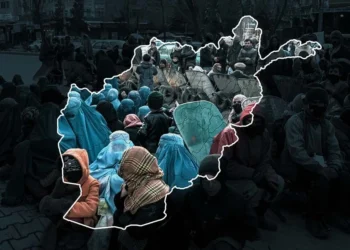
The issue of women and their identity has always been a significant concern in Afghan society over the past century. From the time of Amanullah Khan until the present day, women have played a crucial role in determining the stability and longevity of governments. The level of women’s rights and their presence in society has consistently been a topic on the government’s agenda. Women have been impacted by government policies and have lived under the constraints of male leaders and a patriarchal society, often without significant roles. However, in the past two years, women have not only rejected the decisions of their rulers but have also bravely challenged the most oppressive regime in the world. During this time, women have faced the brutal violence of the Taliban, including imprisonment, torture, and even death. Nevertheless, they have stood up against the Taliban in an unprecedented manner, defying the gender-based segregation enforced by the regime. With remarkable courage and determination, Afghan women have managed to make their voices heard in influential global institutions. They have transformed the most difficult challenge of their time into an opportunity for real and hopeful change. It is crucial to fully grasp and appreciate this opportunity, as it has the potential to bring about significant positive transformations.
The resistance of women against the Taliban is just one aspect of the ongoing struggle for women’s rights that we discuss on a daily basis. While this is not the sole battleground for women, they are simultaneously engaged in various other fronts within the complex web of traditions and customs in Afghanistan’s patriarchal society. Specifically, women must first fight for their rights within their own homes before they can openly protest against the Taliban regime or participate in other activities. It is important to highlight this point because it is evident that if women had more freedom to combat the Taliban, the situation would be significantly different today. Despite these limitations, women have managed to establish themselves as a powerful force and catalyst for change in society over the past two years.
I believe that the struggles and perseverance of women have been the primary factor behind the political isolation that has greatly troubled the Taliban regime over the past two years. Additionally, women’s determination has posed a challenge to the Taliban’s ultimate goal of gaining international recognition as a legitimate and lawful system. Although the Taliban and some members of the male society in Afghan politics may not be willing to acknowledge this, they are well aware of the influential role women play in this phase of Afghanistan’s history. If women continue to maintain and enhance their effective role, it will not only have a short-term impact on weakening the Taliban, but also have long-term implications in combating the larger and more fundamental issue of gender inequality in Afghan society. Without addressing this perspective and attitude towards women in Afghanistan, even if the Taliban were to leave, the injustice against Afghan women would persist.
Hence, it is imperative that we extensively document the experiences of women, including their challenges and opportunities, and provide them with comprehensive support. This will contribute to the institutionalization and substantial advancement of their movement, which has never been achieved before in the history of Afghanistan. It is crucial that their activism goes beyond mere street petitions and instead focuses on making appropriate demands that compel men in society to seriously consider and ultimately become genuine allies. This can be accomplished by encouraging women to take progressive and ambitious measures. I am confident that Afghan women possess the capability to do so, and these steps can be taken gradually over time.
The primary objective of this article is to amplify the voices of several women who have been speaking out, albeit with limited strength, in order to encourage others to join them and make a greater impact. This issue has motivated me to raise my own voice even louder. The focus of this campaign is to challenge the United Nations to acknowledge the Taliban regime as a form of gender apartheid, which is both crucial and timely. It is imperative that a convention be established to prohibit and eradicate this regime. The Taliban regime exhibits all the necessary criteria and characteristics of gender apartheid.
It is widely known that in South Africa, over 70% of its citizens were denied citizenship rights solely based on their race. This systematic, targeted, and comprehensive deprivation of rights was eventually met with global opposition. In 1973, the Convention on the Prohibition and Punishment of Racial Apartheid was ratified, further limiting the actions of the apartheid regime. This convention prohibits any government from establishing relations with a regime accused of practicing apartheid. While the immediate impact may not be apparent, the adoption of this convention will ultimately play a significant role in ending apartheid in South Africa. The convention facilitated international cooperation and put pressure on governments to support justice and humanity, leaving them unable to remain indifferent towards the issue of apartheid.
Given their experience and knowledge, it is now opportune for all anti-Taliban factions to unite and coordinate their efforts at various levels. They should collectively label the Taliban regime as a gender apartheid regime at the United Nations and request the establishment of a convention addressing this issue. It is crucial for the Commission for Prohibition and Punishment of Gender Apartheid to endorse this initiative, as it would prevent other governments from providing assistance to the Taliban under the guise of engagement.
The Taliban regime exhibits all the traits of an apartheid regime. According to the definition of apartheid, it entails systematic, targeted, and extensive discrimination based on race. By extension, it can be argued that systematic, targeted, and comprehensive discrimination based on gender also falls under the category of apartheid. Over the past two years, numerous documents have surfaced indicating that the Taliban have issued 50 orders from their leader or various institutions and figures within the Taliban Emirate. These orders were specifically designed to impose restrictions on women.
The objective of registering the Taliban as an apartheid regime in the United Nations can also serve as a unifying factor. This is because, over the past two years, there have been occasional criticisms directed towards women protestors in Afghanistan or women in general, claiming that their activities are disorganized. While I personally do not consider such criticism to be significant, given the immense pressure faced by Afghan women within the country and the numerous challenges women encounter in the realm of immigration, I believe that unity should be defined by working towards a common goal rather than having a singular name, symbol, or flag. This overarching objective can provide guidance to the activities of all women, both inside and outside Afghanistan, making their efforts more purposeful and increasing their impact.
Another crucial aspect is that this desire attracts numerous women from around the globe to stand alongside the people of Afghanistan. Presently, a multitude of women ranging from human rights activists to artists and politicians are standing in solidarity with Afghan women. They often send messages or write letters to Afghan women, and occasionally provide support on significant international platforms. However, many of them are unsure about how to contribute more earnestly and effectively to the struggles faced by Afghan women. Consequently, the initiation of this objective garners extensive national and international support, elevating the fight of Afghan women from merely seeking assistance or opposing the Taliban to a proactive and assertive stage. This represents a substantial and significant step forward.
Read this article in Farsi here.