• 8AM.MEDIA
  • ویب‌سایت فارسی
  • پښتو ویب‌پاڼه
  • اۉزبېکچه ویب‌سایت
  • Podcast
Sunday, October 18, 2026
Hasht-e Subh
  • Home
  • News
    • Afghanistan News
    • World News
  • Opinion
    • Editorial
    • Analysis
  • Reports
    • Daily Reports
    • Investigative Reports
  • Society
    • The story of people
  • Women’s Word
  • Columns
    • Three Years After Afghanistan’s Fall: The Taliban’s Resurgence
    • Towards Equality
    • The Resurgence of the Taliban: Two Years Since Afghanistan’s Fall
    • Hebatullah Report Special Edition
    • Resistance for Education Special Edition
    • Special Column on Taliban’s Education Curriculum
    • Nawroz
  • Interviews
  • Contact Us
    • About Us
    • 8AM MEDIA Annual Awards
    • Submit an Article to Hasht-e-Subh
  • 8am.mediaBack
Subscribe
No Result
View All Result
  • Home
  • News
    • Afghanistan News
    • World News
  • Opinion
    • Editorial
    • Analysis
  • Reports
    • Daily Reports
    • Investigative Reports
  • Society
    • The story of people
  • Women’s Word
  • Columns
    • Three Years After Afghanistan’s Fall: The Taliban’s Resurgence
    • Towards Equality
    • The Resurgence of the Taliban: Two Years Since Afghanistan’s Fall
    • Hebatullah Report Special Edition
    • Resistance for Education Special Edition
    • Special Column on Taliban’s Education Curriculum
    • Nawroz
  • Interviews
  • Contact Us
    • About Us
    • 8AM MEDIA Annual Awards
    • Submit an Article to Hasht-e-Subh
  • 8am.mediaBack
No Result
View All Result
Hasht-e Subh
No Result
View All Result

Where Did the Afghan Refugees Go? What Else Should Be Done?

By: Sadeq Amini

Moqim mehran Moqim mehran
12 November 2023 - Solar Hijri Date: 1402/08/21 [t_time:1699797648]
Where Did the Afghan Refugees Go? What Else Should Be Done?

Reuters

While the world is still in search of a political solution, people are paying the price.

Most of the Afghans who fled their country in 2021 after the Taliban took over Afghanistan are now residing in Pakistan and Iran with an approximate population of 600,000 and 500,000. These two countries are referred to hosting a substantial number of Afghan refugees worldwide with 1.35 million people in Pakistan and 780 thousand in Iran. Living conditions and treatment of Afghan nationals in these two countries are often dreadful, as they are faced with discrimination and prejudice from the authorities of these countries and have serious problems in accessing basic needs such as jobs, shelter, and healthcare. Additionally, our people in these two countries are constantly subject to the threat of deportation and forced return to the country.

Pakistan is currently deporting Afghans en masse, ignoring repeated requests from the international community to reconsider this decision. Iran also deports our compatriots regularly.

Other countries in the region also host Afghans who recently fled the Taliban, including Turkey (300,000), Uzbekistan (13,000) and Tajikistan (10,000). The situation of Afghan refugees in these countries is equally challenging as they have limited rights, receive minimal assistance, and have no clear path to acquiring citizenship in these countries. Our compatriots are facing deportation in these countries, especially in Türkiye.

Afghanistan’s political and business classes seem to be living comfortably in these countries, with some of them now trying to go to the United States and its allied countries.

India currently hosts 13,000 Afghan students, but the country’s bureaucracy is still trying to find a solution for their residence. Brazil, a country with which Afghans have rarely interacted, has extended a helping hand by offering thousands of humanitarian visas to Afghans. While some of these Afghans eventually went to the United States and Canada, about four thousand still live in Brazil, despite unacceptable conditions.

The United States hosts nearly 100,000 Afghan refugees, many of whom were evacuated by US military aircraft in 2021.

Since then, US and American institutions have been one of the most benign hosts for Afghans in the world. In addition to the United States, the European Union (41 thousand), Canada (40 thousand), the United Kingdom (24 thousand), and Australia (six thousand) have welcomed the Afghans who were recently evacuated from Afghanistan and generally treated them with the same hospitality as the Afghans themselves. These countries have provided equal rights to Afghans with their citizens, including work permits, the right to open a bank account, own a house and car, start a business, travel without restrictions, and facilitate acquiring a permanent residence and finally citizenship. Although there are still challenges, these countries have treated Afghan immigrants humanely.

So, considering the diverse conditions that migrants have in different countries and with little chance of returning home (Afghanistan), what else can be done?

Firstly, the international community should provide financial aid and other incentives to countries that have difficulty hosting Afghan refugees, where Pakistan should be at the top to avoid mass deportations of Afghan refugees in the weeks leading up to winter.

Second, the host countries should prioritize aid so that Afghans can resettle and rebuild their lives in safe and sustainable ways. These aids include promoting education and job training. It seems difficult to conceive that the Taliban will manage the political and security conditions inside the country in such a way that could pave the way for the mass return of all Afghans to the country. Subjecting the refugees to live in limbo will only contribute to local and regional instability.

Third, we should not forget the people who remained in Afghanistan under the rule of the Taliban. They are very likely to join the refugees abroad. The international community should intensify its efforts to safeguard the rights of Afghan women and girls. International actors can collectively hold the Taliban accountable for human rights violations in this context.

Afghan refugees around the world are hoping for a political solution to the crisis in their country that will protect the rights of all Afghans, including women and girls, and prevent more compatriots from being displaced and immigrating. Afghan refugees are unsatisfied with the sluggish process of evacuation and resettlement of people at risk. While the world is still searching for a political solution, decision-makers in the region and beyond must prioritize the needs of Afghan refugees in their respective countries and find smart ways to assist those still at risk.

Sadeq Amini is the director of public relations at the American Foundation for Oversight and Research in Washington, DC. Before that, he was the political assistant of the United States Embassy in Kabul and worked in the Permanent Mission of Afghanistan to the United Nations. The opinions expressed in this article are entirely his personal views.
ShareTweetSendSendShare

Related Posts

A map of Afghanistan overlaid with a dense cityscape reflects the debate over the country’s political system and economic development. (Photo credit: Pexels)
Analysis

Afghanistan’s Core Problem: Political System or Underdevelopment?

17 October 2026 [t_time:1792262468]
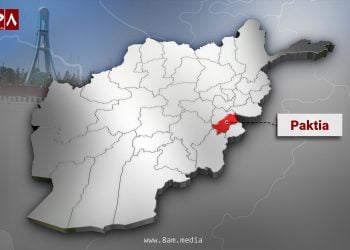
Map of Paktia Province highlighted in red inside the map of Afghanistan. (Photo Credit: 8am.media)
Afghanistan News

Clashes Erupt Between Taliban and Pakistan in Paktia’s Dand Patan District

17 October 2026 [t_time:1792250419]
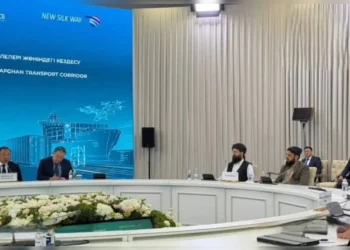
Taliban representatives attend the Economic Cooperation Organization meeting in Astana, Kazakhstan, where regional railway projects and transport links were discussed. (Photo credit: @bnadari1)
Afghanistan News

Taliban Discuss Afghanistan Railway Projects at ECO Meeting

17 October 2026 [t_time:1792250075]

Latest

Loading latest news...

Popular stories

  • An aerial view shows collapsed buildings and widespread damage following an earthquake in Panama (Photo: Reuters)

    More Than 200 Aftershocks Recorded in Panama Since Friday’s Earthquake

    Share
    Share Tweet
  • Trump Again Says War with Iran Will End “Very Soon”

    Share
    Share Tweet
  • Axios: Trump Expects Ukraine Not to Attack Russian Oil Refineries

    Share
    Share Tweet
  • UN Report Reveals Shifts in Family Attitudes and Rise in Domestic Violence in Afghanistan

    Share
    Share Tweet
  • Russian Foreign Intelligence Chief Arrives in Kabul

    Share
    Share Tweet

Podcast

Insights
Insights

Join Lynne O’Donnell for 8AM’s podcast series, Insights.
Lynne talks with generals, diplomats, soldiers, journalists, politicians, activists, people who have front row seats for conflicts around the world, and citizens with a story to tell, happy or sad. For this first series, Afghanistan is the focus. Lynne and her guests talk about the collapse of the republic in August, 2021, and the impact since — for the people of Afghanistan, for the security of the region, for the safety of the world. It’s important, interesting and insightful.

Insights/22: Controlling the Narrative with Mina Sharif
byinsights8am

Controlling the Narrative

Lynne O’Donnell talks with Mina Sharif, author, activist, women’s rights campaigner, educator and mentor. They discuss who controls the narrative and who speaks for Afghanistan’s people when the Taliban appear to have seized control not only of the country but of the message, too.

Have a listen

Insights/22: Controlling the Narrative with Mina Sharif
Episode play icon
Insights/22: Controlling the Narrative with Mina Sharif
Episode Description
Episode play icon
Insights/21: Media Meltdown with Zahra Joya
Episode Description
Episode play icon
Insights/20: Terror Inc with Scott Richards
Episode Description
Episode play icon
Insights/19: Busting Stereotypes with Bushra Gohar
Episode Description
Episode play icon
Insights/18: Media Matters with Waliullah Rahmani
Episode Description
Episode play icon
Insights/17: What Goes Around Comes Around with Sima Samar
Episode Description
Search Results placeholder
Hasht-e Subh

8AM Media, also known as Hasht-e-Subh Daily, stands as Afghanistan's premier independent and non-profit newspaper, resonating as a beacon of journalistic integrity since its establishment in June 2007 by esteemed Afghan journalists and human rights advocates. With a steadfast commitment to citizen journalism and civic education, Hasht-e-Subh Daily has earned its place as the most esteemed publication in the nation.

Publisher: Sanjar Sohail
Email: [email protected]
Executive Director: Parwiz Kawa
Email: [email protected]

Read More

Two People Killed After Vehicle Drives onto Football Field in US

US Defense Secretary Warns Iran of “Destruction”

Explosion at Iraqi Popular Mobilization Forces Base Kills One

Saudi-Led Coalition Says It Intercepted Two Missiles

CENTCOM Says 138 Ships Diverted Under US Naval Blockade of Iran

Editor’s Choice

Every Saturday morning, 8AM MEDIA English Services Department will guide you through the week’s biggest stories from Afghanistan and the international community.

Subscribe

© 2026 - ©Hasht-e Subh Daily

No Result
View All Result
8am.Media
پښتو ویب‌پاڼه
ویب‌سایت فارسی
اۉزبېکچه ویب‌سایت
  • Home
  • News
    • Afghanistan News
    • World News
  • Opinion
    • Editorial
    • Analysis
  • Reports
    • Daily Reports
    • Investigative Reports
  • Society
    • The story of people
  • Women’s Word
  • Columns
    • Three Years After Afghanistan’s Fall: The Taliban’s Resurgence
    • Towards Equality
    • The Resurgence of the Taliban: Two Years Since Afghanistan’s Fall
    • Hebatullah Report Special Edition
    • Resistance for Education Special Edition
    • Special Column on Taliban’s Education Curriculum
    • Nawroz
  • Interviews
  • Contact Us
    • About Us
    • 8AM MEDIA Annual Awards
    • Submit an Article to Hasht-e-Subh
  • 8am.media

© 2026 - ©Hasht-e Subh Daily