The 80th session of the United Nations General Assembly convened on September 23, 2025, at the organization’s permanent headquarters in New York City, United States. During this session, heads of member states and government representatives deliver speeches outlining their commitments to the world. The theme of this year’s 80th General Assembly is “Better Together: 80 Years and Beyond for Peace, Development and Human Rights.” For the fourth consecutive year, Afghanistan has been excluded from participation, and its seat remains vacant. In this session, leaders of neighboring and regional countries referred to the situation in Afghanistan. The Prime Minister of Pakistan, in his address, stated that terrorism in Afghanistan constitutes a serious threat to global security.
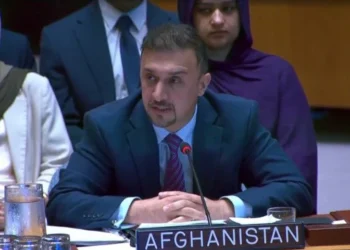
The 80th General Assembly is taking place four years after the Taliban’s takeover of Afghanistan and the country’s absence from the Assembly. During this time, the acting representative of Afghanistan at the UN has been denied the right to speak at the General Assembly, only participating in side events related to human rights and the situation in Afghanistan.
This year, too, Afghanistan is absent, but leaders of some neighboring and regional states raised concerns about the country in their remarks. Uzbekistan, Tajikistan, Pakistan, and several others addressed issues such as security conditions, humanitarian assistance, and Afghanistan’s growing isolation.
Shehbaz Sharif, Prime Minister of Pakistan, in his speech to the UN General Assembly in New York, described terrorism in Afghanistan as a grave threat to global security. He said: “Pakistan has been at the forefront of global counterterrorism efforts for more than two decades, standing as a bulwark against terrorist groups.”
Sharif added: “Had these groups not faced Pakistan’s resistance, today they would be roaming the streets of New York, London, and other parts of the world.” He further stressed that his country is currently facing foreign-sponsored terrorism, particularly from groups operating out of Afghanistan. Shehbaz Sharif called on the Taliban to respect human rights, especially women’s rights, and to ensure that Afghanistan’s soil is not used for terrorist activities against any country.
Shavkat Mirziyoyev, President of Uzbekistan, in his UN General Assembly speech, emphasized that the international community must not allow Afghanistan to slip into isolation. He said: “I would like to once again stress that Afghanistan is an inseparable part of Central Asia. Not only we and the neighboring states, but the entire world has a stake in ensuring peace and stability in this country. Therefore, we will always do our utmost to assist the people of Afghanistan.”
Emomali Rahmon, President of Tajikistan, in his remarks to the General Assembly, urged the international community to help address Afghanistan’s drought crisis and to assist victims of the recent earthquake in the country’s east. He emphasized that Tajikistan stands ready to cooperate in this process. Rahmon added: “We call on the international community to deliver humanitarian assistance, particularly to areas affected by drought and the severe earthquake.” He reiterated that Tajikistan has consistently supported peace, stability, lasting security, and social and economic development in neighboring Afghanistan.
Sadyr Japarov, President of Kyrgyzstan, at the 80th General Assembly session, called for the release of Afghanistan’s frozen assets. In his speech, he stressed that isolating Afghanistan is not in the country’s interest, adding: “Depriving Afghanistan of financial assistance is unacceptable.”
Recep Tayyip Erdoğan, President of Türkiye, in his address to the General Assembly, urged the Taliban to adopt an inclusive approach based on human values. He stressed, “It is essential that the international community does not abandon the people of Afghanistan, and Türkiye and the Turkish nation will always stand by them.”
Kassym-Jomart Tokayev, President of Kazakhstan, also stated: “Kazakhstan believes that inclusive development in Afghanistan is the foundation for lasting peace and regional stability.”
Micheál Martin, Prime Minister of Ireland, in his speech to the UN General Assembly, strongly criticized the Taliban for violating fundamental human rights, particularly the rights of women and girls in Afghanistan, and called for urgent action by the group. He emphasized that the Taliban bear responsibility for ensuring the protection of human rights in Afghanistan. Martin added: “Ireland supports international efforts to counter any attempt to undermine global commitments and human rights standards.”
Volodymyr Zelenskyy, President of Ukraine, in his address to the General Assembly, made a brief reference to Afghanistan, stating that the Taliban have dragged the country back into a “dark age.” Zelenskyy underscored that the UN Charter and the Universal Declaration of Human Rights must be upheld worldwide, without exception.
Side Events on Afghanistan
Concerns have been raised over the absence of Afghanistan’s representative at the UN General Assembly, while several side events at this year’s session are being held on the situation in Afghanistan, particularly women’s rights and human rights.
One such event, titled “Weaponization of Religion by the Taliban and Its Consequences on Afghanistan and Beyond,” was held on Friday, New York time. Another meeting, “Strengthening the UN’s Mosaic Approach for an Inclusive Future in Afghanistan,” took place yesterday, U.S. time.
Another side event, titled “Erased But Not Forgotten: Voices for Justice and Accountability in Afghanistan,” is scheduled for Monday, September 29, 2025.
Over the past several days, leaders of neighboring and regional countries have spoken about Afghanistan, while women and girls in the country remain stripped of all basic human rights by the Taliban.
For more than four years, the Taliban have continued to issue dozens of decrees resulting in widespread human rights violations, particularly against women. The group has also carried out reprisals, suppressed opponents, executed former soldiers, and failed to uphold their pledge of general amnesty.
Previously, Afghanistan and Myanmar, based on an agreement at the UN General Assembly, did not deliver speeches. However, the acting permanent representative of Afghanistan addressed the UN Security Council on behalf of the country’s citizens. Reports indicate that this year, the UN has once again followed the “procedures of recent years” regarding Afghanistan.
You can read the Persian version of this report here:
هشتادمین مجمع عمومی سازمان ملل؛ غیبت افغانستان، صدای پررنگ همسایهها