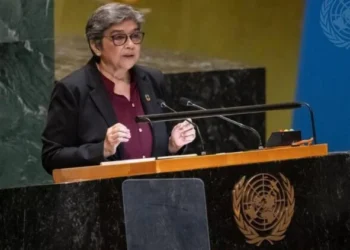
Sima Samar stands as one of the most respected human rights defenders in Afghanistan. After the fall of the first Taliban regime, she became the first woman to join the Afghanistan government cabinet. For nearly two decades, Dr. Samar led the Afghanistan Independent Human Rights Commission (AIHRC), guiding it through some of the country’s most difficult years. Alongside her advocacy, she also helped establish dozens of schools and health centers, bringing education and care to communities in need. To honor four decades of her tireless work for justice, human rights, and education, the “Hazara Community of Melbourne – Australia” celebrated her achievements in her presence under the title “A Symbol of Hope and Resilience,” at a gathering attended by political and cultural figures, journalists, and several members of the Australian Parliament.
On Saturday, December 6, 2025, in the city of Melbourne, the “Hazara Community of Melbourne – Australia” honored the remarkable record of Dr. Sima Samar, former Chairperson of the Afghanistan Independent Human Rights Commission, and her efforts to build schools and health centers across Afghanistan. The ceremony brought together migrants from Afghanistan living in Australia, along with guests from other countries.

In her speech to supporters and political and cultural figures gathered in Australia to honor her work, Sima Samar said, “Never question a person’s human dignity because of their ethnicity or actions. Give them the chance to respond and access fair justice; access to justice is the right of every human being. But when we misuse harsh words and social media, when we insult and humiliate ethnic groups and families, we do not save ourselves. Instead, we place our own character on trial.”
Emphasizing the importance of education, the former head of the Independent Human Rights Commission called on all people of Afghanistan living abroad to invest in learning as a way out of darkness. She urged them to support their relatives inside the country and help their children gain access to education by every possible means.
Wahidullah Waissi, Afghanistan’s ambassador to Australia, said: “When many chose silence, she became a voice. That voice rose from the heart of Afghanistan and reached the world. From a village to a hospital, from an institution to a ministry, from the founding of the Afghanistan Independent Human Rights Commission to the great halls of the United Nations, she moved from healing bodies to healing the conscience of humanity. She took justice from a distant dream and turned it into reality.”

Referring to the restrictions imposed by the Taliban on women and girls in Afghanistan and the launch of the 16 Days of Activism against Violence campaign by the Afghanistan Embassy in Australia, Mr. Waissi added: “Today, our country lives under an ideological occupation built on terror, extremism, discrimination, and totalitarianism.” He said that in these conditions, Afghanistan must become a force for restoring peace and justice, rebuilding the nation, and spreading awareness.
Niamatullah Ibrahimi, a researcher at the University of Melbourne, said during the ceremony, “Dr. Samar is a symbol of an entire generation’s resistance. In the darkest times of history, she became a healing force for wounded people. In the hardest chapters of our past, deep among the mountains and stones of the homeland, she kept the light of knowledge alive. She taught us that the defense of human rights knows no gender, no ethnicity, and no political label.”
Sanjar Sohail, journalist and the publisher of the Hasht-e Subh Daily, described Sima Samar as a woman whose “name is tied to justice, human rights, and freedom, and whose voice speaks for the conscience of Afghanistan.” He stressed that her role in shaping the ideas of human rights and citizenship in Afghanistan has been “deep, lasting, and essential.”
Mr. Sohail added, “Talking about Dr. Sima Samar is never easy. Her life and work fill countless pages. She is not only a name. She is a path, a mission, and a teacher for my generation and for those before and after me. Dr. Samar has dedicated fifty years of her life to justice, humanity, and human dignity. This is neither an exaggeration nor a polite gesture. Her life itself stands as proof.”
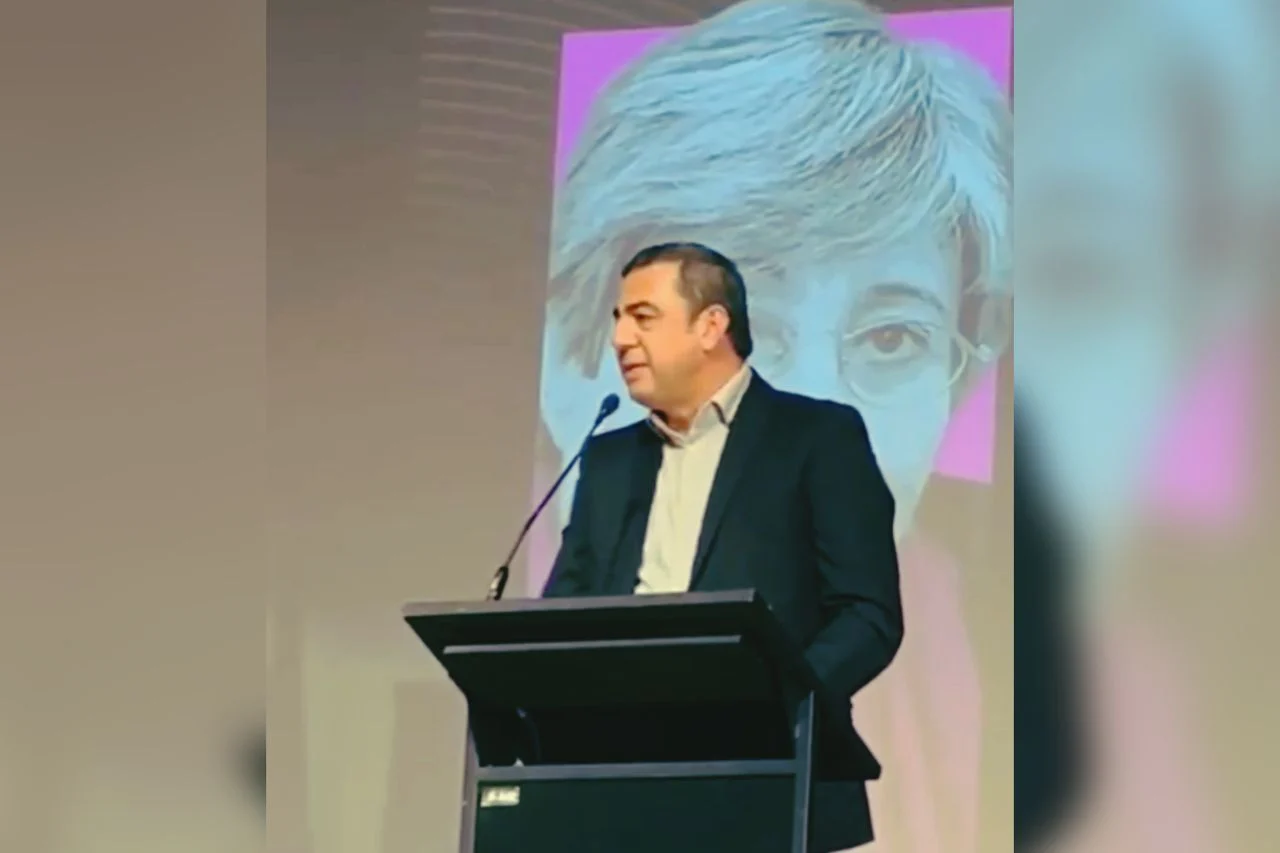
He also emphasized: “Sima Samar rose from a community that has suffered organized discrimination, violence, and genocide for centuries. Yet she never turned that historical pain into a wall around herself. She never allowed her community’s suffering to narrow her vision. She came from a wounded society, but she demanded justice for everyone: for Pashtun, Tajik, Uzbek, Hazara, Nuristani, Shiite, Sunni, women and men, the poor and the powerful alike.”
Mr. Sohail further said that speaking about Sima Samar is difficult because she transformed the Afghanistan Human Rights Commission into a vision of a “possible Afghanistan.” She represents a generation that stood with dignity, avoided political games, ideological extremism, and deal-making, and firmly defended human-centered values and justice. According to him, Sima Samar “stood against Taliban, stood against warlords, stood against human rights violators, and most importantly, stood against collective silence and indifference.”
Cassandra Fernando, a member of the Australian House of Representatives, said in her speech: “Dr. Samar is one of the pioneers of women’s empowerment, equality, democratic governance, and human rights.” Addressing Samar directly, she added: “Your courage has inspired people across continents, and your leadership still shines like a guiding light in places where hope is desperately needed.”
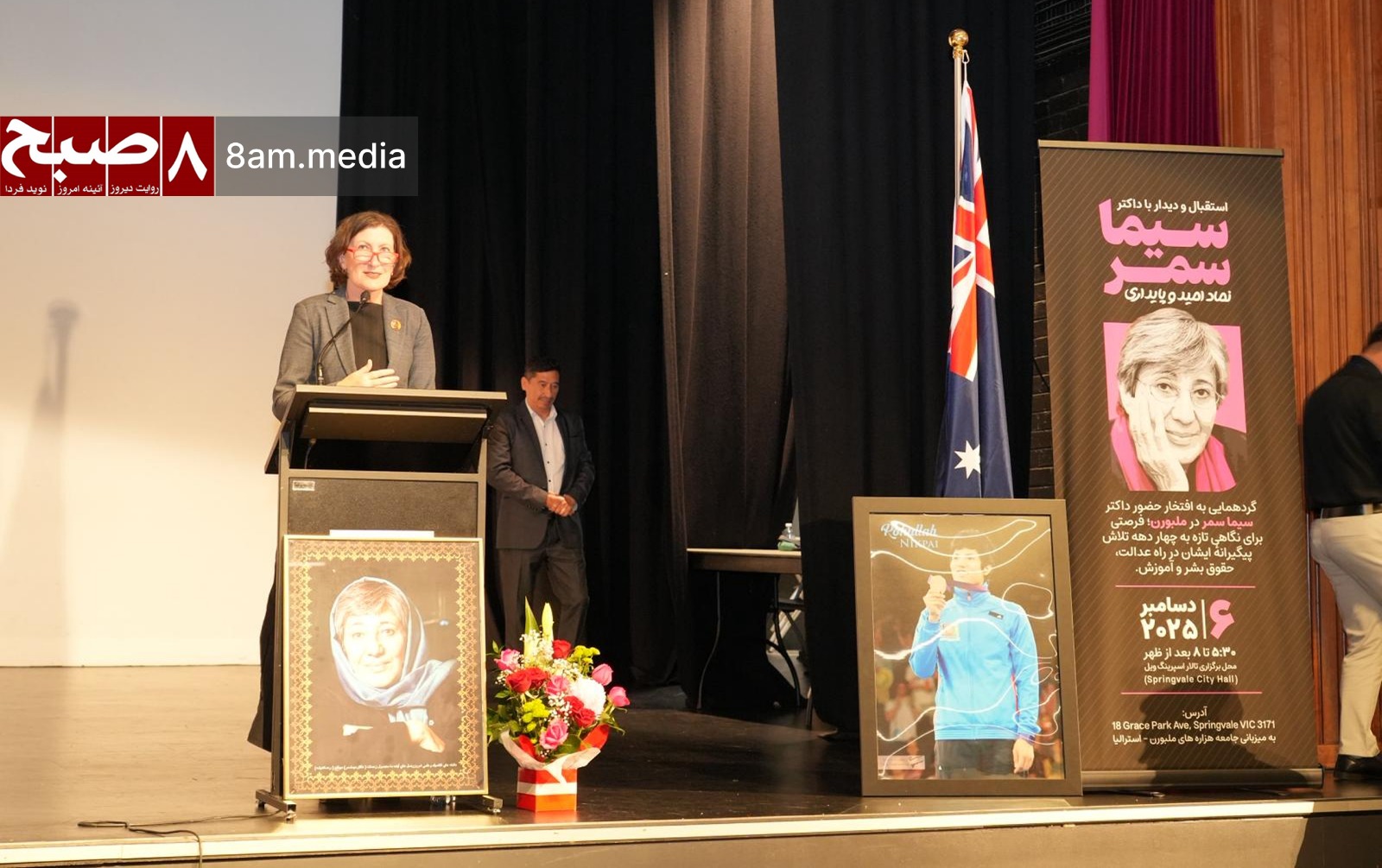
Dr. Farkhondeh Akbari, a writer and university professor, also spoke at the ceremony about Dr. Sima Samar. During the event, participants presented flowers to honor her achievements and stressed the importance of continuing and strengthening her efforts to achieve justice and promote human rights values.

You can read the Persian version of this report here:
«نماد امید و پایداری»؛ تجلیل از چهار دهه تلاش سیما سمر در حقوق بشر و آموزش