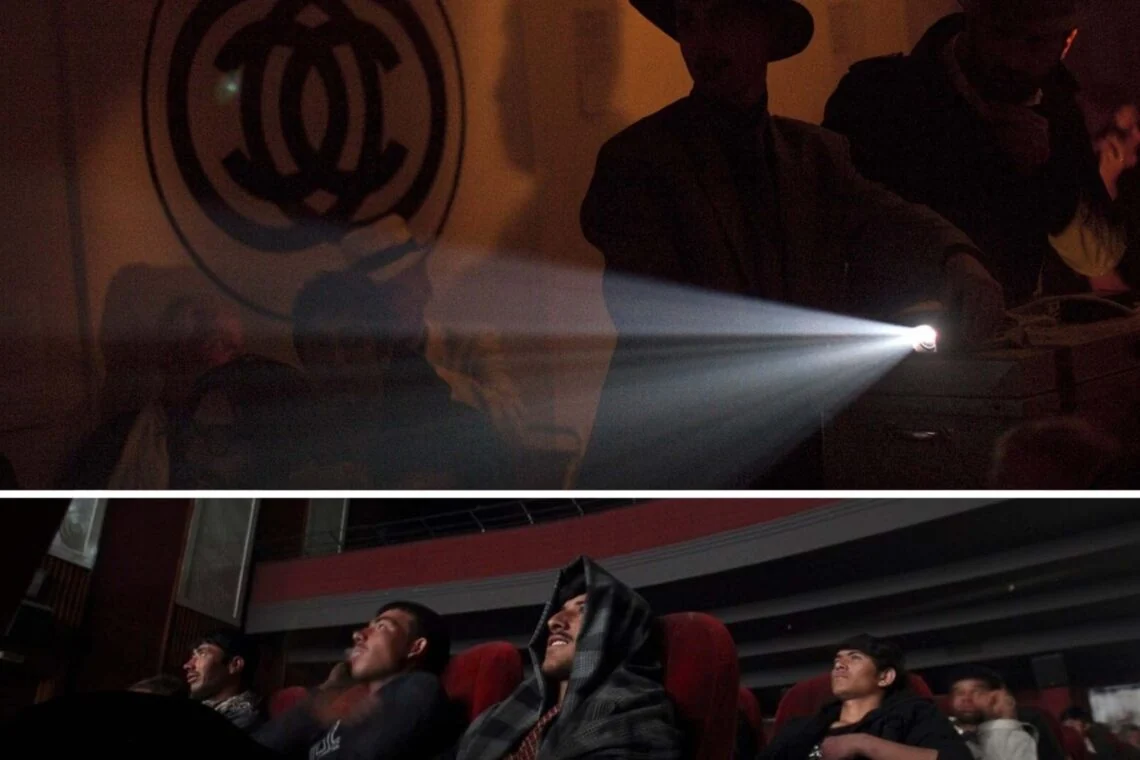
Several film and theater actors in Afghanistan are complaining about their dire economic situation under Taliban rule. They say they lost their jobs and main source of income after cinema activities were halted, and they are now facing serious difficulties in meeting the basic needs of life. According to them, some actors have turned to other jobs to cover living costs, while others have still not been able to find alternative work. They add that the continuation of this situation, and the absence of any clear prospect for resuming cinema activities, has left the professional future and livelihood of the artists remaining in Afghanistan in a haze of uncertainty.
These actors also say that the abolition of Afghan Film and its replacement with an audiovisual section in the structure of the current administration has not created a space for filmmakers to work professionally. They are calling on international institutions and organizations that support cinema to take action to support the artists remaining in Afghanistan and to provide the conditions for them to continue their artistic work.
For a number of artists in Afghanistan, years of work in theater and cinema were not just a profession but an important part of their identity and lives. However, after the Taliban takeover and the restrictions placed on artistic activities, a number of these artists have lost their positions and are now struggling to cover their basic living costs. Some of them, despite years of service in government institutions, have neither an income nor the pension they are entitled to.
Shukria (pseudonym), a theater and film actress in Afghanistan, says she has faced serious economic problems since the Taliban took control of the country and she was dismissed from her post at the Directorate of Theater. She says she worked in theater and cinema for years and was the breadwinner of her family, but after the Taliban takeover and the loss of her job, she now has no source of income. The actress adds that unemployment and the restrictions imposed by the Taliban on artistic activities have hurt her morale and artistic identity. According to her, she was unable to leave Afghanistan because of her responsibility to care for her children, and she now lives in a rented house with her ill husband and unemployed children.
The actress says: “After I was dismissed from my post at the Directorate of Theater, my life became very difficult. I was the breadwinner of my family, and I worked in cinema and theater for years, but now I have no income at all. My husband is ill, and my children are also unemployed. We live in a rented house and have to pay for water, electricity, medical treatment, and other daily needs. When I have neither a job nor a pension being paid to me, I do not know how I can manage all these expenses. This situation has not only made my economic life difficult, but has also hurt my morale and artistic identity.”
Shukria says that despite years of service in theater and cinema, her pension is also not being paid, and covering the costs of rent, water, electricity, and her family’s medical treatment has become difficult for her. She adds that if the opportunity for artistic work becomes available again, the first thing she would do is make a documentary film about her own life, although at present she lacks the necessary resources for it. The actress is calling on international institutions and organizations that support artists to back the actors and filmmakers remaining in Afghanistan and to take action to address their economic problems.
Speaking about her wish to return to cinema, she says: “If I find an opportunity for cinema work again, the first thing I will do is make a documentary film about my own life. I want to depict the hardships I have faced after years of artistic work. Although I do not have the financial means for this, I am still interested in returning to cinema. I ask international institutions and organizations that support cinema not to forget the artists who have remained in Afghanistan, and to take action to support them.”
Alongside the economic problems of actors, the halt in film production and the changes to the structure of cinema-related institutions are also among the concerns of several filmmakers remaining in Afghanistan. They say that over the past five years, the space for making independent cinematic works and reflecting the social, cultural and political realities of the country has been severely restricted.
Akbar Khan (pseudonym), a former employee of Afghan Film and an actor in Afghanistan’s cinema, says that in the past five years, no independent film production reflecting the realities of society has been made inside the country. According to him, subjects such as the situation of women, girls’ education, culture, art, and ethnic, religious, and linguistic violence are among the issues that cannot be freely reflected in cinematic works.
The filmmaker says: “It has been five years since Afghanistan’s cinema has had any production inside the country that portrays the realities and objective events of society, culture, art, the situation of women, girls’ education, and ethnic, religious and linguistic violence. Afghan Film, which was a state institution and the shared home of Afghanistan’s filmmakers, has been abolished. As a result, Afghanistan’s cinema inside the country lives in silence and stillness, and filmmakers have little opportunity to reflect the realities of society.”
Akbar Khan adds that after the abolition of Afghan Film, a section called the audiovisual section was created within the structure of the General Directorate of Affairs Related to Jihadi Values. However, according to him, this section has not been able to fill the professional role of Afghan Film in supporting filmmakers and producing independent cinematic works.
The man says: “Afghan Film was the shared home of Afghanistan’s filmmakers, but now the audiovisual section has been created in its place. Unfortunately, non-professionals work in this section, and no notable achievement in film production has been seen so far. Even if a documentary is produced, its content is mostly jihadi and related to the government, which is not accepted by many people in Afghanistan. Even YouTube users work with fear and anxiety when preparing social topics.”
This former Afghan Film employee also says that several Afghanistan’s filmmakers left the country after the Taliban returned to power, but a group of artists who have remained in the country is facing economic problems and a lack of support. He also criticizes the dispersion of filmmakers abroad and claims that, in the process of relocating some artists out of Afghanistan, attention was paid to several filmmakers, but many experienced artists were deprived of this opportunity.
Cinema in Afghanistan has a history of nearly a century and, in different periods, has been one of the tools for reflecting the country’s culture, art, and social events. This art form entered Afghanistan in 1923, during the reign of Amanullah Khan. During the era of Mohammad Zahir Shah, with the establishment of Afghan Film within the Ministry of Information and Culture (MoIC), the ground was laid for the growth of the film industry in the country. In the following decades, filmmakers portrayed part of Afghanistan’s social, cultural, and historical developments through fictional and documentary works.
Nevertheless, wars and political developments in Afghanistan repeatedly brought cinema and theater activities to a standstill. After the formation of the republican system, the activities of a number of cinemas in Kabul and the provinces resumed. According to filmmakers, there were 38 cinemas operating in the country at that time, of which 17 were in Kabul, and 21 others were in the provinces. In these cinemas, various works, especially Indian films, were screened.
However, with the Taliban takeover in August 2021, the activities of cinemas were halted, and new restrictions on cultural and artistic activities limited work opportunities for filmmakers and actors. During this period, Afghan Film also lost its former structure and standing, and an audiovisual section was created within the structure of the Taliban’s General Directorate of Affairs Related to Jihadi Values. A number of filmmakers left the country, and the artists who remained faced unemployment, a lack of financial support, and restrictions on producing cinematic works.
Alongside the halt in cinema activities, a number of old film screening venues have also disappeared. The Ariana Cinema in Kabul, which was built in 1960, was demolished last year.
You can read the Persian version of this report here:
پنج سال پس از سلطه طالبان؛ سینماگران با فقر و بیکاری دستوپنجه نرم میکنند