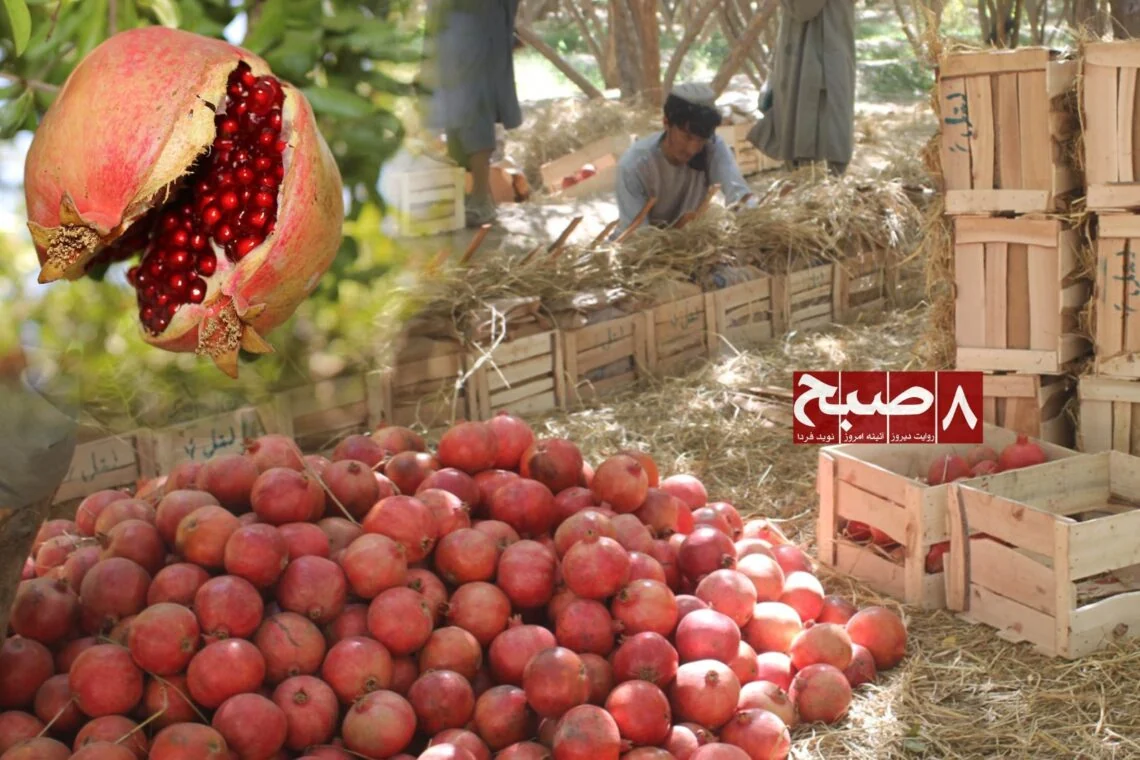
Pomegranate growers in Kandahar province are facing severe economic hardship this year due to the lack of a suitable market, closed export routes, drought, and crop diseases. The growers say the closure of trade routes with Pakistan has had a negative impact on pomegranate exports and has cut the price of the fruit by up to 70 percent. According to them, the current price of pomegranates does not even cover the cost of maintaining and caring for the orchards.
Haji Shir Agha, a pomegranate grower in Arghandab district, says: “This year, the price of pomegranates in the market has dropped sharply compared to last year. In the past, traders came to the orchards willingly and bought our pomegranates at a fair price. But the closure of the routes with Pakistan has worried both growers and traders. Now traders do not buy pomegranates as they used to, and we can barely cover our costs. We wait all year for these days so that we can sell our harvest at a good price, but the lack of a market has dashed all our hopes.”

Haji Mohammad, another pomegranate grower, also says that the price of the fruit has fallen to an unprecedented level because of the lack of buyers. According to him, in the past, one man (four kilograms) of pomegranates reached about 300 Afghanis inside the orchard, but now traders buy the same amount for about 100 Afghanis.
This grower adds: “All of this is a loss and there is no profit at all. We spent money and worked hard all year, but now everything has gone to waste. Think about it yourselves: if I sell one man (four kilograms) of pomegranates for 100 Afghanis, which of our costs will be covered? We have become completely hopeless about this situation.”
According to the growers, Pakistan has been one of the most important and largest markets for Kandahar pomegranates in recent years. However, the closure of trade routes with that country has obstructed the export of pomegranates and directly affected the price of the fruit.
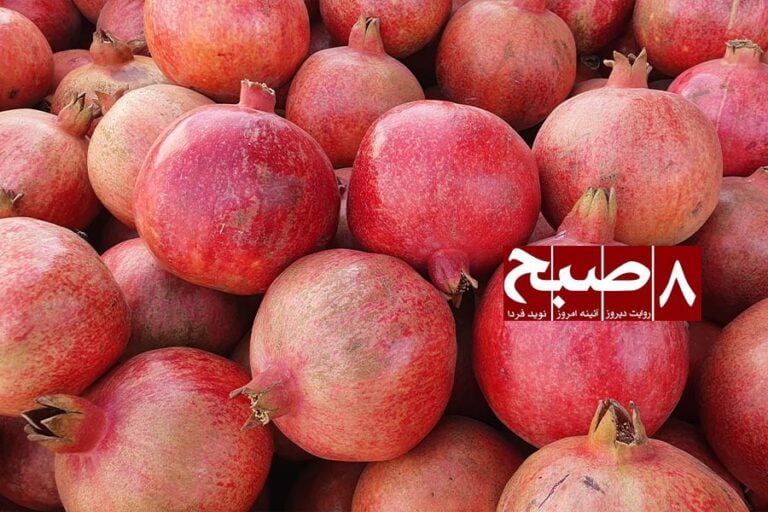
Shah Wali Khan, another Kandahar orchard owner, says that in previous years a large number of traders came to the area to buy pomegranate orchards, but this year the number of buyers has dropped to an unprecedented level. According to him, the traders who do visit the orchards buy pomegranates at a very low price, and growers are forced to sell at any price to keep the fruit from spoiling.
Shah Wali Khan says: “There are 1,800 pomegranate trees in my orchard. Last year I sold my orchard for 1.5 million Afghanis, but this year traders offer about 400,000 Afghanis for it. What can we do? We are forced to sell at this price, because if time passes, the pomegranates lose their quality and can no longer be sold even at this price. We cannot even cover our costs.”
Orchard Owners and the Collection of Ushr and Zakat by the Taliban
Several Kandahar orchard owners have also complained about the Taliban collecting money in the name of ushr and zakat. They say that despite the unprecedented drop in pomegranate prices and their inability to cover orchard maintenance costs, individuals affiliated with the Taliban continue to demand one-tenth of their harvest.
Khan (pseudonym), an orchard owner in Panjwai district, says that members of the Taliban’s Ushr and Zakat department visit the pomegranate orchards and, based on their own estimates, take one tenth of the harvest from the growers in the name of ushr and zakat.
This orchard owner adds: “Members of the Taliban’s Ushr and Zakat department come to our orchards together with the Morality Police and fighters of this group, inspect the harvest, and then demand one tenth of it. A person accompanying the Taliban determines the price of the orchard’s harvest and settles accounts with us based on that price. Rising costs and the lack of a suitable market have reduced our income. We are facing many problems. The Taliban do not help at all in the agriculture sector, but they collect money from us in the name of ushr and zakat.”
According to the orchard owners, individuals affiliated with the Taliban do not provide any official document or receipt when they collect money in the name of ushr and zakat. The growers say that, on the one hand, economic losses have made it difficult for them to afford necessities of life, and on the other hand, the Taliban continue to take money from them in the name of ushr and zakat.
Drought and Diseases Have Also Reduced Pomegranate Quality
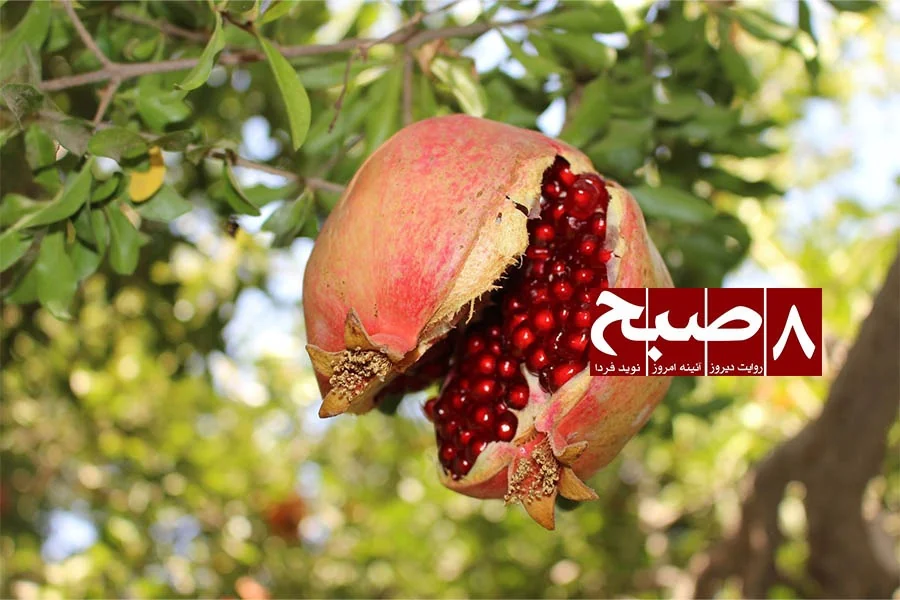
Alongside the lack of a suitable market, drought, water shortages, and crop diseases have also harmed pomegranate growers in Kandahar. According to them, as a result of the water shortage and agricultural pests, a large portion of the pomegranates have turned yellow, split open, or remained small, which has also reduced the quality of the fruit.
Musa Lala (pseudonym), an orchard owner in Panjwai district who does not want his name published in the report because of security concerns, says that support and assistance for orchard owners in the agriculture sector have weakened since the Taliban took control.
He says: “During the previous government, the Agriculture Directorate and related institutions provided us with the necessary assistance and guidance on water shortages, chemical fertilizers, controlling diseases and pests, and growing high-quality pomegranates. But with the arrival of the Taliban, all of these activities have stopped. It seems as though the Agriculture Directorate has packed up and left. We are also residents of this country. The Taliban, who consider themselves a government, should solve the people’s problems, but on the contrary, they have made the problems worse. What can I do? I have only this one orchard, and instead of profit, it has brought me loss. There is nothing more I can do. May Almighty God help us himself, because these rulers do not hear our voices.”
Deceptive Promises by the Taliban Worry Orchard Owners and Traders
Fresh fruit exporters also consider the closure of export and transit routes with Pakistan, and the lack of alternative routes, to be major factors in the drop in pomegranate prices. According to them, Pakistan was one of the important markets for Kandahar pomegranates, and about 110,000 tonnes of pomegranates were exported to that country every year. However, the closure of trade routes with Pakistan has made the export of this product extremely vulnerable.
Some time ago, a number of traders from Russia, India, and Uzbekistan traveled to Kandahar and visited some traders and fruit trading centers in order to buy fresh and dried fruit; these meetings have so far not led to any practical progress in exports.
According to information from traders, the plan was for Kandahar pomegranates to first be transferred to Uzbekistan and, after being packaged according to international standards, exported to global markets. However, this plan has not yet been implemented in practice.
Meanwhile, officials of the Kandahar Chamber of Commerce have said they are unaware of the meeting with these foreign traders and the mentioned plan for pomegranate exports, and say they have no information on the matter.
This comes as Abdul Ghani Baradar, Economic Deputy of the Taliban’s Office of the Prime Minister, had promised in numerous meetings with traders in Kandahar that alternative routes for exports would be found to replace Pakistan’s transit routes. However, several fresh and dried fruit traders complain that these promises have not been fulfilled, and say that the Taliban have only made deceptive promises about finding alternative export routes and have so far not found any effective route. According to them, the slowdown in exports has caused losses not only for orchard owners, but also for fruit traders and those working in the transportation sector.
Traders say that in previous years, during this same season (from October 7 to November 6), more than 150 cargo trucks carrying pomegranates left the country every day. By their estimate, each truck carried about 15,000 kilograms of pomegranates. This year, however, exports have dropped to an unprecedented level, and only a handful of trucks carrying pomegranates have been exported so far.
30 Percent Decline in Pomegranate Yield
Meanwhile, according to statistics from the Taliban-controlled Kandahar Agriculture and Livestock Directorate, the pomegranate harvest in the province was 275,000 tonnes last year, but the directorate has estimated this year’s harvest at about 220,000 tonnes.
According to the directorate, drought, water shortages, and agricultural pests have negatively affected the pomegranate harvest, and production of this crop has declined by nearly 30 percent compared to last year.
The Hasht-e Subh Daily, in an earlier report, also reported on the damage to pomegranate and grape orchards in Kandahar as a result of drought and climate change. According to that report, about 30 percent of the province’s pomegranate and grape orchards have dried up or are at risk of drying up and being destroyed, a situation that has also negatively affected the pomegranate yield in 2026.
Kandahar orchard owners say that if alternative markets and effective transit and trade routes for pomegranate exports are not found as soon as possible, their economic problems will deepen, and the maintenance and development of the province’s pomegranate orchards will also face a serious threat.
You can read the Persian version of this report here:
وعدههای میانتهی طالبان برای یافتن مسیرهای بدیل صادرات؛ باغداران قندهار نگران سقوط بهای انارند