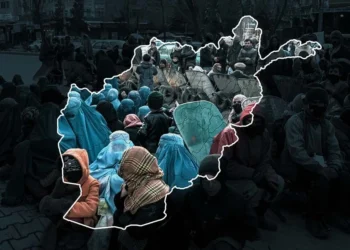

In the male-dominated society of Afghanistan, women and children emerge as the most vulnerable segments. Numerous factors contribute to the vulnerability of women and perpetuate violence against them, but some of these factors hold greater significance. These include traditional and discriminatory views towards women, weak governance, poverty, insecurity, public ignorance, lack of awareness of religious principles, ignorance of legal-human rights values, and illiteracy.
Examining the situation of women throughout Afghanistan’s history reveals that violence in this country has deep and longstanding roots. Severe restrictions on fundamental rights such as the right to work, education, and participation in social, political, and economic affairs, forced marriages, mysterious killings of women, neglect of women, honor killings, and various other forms of violence against women have been prevalent.
While the two decades of the republic era had somewhat opened avenues of hope for girls and women to pursue education and work, the return of the Taliban to power has entangled women and girls once again in extensive restrictions and the terrifying actions of this group, leading to disillusionment and confinement. The Taliban initially excluded women from political participation, citing a major transformation and an unsuitable environment for women in the conducive government. However, subsequent restrictions, including the exclusion of women from media, prohibition of girls above the sixth grade from attending schools, restrictions on women’s travel without a religious escort, banning women from parks and baths, closing university gates to female students, oppression, imprisonment, and torture of targeted women, along with numerous other human rights violations, have caused social and psychological damages, especially among the youth, particularly women and girls. This situation has transformed Afghanistan into a graveyard of hope.
The Factor Behind the Increase in Hunger:
The Taliban, having forcefully seized power and imposed an unwelcome rule on the people, played a significant role in causing hunger and extreme poverty among the population. Statistical evidence reveals a sharp increase in poverty levels since the Taliban’s resurgence, emphasizing the urgent need to address the interconnected issues of hunger and economic downturn.
According to a survey by “Market Watch,” quoting an analysis by Professor Masoud, and supported by reports from Radio Farda citing the United Nations, the poverty rate during the Republic period was 90%. However, with the Taliban’s return to power, this rate skyrocketed to 98%. Disturbingly, within just two months (October and November of the previous year), the number of hungry individuals surged from 28.3 million to 29 million in December. During this period, 700,000 people fell below the poverty line, pushing the unemployment rate to a staggering 74%.
An illustrative example of the Taliban’s contribution to increased hunger is the closure of beauty salons. A Radio Azadi report revealed that Afghanistan had approximately 12,000 active beauty salons with around 60,000 employees. Each of these individuals was a breadwinner for their household. Considering an average family size of six, hundreds of thousands have been deprived of sustenance, intensifying hunger across the nation. It is evident that the Taliban, and no one else, is the cause of this humanitarian catastrophe.
Economic Recession:
While unemployment rates were high in Afghanistan even before the Taliban’s resurgence, their return had severe consequences. According to a report by SEGAR, following the Taliban’s takeover, approximately 500,000 individuals lost their jobs within a year. Furthermore, Market Watch reports that 24% of the GDP, contributed by women, has become unemployed.
Migration:
According to the “Radio Azadi” report, the United Nations High Commissioner for Refugees states that since the resurgence of the Taliban until the end of 2022, 9.2 million forcibly displaced Afghans have been registered worldwide, with only 8.5 million residing in Asia, mostly in Southwestern Asia. Additionally, many government and non-governmental employees have chosen the path of migration. As a result, a large portion of skilled and professional forces has left, and in turn, unskilled individuals have replaced them. This has led to economic recession and exacerbated poverty. A BBC report indicates that over 400 professors from Kabul University have left Afghanistan following the Taliban’s takeover.
Violation of Children’s Rights and Forced Marriages:
With the resurgence of the Taliban, the deprivation of girls’ education, economic hardship, fear of violence, and the Taliban’s presence have forced more families to go against their wishes and marry off their daughters early and forcibly. A report by the human rights organization “Rawadari” shows that “in Maidan Wardak province, a girl was forced into marriage with a Taliban member before reaching the legal age, by paying 600,000 Afghanis to her family.” Such cases have occurred in significant numbers in all provinces of Afghanistan.
Detention and Torture:
Taliban prisons are nothing short of hell. The United Nations Representative Office has emphasized that from August 15, 2021, to the end of June of the past year, they documented 800 cases of extrajudicial killings, torture, mistreatment, arbitrary detention, imprisonment, and disappearances. According to reports, in just the Forty Intelligence Directorate in Kabul’s “Shash Darak” district, around seven thousand Panjshiri individuals are imprisoned and subjected to torture.
The Taliban subject women prisoners, including children, to mistreatment and physical abuse. Their male relatives are also beaten and given electric shocks. Women in Taliban prisons are sexually assaulted, and some female prisoners have resorted to suicide after being released from prison.
Concealing Tragedies:
Media freedom in Afghanistan before the Taliban’s rule was considered one of the symbols of emerging democracy in the country. Hundreds of male and female journalists worked in radio, television networks, and print media, contributing to the expansion of media activities. With the resurgence of the Taliban, media freedom vanished, 60% of media outlets closed, and those operating within the country faced severe censorship. Programs related to entertainment, culture, arts, and politics were replaced by religious programs.
Due to intense censorship of media activities, hundreds of other tragedies resulting from the Taliban’s oppression and terror remain hidden from the public eye. For instance, even an ordinary interviewer speaking about the system can be detained by the Taliban and subjected to severe torture.
Some organizations defending journalists’ rights reported 168 cases of fundamental rights violations against journalists by the Taliban in 2023. For example, a behind-the-scenes journalist was arrested without evidence and subjected to six months of torture. When there is no media freedom in the country and people cannot speak freely due to fear of the Taliban, imagine the extent of other horrific acts by the Taliban, such as taking girls away under the pretext of not wearing the prescribed veil, which remains hidden from the public. These concealed violent tragedies perpetuated by the Taliban remain unknown to the people, intensifying the sense of fear and horror.
Increase in Administrative Corruption:
Corruption was one of the negative indicators of the previous Afghan government, but there are documented reports indicating that this phenomenon has multiplied under the Taliban regime. For example, obtaining a passport in Afghanistan has become a thriving black market. According to Deutsche Welle (DW) reports, a former government employee, now a commissioner, states: “The cost of a passport ranges from two to three thousand US dollars, a marriage certificate costs one to two thousand dollars, an ID card is around 500 dollars, and a birth certificate is approximately two to three hundred US dollars. A Bachelor’s Degree Certificate is exchanged for 10 to 15 thousand US dollars.” This level of rampant administrative corruption exists in all departments under the Taliban’s rule and is on the rise.
Suppression of Women under the Pretext of Not Observing Taliban’s Veil:
Women in Afghanistan under the Taliban’s rule even lack the autonomy to choose their clothing. According to a DW report, on the first day of 2024, the Taliban detained dozens of women and girls in Kabul on the pretext of “not observing the Taliban’s veil” and transferred them to undisclosed locations. They forced the families of the detained women and girls to stage demonstrations in support of the Taliban’s veil.
Afghanistan’s people, rooted in the historical heritage of a true Muslim nation, culturally adhere to the veil. Nevertheless, the Taliban violate the sanctity of women’s bodies and disrespect them under the pretext of not adhering to the Taliban’s veil, despite the Afghan people’s cultural observance of the veil.
The Strategy of Promoting Violent Islam:
With their return to power, the Taliban, instead of governing and providing services to the people, are pursuing the promotion of fundamentalism and institutionalizing Talibanism. Reports indicate the existence of a substantial undisclosed budget for the implementation of this strategy, leading to the establishment of numerous large schools in each district. In 24 provinces, a certain type of these schools, named “Jihadi Schools,” has also been constructed. The expenditures of these projects reveal the Taliban’s intention to establish their dominance in the social fabric and minds of the people.
According to a report by the 8 AM newspaper, the Taliban have constructed 350 religious schools only in the Ghor province. The creation of 100,000 teaching positions for religious schools, along with 70,000 positions for religious supervisors, and providing facilities for the teachers of these schools, while it has been nearly three years since the doors of schools and universities have been closed to girls, indicates the spread of extremism. In these schools, the Taliban teach an extremist version of Islam according to their interpretation and inject it into society’s pulse.
The Catastrophic Consequences:
Considering the briefly discussed issues, this outlook guides us to overarching points that, if the current situation persists, Afghanistan will plunge into the abyss of destruction, leaving no hope for a bright path ahead. Currently, the young generation of the country, more than any other segment, envisions their aspirations in darkness and nightmares. Escaping from this crisis, which is infused with tragedy, requires extensive and concerted efforts.