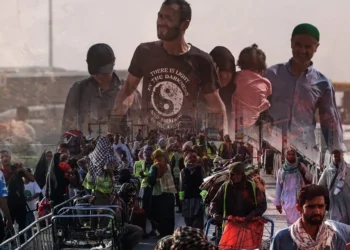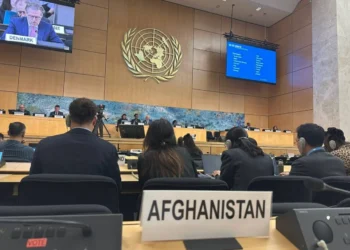

Afghanistan’s case is not closed, and the world’s silence toward it is meaningful. But that statement needs unpacking, since the ambiguity of the current situation makes it hard to define. This analysis examines that question.
Immediately after the fall of the republic, the Taliban’s return to power, and the continuation of their authoritarian rule, two views formed regarding the new situation:
The Taliban are the outcome of a period of turmoil and political anarchy, and they should be supported. Many people, even outside Afghanistan, lobbied for and defended this regime, and continue to do so.
The Taliban are dragging Afghanistan back into a dark chapter of its history, and their continued rule could bring civil war, deepen ethnic tensions, and reactivate terrorist networks with a mafia-like character, a situation that could usher in a new period of instability and violence.
Meanwhile, the world, regional countries, neighboring states, and international organizations have viewed Afghanistan’s crisis with notable caution. That crisis was the result of an intelligence agreement and carries security dimensions within a fluid geopolitical context. The people of Afghanistan bore the brunt of the damage over these four years, most of all those who never had the chance to leave, along with some of those outside the country who still hope, in nostalgia, to one day return home.
The world has kept intervention in the Afghanistan issue on its agenda, staying involved through organizations, institutions, certain countries, and individuals. Since today’s world has little choice but to defer to the decisions of major powers, it has settled for symbolic, cautious, diplomatic, and largely political and media-driven measures.
The global position on Afghanistan has been that an inclusive political system should be established, women’s rights to work and education should be restored, and the Taliban should distance themselves from terrorist groups. Yet everyone knows the Taliban project is a calculated intelligence scheme: it undermines security, promotes an ideology of exporting extremist thought, inspires other extremist movements, and builds a highly repressive regime with no capacity for tolerance and an extreme willingness to adapt to whatever serves its interests. Even so, some regional countries have gone as far as officially recognizing the Taliban, establishing political and diplomatic relations, and even handing over Afghanistan’s embassies to them.
They invite Taliban delegations to international gatherings; officials travel back and forth to Afghanistan, largely to secure their own countries’ interests; and some have gone further still, calling at the United Nations Security Council (UNSC) for the release of Afghanistan’s frozen funds, funds blocked under a Security Council resolution after the fall of the republic and the rise of the illegitimate, terrorist Taliban regime. Some have even praised the Taliban’s artificial security and are trying, through that support, to preserve the status quo.
At the same time, the contradictions in how outside countries view Taliban rule are central to understanding the situation. Russia supports the Taliban and praises its performance one moment, then voices concern over growing terrorist threats the next. China takes a similarly inconsistent position.
Pakistan, which openly backed the Taliban throughout the twenty years of the republic, now appears set on delegitimizing them. European countries, while refusing to recognize Taliban rule and condemning its human rights record, still invite Taliban delegations to Europe and go as far as negotiating with them over migration.
India, despite its opposition to the Taliban’s nature, is now working to strengthen the group as a way to counterbalance Pakistan. Arab countries and Turkey, likewise looking to benefit from the situation, have taken no clear position on the Taliban. Iran, with a dual approach, maintains extensive covert ties with the Taliban while also backing its opponents as a counterweight.
Central Asian countries have approached the post-Taliban landscape cautiously, focusing their efforts on economic and security interests. Notably, their membership in the Collective Security Treaty Organization (CSTO), led by Russia, gives them an implicit guarantee regarding the new situation in Afghanistan.
Yet none of these positions add up to a credible, precise analysis grounded in Afghanistan’s actual conditions, because none of them are transparent, principled, or impartial. The ambiguity in how the region and countries beyond it view the Taliban limits any real prospect for clear analysis. There is no lasting coalition, no reliable security understanding, and no genuine effort to help the world understand what is actually happening in Afghanistan.
Still, some factors can help clarify the broader, if not the finer, picture from a geopolitical standpoint: stable elements like geography, and unstable ones like the political system and demographics. The security dynamics surrounding Afghanistan, its position as a buffer state, and attempts to use its geography as a battleground for rivalry also help sharpen that picture.
As a buffer state, Afghanistan sits between two or more rivals, and its location means it can serve as a basis for cooperation, an arena for rivalry, or some mix of both. History shows Afghanistan has played this role before, from the Great Game between Tsarist Russia and the British, to the Cold War between the Soviet Union and the United States, and now to the contest between the region and outside powers.
But Afghanistan’s role isn’t defined by geography alone. Its position at the crossing point of the security belts of North, South, East, and West Asia has deepened its turmoil. The core problem is that Afghanistan belongs to none of them, which has made it a no-man’s-land where no one takes responsibility, and which has long served as a place where outside scores get settled.
Afghanistan’s unusual position offers the region far more in economic benefit than it costs in security risk, yet the region has forfeited that benefit and instead turned this territory into a battleground of its own making. Countries beyond the region take much the same view.
At the same time, the region, wary of uncontrollable chaos, sees the Taliban as an absolute evil, but one it can live with, and has no appetite for confronting that evil or its destructive potential. Yet Afghanistan’s location could just as easily make it a hub for economic and transit links between Central Asia, South Asia, China, and Iran.
Instead, the region’s outlook is narrowly focused on staying safe from the harm Afghanistan could cause, with little regard for its economic potential or for engaging it politically outside of security concerns. So regional powers back local groups, along with mafia-style and political networks and economic players, to build tools that can balance against their rivals.
The dynamics of Afghanistan’s current situation, then, don’t reflect confusion so much as a deliberate new strategy. Asked whether the world has splintered in its approach to the Taliban, the answer is clearly yes.
Two camps have now formed:
A pressure camp, aimed at containing the Taliban.
An engagement camp, aimed at managing them.
The two compete along geopolitical and strategic fault lines.
The Taliban, meanwhile, have caught a break: they rose to power at a moment when the world is grappling with instability, disorder, and a breakdown of the usual norms of global governance, facing an almost total vacuum of global leadership for lack of any effective international mechanism.
Both camps, East and West, pressure and engagement alike, are now intent on keeping the Taliban in power. Wary that removing them could make things worse under any number of scenarios, the region leans toward security and intelligence cooperation with the group.
Russia, China, Iran, and the Central Asian states have gone as far as engaging with and formally recognizing the Taliban. They maintain security ties with the group and place little priority on the region’s long-term geopolitical stability.
Countries beyond the region, by contrast, are applying unusual pressure to try to reshape the Taliban once again, a push that could come with disruption, coercion, and severe, potentially crippling blows. Pakistan is moving in that direction, while India is carefully shielding the Taliban to head off friction.
Many examples illustrate this deeper strategic ambiguity behind Afghanistan’s current, unsettled state.
At the same time, as resistance-front attacks against the Taliban intensify, the group’s alarm over the shifting situation and its efforts to contain that alarm remain central to understanding what is actually happening in Afghanistan today. The current standoff may, in the long run, resolve the core challenge and break the deadlock. But predicting how the situation will unfold, or forecasting specific events, is extremely difficult, if not impossible. For now, the only viable analysis is a tactical one: reading the situation as it stands, in order to assess it strategically against the game’s underlying, stable rules.
You can read the Persian version of this analysis article here:
افغانستان در میانه ابهام استراتژیک؛ جهان با طالبان چه میکند؟