
For the elite and the middle class in Afghan society, the rule of the Taliban and the loss of rights and freedoms may be the most significant issue in Afghanistan at present, but for the poorer segment of society, bread is a more pressing concern. Perhaps the hungry do not contemplate freedom. Poverty has always been synonymous with Afghanistan. Non-mechanized agriculture, underdeveloped industry, unstable energy, successive government collapses, mismanagement, and climate change are considered the most significant factors contributing to poverty in Afghanistan. Mismanagement and corruption, also cited as factors in the collapse of the republic system, have squandered the country’s economic growth opportunities over the past two decades, and with the Taliban in power, society is being pulled toward economic collapse. Reduction in foreign aid and increased economic pressure from the Taliban have impacted household economies. The Taliban have raised public service fees, increased taxes, forcibly collected other monies under the guise of tithe and alms, and are accused of extorting the people. These actions have damaged household economies and subsequently increased child labor rates in the country. Moreover, the Taliban do not allow women to work, and if male family members cannot meet living expenses or if a family lacks a working male, they send their children to the labor market. These children are deprived of education, perpetuating the cycle of poverty and violating children’s rights and protections.
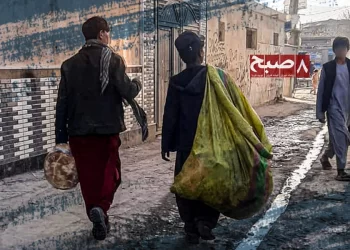
International organizations report an increase in unemployment in Afghanistan. Statistics released by the World Bank in October 2023 showed that unemployment has doubled following the Taliban’s takeover of Afghanistan, marking a 100 percent growth of unemployment for an economy reliant on aid. While precise figures on unemployment among individuals in the country are unavailable, the World Bank stated that among individuals aged 14 to 24, one in every three is unemployed. In a situation where young people lack employment opportunities, child labor becomes one of the few options. Shoe shining, car washing, mechanics apprenticeship, collecting plastic objects from landfills, street vending, and hand embroidery are among the immediate options for child laborers in cities. In rural areas, shepherding and farming have taken the place of these options. However, children engaged in these activities earn little income. The Taliban’s control over Afghanistan and the weakening of household economies through the Taliban policies mentioned above have also negatively impacted the income of child laborers.
Rahimullah, a thirteen-year-old who shines shoes in the city of Taleqan, the capital of Takhar province, says he earns between 50 to 150 Afghanis daily. Speaking to the Hasht-e Subh Daily, he mentions that his income is the sole breadwinner for his family of five, only able to afford dry bread for the family daily. When asked about the challenges of his work, he says, “The work is challenging, especially during these cold winter days. Progress is slow, and some days I encounter bothersome harassment from people. It’s tough.”
Najibullah, a child laborer in Kandahar province, is an apprentice to a mechanic. Like any other child worker, his job is challenging. Speaking to the Hasht-e Subh Daily, Najibullah says that when he returns home from work at night, his body aches: “Most of the time, we feel tired when engaged in these tasks. Occasionally, we don’t experience fatigue. Upon returning home, our bodies ache, every limb weary.” Concerned about younger child laborers, he says, “Many children younger than myself are involved in even more challenging tasks, such as working in motorcycle and motor repair shops. While they should be 15, 16, or 17 years old, there are individuals as young as 10, 11, or 12 years old, meaning very young children, performing demanding physical labor.”
The growth of the population is another factor contributing to the increase in poverty and its perpetuation in most families. In 2020, media outlets reported, citing Afghan government officials, that the country has the highest population growth rate in the world. Mohabbat and his brother, both engaged in shoe shining in the city of Ghazni in Ghazni province, are among those forced to support the expenses of a densely populated family of seven. Mohabbat, 10 years old, has a younger brother. The daily income ceiling for these two young workers is 300 Afghanis. Mohabbat, who responds briefly to questions, says his father is addicted, and he and his brother are compelled to cover the family expenses. However, when asked about his living conditions, he has no response. After a brief pause, while appearing to struggle to speak, he says, “I don’t know what to say.”
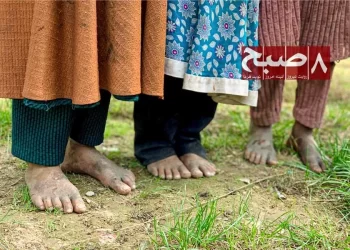
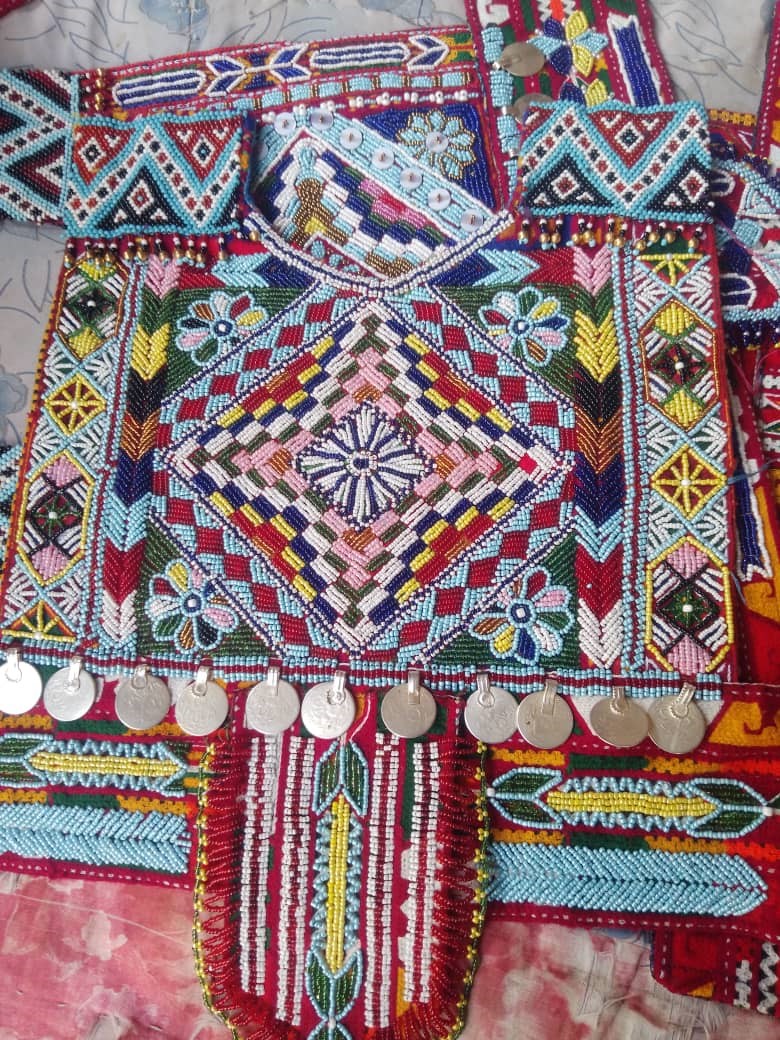
A portion of child laborers in Afghanistan comprises girls. These girls mostly work in carpet weaving workshops or engage in handicrafts such as embroidery. However, these jobs yield much lower income compared to external jobs. Rarely does the daily income of girls working at home reach 100 Afghanis. Sixteen-year-old Farzana, who is busy with embroidery in western Kabul, earns a monthly income of one thousand Afghanis, sometimes a little more. Farzana tells the Hasht-e Subh Daily about her income, saying, “If it’s standard-size men’s clothes, I earn about one thousand Afghanis. For larger traditional-style cloths, like those from Kandahar or other types, it takes two months to complete, and I earn almost two and a half thousand Afghanis.”
Carpet weaving and embroidery, however, require more precision and patience. The threads of the carpet and the pieces onto which they are sewn must be accurately counted. Farzana speaks to the difficulty of embroidery, telling the Hasht-e Subh Daily, “It’s very difficult and hard. Sitting from morning till evening, counting the threads meticulously, and doing the embroidery is very tough.” She says that after the Taliban’s restrictions on women and their activities and education, she no longer had any other option to create employment and help her family.

Sitara started embroidery before she turned fourteen. Sitara says her father is ill, and she embroiders to both pass the days away from school and help the family’s finances. She tells the Hasht-e Subh Daily, “After the Taliban took control and I couldn’t attend school, I had to find employment to avoid unemployment. Additionally, because my father is sick and unable to work, I embroider to fulfill some of my financial needs and occasionally contribute to household expenses.” Now fifteen, she started embroidery a year and a half ago. However, according to her, even if she works well and fast, her income barely reaches 500 Afghanis per month. Sitara, however, is disappointed with this job and says it neither provides adequate income nor guarantees a future. Moreover, her eyesight has also been affected by the high precision and concentration required for embroidery.
On the other hand, Belqis Najafi complains of neck pain due to the intricate work of beadwork. She, who started beadwork after the Taliban took control of the country and closed schools to girls, speaks to the Hasht-e Subh Daily about her meager income: “If I calculate my income in a day, it’s not much. Maybe a thousand Afghanis per month.”
Each of these child laborers has a significant reason for leaving home or working within it. Bread is a common and important reason in all these cases. Rahimullah, who polishes shoes in Taleqan city, says his father is disabled, and he must take responsibility for providing for the family’s livelihood. Najibullah also suffers from economic problems and therefore works as an apprentice in a motorcycle repair shop. Mohabbat and his brother work in the cold weather of Ghazni city because their father is addicted. Sitara’s father is sick, and Belqis’s father is unemployed. Although Farzana’s father is not physically ill, he, like Belqis’s father, is unemployed. Farzana has another reason for working: to be able to afford her English Language course expenses in the absence of sufficient family support. Najibullah, however, reminisces with regret about a time when he was younger and went to school. Rahimullah also expresses his disappointment, saying he wants to study like other children, but he is the only breadwinner for the family and cannot afford to think about education.
This is happening while Afghan society is a society without statistics. Just as there are still no accurate or even close statistics on the population of the country, there are also no accurate statistics on child labor. However, estimated figures from international organizations indicate that between one million and 3.7 million children work in Afghanistan. Last year, on June 12, World Day Against Child Labor, the United Nations announced that the number of child laborers worldwide had reached 160 million.