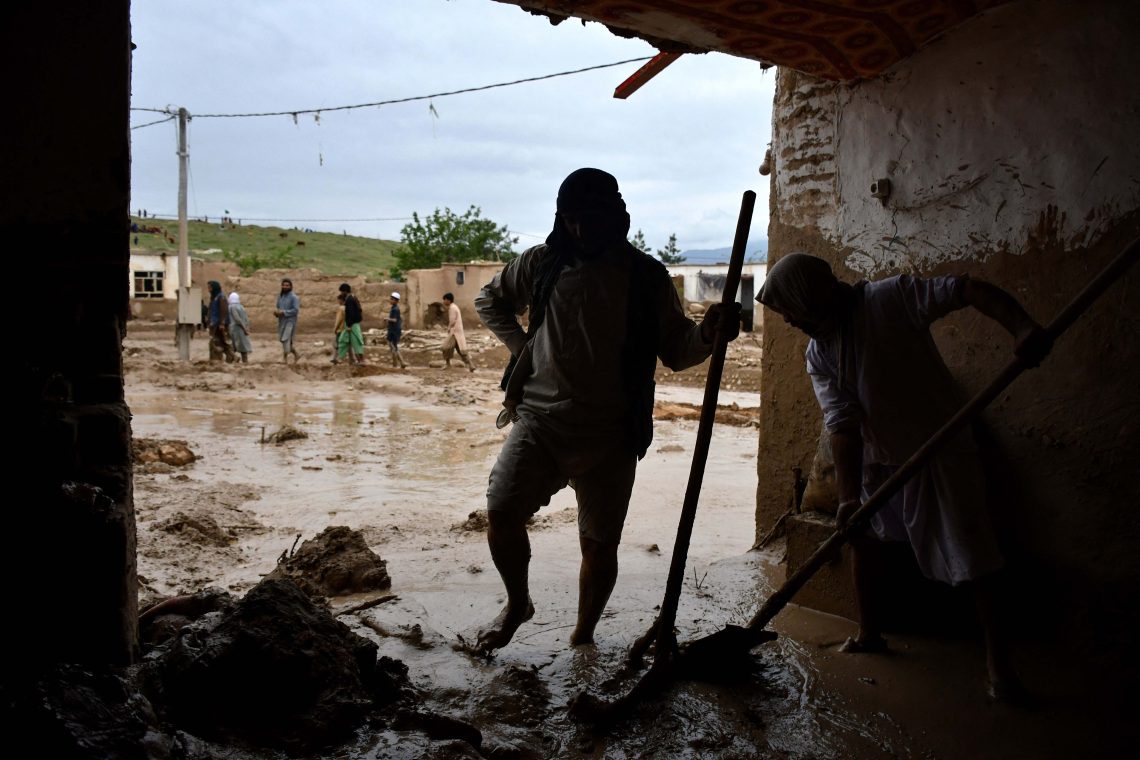
In the past two days, Afghanistan has witnessed devastating and deadly floods. According to reports, as a result of the floods in the provinces of Badakhshan, Takhar, Baghlan, Herat, and Ghor, 239 people have lost their lives. However, given the widespread nature of the recent floods, this figure is likely to be understated, and the true extent of the casualties will be determined in the coming days. Nevertheless, even if we accept this figure of 239 as final, it does not diminish the depth of the tragedy. Among the flood-affected provinces, Baghlan has suffered the most casualties from this natural disaster, with 210 lives lost in just two districts of Central Baghlan and Burka.
Recorded images and videos of the devastating floods in Baghlan and the cries of surviving children from this tragic event are so poignant that no language can adequately express them. Being human is heartbreaking when you feel the pain with all your being but lack the power to articulate it. Being human is sad when tragedy unfolds before your eyes. Not only can you not do anything to stop it, but you exacerbate it with foolish and superstitious responses, further deepening the tragedy. The ongoing tragedy in Afghanistan is deeper, more chronic, and more bone-chilling precisely because instead of confronting it, it is being normalized.
Religious authorities attribute the tragedy to divine punishment in an attempt to absolve themselves of criticism. Floods, earthquakes, hurricanes, droughts, and other natural events are not seen as natural but as “divine retribution” for which humanity has no role in mitigating. Therefore, according to their belief, everyone is at fault except for the current purely Islamic regime which leaves no room for deviation from Sharia law. Why should such a thoroughly Islamic and lawful regime be blamed? The people are sinners, and for this reason, God punishes them. Or perhaps there is some wisdom in the mass deaths of these people that our flawed intellect cannot comprehend! This is precisely why everything becomes ordinary and unavoidable, and people, more than the rulers, accept the deadly fate that awaits them without protest: death is from God, and destiny has already been written, and nothing can be done about it. In such a superstitious and backward society, everything is considered “normal” and “natural,” and therefore, we are less likely to witness resistance to tragedies and crimes that have nothing to do with metaphysical factors.
Floods are not an uncontrollable natural event. Predicting such events is straightforward, even within the capabilities of the Taliban’s primitive and reactionary regime. However, because in Afghanistan everything is attributed to supernatural factors, even if this regime had issued warnings days before the floods, it would not have been taken seriously. People believe that there is no escaping fate, and if God intends to punish His servants, even the safest places cannot offer protection. Death is inevitable, and its timing is not within our control. This prevailing religious outlook has been reproduced in our society for centuries, and unfortunately, no alternative perspective has replaced it.
Due to the dominance of such a backward view, people in remote villages do not attach much importance to the vulnerability of their structures and locations. Countless villages can be found in various regions of Afghanistan built near rivers and floodplains. There are even villages and farmlands constructed in the beds of rivers and floodplains. No factor other than sheer mass ignorance is involved in this behavior. Political regimes, all corrupt and incompetent, have not only failed to prevent such actions but have even facilitated the occurrence of natural disasters.
Non-standard constructions are evident even in urban areas, let alone remote regions where sometimes governments are informed of their existence long after the villages are established. It is an undeniable fact that all governments that have come to power in Afghanistan have been corrupt and incompetent and have done little to mitigate natural disasters; however, the people are also to blame in this regard. In many cases, they have disregarded the orders and serious recommendations of governments and acted contrary to them.
Afghanistan is a country plagued by disaster and embroiled in chronic and enduring crises. In this country, nothing is in its place. Neither can the people play their true role nor have the regimes, apart from theft and corruption, provided sustainable and tangible services for Afghanistan. Political regimes either change peacefully after a while or are overthrown, but the people remain to pay for the follies and mistakes of their past and present, along with the political regimes.
You can read the Persian version of this analysis here: