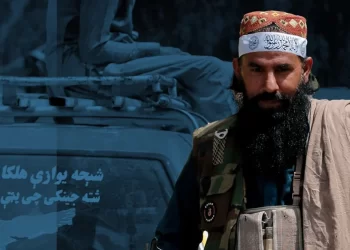

In the final years of the republic system, Badakhshan stood as a primary center for Taliban activities in northern Afghanistan. During those years, Warduj was one of the first districts or among the first districts nationwide to fall to the Taliban, underscoring the serious and perilous nature of their presence in Badakhshan province. The Taliban’s multi-year presence in various districts of Badakhshan laid the groundwork for their increased influence in the northern regions of the country. Badakhshan militias played a significant role in the fall of Panjsher province to the Taliban as well, reportedly behaving even worse than Taliban forces from Kandahar, Helmand, and Zabul provinces in their brutal treatment of residents. Due to the services rendered by the Badakhshan Taliban during the fall of Afghanistan, the Taliban supreme leader decided to appoint Fasihuddin Fitrat as the Chief of the General Staff of the Armed Forces of the Taliban, and also employ many of his associates in high government positions in Badakhshan province. However, it wasn’t long before the Taliban gradually dismissed or demoted individuals associated with the chief of staff of the Taliban army from Badakhshan and other areas, to the extent of sending combatants from Helmand and Kandahar to destroy poppy fields in Badakhshan and denying Badakhshan militias the permission to operate. In recent demonstrations in some districts of Badakhshan, locals explicitly stated that non-local Taliban fighters were invading their privacy, harassing and intimidating people, and even molesting women. What do these events prove? They demonstrate that we are facing an exclusive ethnic and ideological group that does not tolerate the slightest diversity and pluralism, aiming for a homogenized society in Afghanistan. This is despite Afghanistan historically being host to diverse cultural, ethnic, linguistic, and religious pluralities.
In contemporary times, totalitarian regimes are the foremost enemies of cultural, linguistic, and ethnic diversity. The Taliban government is one such example of a totalitarian regime today. Totalitarian regimes, by promoting a particular ideology, consider their ideology to be the sole truth and seek to monopolize it. Ideological regimes aim to homogenize citizens and eradicate diversity and pluralism. Ideological regimes spare no effort in molding people according to their desires. The Taliban regime, both in the 1990s and currently, endeavors to homogenize society and eradicate the diversities and pluralities that have long existed. The religious reading of the Taliban is based on tribal norms and primitive cultures. Based on this reading, even clothing for men and women must be uniform and devoid of diversity. Besides, the Taliban do not accept any cultural practices prevalent among tribes on both sides of the Pakistan-Afghanistan border that deviate from their cultural norms, and they suppress other traditions and cultures in the name of opposition to religious principles and Afghan values.
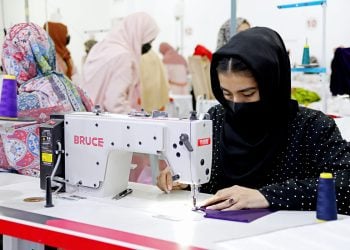
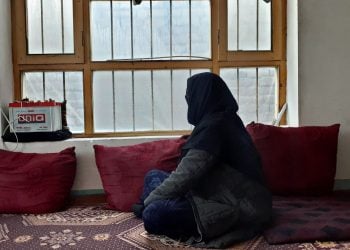
In their hostility towards diversity and pluralism in Afghanistan, the Taliban have deprived women of education, employment, and space to the extent that breathing space is almost non-existent for them. In the Taliban’s ideology, women are only allowed to live within the confines of their homes and engage in household chores. Under the auspices of the Taliban’s ideology, girls and women have no access to even the most basic rights and privileges and are plunged into the darkness of medieval times. Misogyny is a fundamental characteristic of the Taliban’s ideology. Under the shadow of Taliban rule, the country’s environment is entirely masculine, and even women are deprived of going to parks and recreational areas.
Given the strong ethnic inclinations within the Taliban, their religious ideology has also taken on an ethnocentric hue. They are striving for the widespread promotion of the Pashto language and consider the Persian language, which historically served as a lingua franca facilitating understanding and communication among all the country’s inhabitants, as a foreign and secondary language. They seek to eradicate it from government offices, remove Persian-language signs, create official correspondences only in Pashto, and compel people to speak Pashto. On the other hand, the presence of other ethnicities in Taliban security forces is very rare, and if they are present, it is ineffective. Currently, apart from individuals who have somehow proved their loyalty to the Taliban, others are absent from the country’s defense, interior, and judicial apparatus. They still regularly detain and torture former military personnel and in some cases even murder them.
Universities and academic institutions in Afghanistan have also been emptied of non-Taliban individuals and have become heavily ideologically charged. By narrowing the space for individuals who do not accept their ideology, the Taliban create conditions for dismissing them. Instead, they attempt to appoint individuals in universities from among Taliban members who have no familiarity with academic requirements, solely because they have demonstrated more valor in destroying infrastructure and killing people during the Taliban’s war against the previous regime. Recently, the Taliban have announced that they are rewriting the educational curriculum and university syllabi according to their ideology.
One of the recent actions by the Taliban in the direction of homogenizing the country has been to seize thousands of books from bookstores and publishing houses in Kabul and other regions of Afghanistan. The Taliban’s intelligence department and the Ministry of Information and Culture excessively censor the publication and dissemination of books and confiscate any book that contains the slightest deviation in its content. They strive to shape the thoughts and ideas of citizens according to their ideology and do not allow even the slightest room for dissent. It is evident that in an environment where genuine knowledge is not accessible to all, false consciousness proliferates and minds are subjugated.
We all know that the essence of life is diversity and difference. Just as there is diversity and difference in nature and other creations, there are also numerous differences among humans. Although most people are aware of this fact and acknowledge that we have religious texts that demonstrate that diversity and difference among humans are an undeniable principle, it is still regrettable and sorrowful what is happening in Muslim countries in practice. In some of these countries, bigotry and discrimination based on religion, ideology, and race are still rampant and leave countless victims in their wake. Moreover, in these countries, political differences often turn into bitter personal enmities, whether bloodshedding or non-bloodshedding. It is now clear that there is a significant gap between slogans and actions. We are aware of some religious teachings, but we forget to implement them in practice. Therefore, it can be said that intellectual, religious, racial, and ethnic diversity in itself does not create problems; what matters is how we deal with these issues. The reality is that no society, whether advanced or primitive, is devoid of factors that create differences and contradictions, just as it has components of unity and homogeneity.
In the twentieth century, ideologies such as democracy, human rights, and self-determination gradually spread and gained prominence among various societies, making it difficult to deny differences and diversity in different sectors of society. The formation of nation-states with the help of colonizers led people from different religions, races, and languages to unite under the flag of a single country. This resulted in countries that had the potential to fall into bloody conflicts. However, the leaders who held the reins of power in these countries mistakenly believed that recognizing the rights and privileges of various layers and classes of society, regardless of race, language, and religion, would weaken the central government and could lead to its collapse.
Countries suffering from detrimental internal conflicts based on religious, racial, and linguistic factors need to learn from modern democratic countries in this regard. One of the solutions that democratic countries have considered regarding how to deal with their internal conflicts and diversity is placing the law at the forefront. Placing the law as the reference point not only prevents governmental arbitrariness but also institutionalizes citizenship rights and prevents interference in the citizenship rights of individuals based on race, ethnicity, and religious beliefs. In a country where democratic change mechanisms are not accessible to citizens, natural peaceful differences are pushed onto a path that increases violence and conflict among citizens.
Does the Taliban’s insistence on homogeneity lead anywhere, and will this group succeed in eliminating diversity from the country? Based on human experiences, regimes and groups that have sought to homogenize society have sometimes progressed rapidly and superficially achieved successes, but ultimately they have been trapped in failure. Predicting the future is difficult; however, the hopeful point is that it is unlikely that the Taliban, with their primitive and history-laden ideology, will control all the pillars of society permanently or for an extended period. Nevertheless, it is evident that the Taliban’s rule, even for a short period, imposes heavy human costs on the country, the compensation for which takes years, if not decades.
You can read the Persian version of this analysis here: